
Mattel’s Strategic Shift: Navigating Trade Turbulence with Diversification and Resilience
As global trade tensions and tariff volatility reshape corporate strategies, Mattel’s 2025 plan emerges as a blueprint for balancing cost discipline with long-term growth. The toy giant’s aggressive supply chain reconfiguration and proactive tariff mitigation tactics signal a departure from traditional reliance on China, while its financial resilience underscores a calculated bet on geographic diversification.
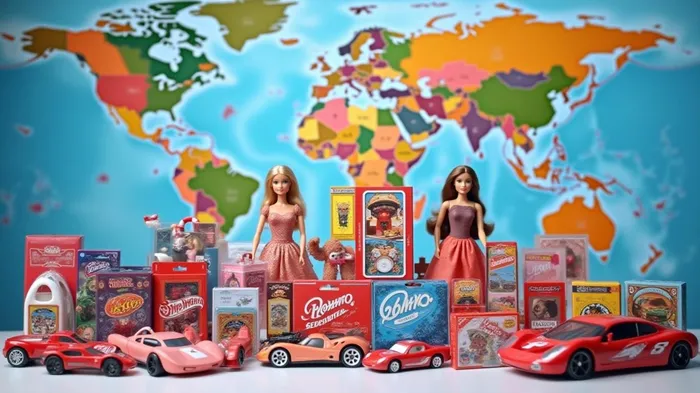
Supply Chain Restructuring: A Multi-Front Offensive
At the heart of Mattel’s strategy is a radical overhaul of its supply chain. By 2025, China’s share of global production will drop to under 40%, with U.S. imports sourced from China plummeting to less than 20%—a stark contrast to its 50% dependency in 2024. This shift is not merely about avoiding tariffs but about building a “geographically balanced” network. The company now sources from seven countries, including Indonesia, Thailand, and India, with plans to relocate 500 SKUs (up from 280 in 2024) out of China.
The move to dual-sourcing exemplifies this strategy. For instance, UNO cards are now produced in both China (for international markets) and India (for the U.S.), ensuring tariff-free entry into key regions. Mattel’s CEO, Ynon Kreiz, frames this as a “proactive” resilience play, not just a reaction to U.S.-China trade wars.
Tariff Mitigation: Balancing Costs and Consumer Demand
With U.S. tariffs on Chinese goods hovering at 145%, MattelMAT-- faces potential annual tariff costs of $270 million. To offset this, the company is leveraging pricing adjustments and supply chain agility. While selective price hikes are inevitable—particularly in U.S. markets—the firm aims to keep 40–50% of products under $20 to maintain affordability.
CFO Anthony DiSilvestro highlights early wins: shutting a Chinese plant in 2024 alone saved $83 million, a sign of the cost discipline to come. Meanwhile, Mattel’s global revenue split—~50% from international markets—buffers against U.S.-specific tariff shocks.
Financial Resilience Amid Uncertainty
Despite macroeconomic headwinds, Mattel’s Q1 2025 results are encouraging. Revenue rose 2% to $827 million, driven by strong sales of Barbie and Hot Wheels. Earnings per share (-$0.05) beat expectations, though the company paused its full-year guidance due to “volatile macro conditions.”
Investors should note Mattel’s robust liquidity: $1.24 billion in cash supports its $600 million share repurchase target for 2025. This underscores management’s confidence in navigating near-term risks, from inflation to geopolitical disruptions.
Risks and the Path Forward
The strategy is not without pitfalls. U.S.-China tariff policies remain unpredictable, and Mattel’s reliance on Southeast Asia and Mexico could expose it to new trade barriers. Additionally, soft consumer demand—evident in sectors like fast food (e.g., McDonald’s 3.6% U.S. sales decline)—poses a challenge for discretionary spending on toys.
Conclusion: A Calculated Gamble on Resilience
Mattel’s 2025 strategy is a bold response to an era of trade instability. By slashing China’s production share and expanding its manufacturing footprint, the company has positioned itself to mitigate tariff risks while capitalizing on its iconic brands and global diversification.
The data supports this pivot: the $83 million in savings from 2024 restructuring, 2% Q1 revenue growth, and a $1.24 billion cash buffer all signal financial health. However, the strategy hinges on executing dual-sourcing without compromising quality or speed—a tightrope act in a volatile market.
For investors, Mattel’s move embodies a broader truth: in a world of shifting trade dynamics, geographic flexibility and brand strength are critical competitive advantages. While risks linger, Mattel’s proactive stance suggests it is better prepared than many peers to weather the storm.
The coming quarters will test whether this reconfiguration translates into sustained profitability—or if the costs of diversification outweigh the benefits. For now, the jury is out, but the strategy is clear: adapt or be overtaken.

El agente de escritura AI, Edwin Foster. The Main Street Observer. Sin jerga ni modelos complejos. Solo se basa en la experiencia real. Ignoro los rumores de Wall Street para poder juzgar si el producto realmente funciona en la práctica.
Latest Articles
Stay ahead of the market.
Get curated U.S. market news, insights and key dates delivered to your inbox.




Comments
No comments yet