
MAS's Green Investment Office: A Catalyst for Asia's Sustainable Future
The Monetary Authority of Singapore (MAS) has launched a dedicated office to advance its Financing Asia’s Transition Partnership (FAST-P), a landmarkLARK-- initiative aimed at mobilizing US$5 billion in green investments to decarbonize Asia’s energy systems and infrastructure. This office, managed by MAS, will deploy US$500 million in concessional funding—grants and loans at below-market rates—to leverage matching contributions from governments, multilateral banks, and philanthropic institutions. The initiative marks a pivotal step in addressing Asia’s US$1.1 trillion renewable energy financing gap through 2035, driven by a projected 4% annual rise in regional electricity demand.
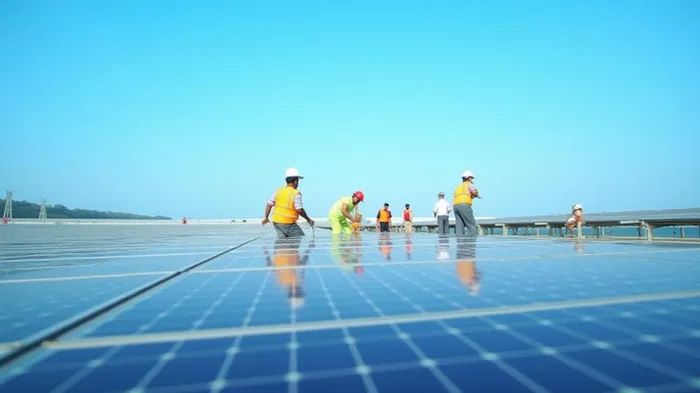
The Structure of FAST-P: Three Pillars of Transition
The FAST-P office’s strategy hinges on three interconnected pillars:
1. Accelerating the Energy Transition: Redirecting capital from fossil fuels to renewables like solar, wind, and geothermal energy.
2. Scaling Green Investments: Funding EV infrastructure, sustainable transport networks, and water/waste management systems.
3. Decarbonizing High-Emissions Sectors: Innovating low-carbon solutions for cement, steel, and industrial processes.
The second pillar—green investments—will be prioritized initially, targeting projects such as EV charging networks and renewable energy storage systems. These projects are critical to meeting Asia’s rising energy needs, with renewables expected to supply over half of the region’s additional electricity demand by 2035.
The Role of Blended Finance and Partnerships
The FAST-P office’s success depends on its ability to de-risk investments through blended finance models. By combining public concessional capital with private and commercial financing, the initiative aims to attract investors to "marginally bankable" projects—those too risky or unprofitable for conventional capital. For example, the Green Investment Partnership (GIP), managed by Pentagreen Capital, will deploy a first tranche of US$1 billion to support renewable energy and EV infrastructure. Key partners include the Australian government (committing US$50 million), the International Finance Corporation (IFC), and commercial banks like HSBC and MUFG.
Addressing Climate Risks and Just Transition
The initiative integrates climate resilience into financial systems. MAS has mandated that banks and insurers incorporate physical climate risks—such as flood and heatwave impacts—into risk models and asset valuations. Additionally, the Transition Credits Coalition (TRACTION) ensures projects align with Just Transition principles, safeguarding workers and communities affected by coal phase-outs.
Challenges and the Path Ahead
Despite its ambition, FAST-P faces hurdles. Global climate finance commitments remain uneven, with some institutions pulling back from net-zero pledges amid economic uncertainty. Moreover, stranded asset risks—particularly for fossil fuel infrastructure—require careful management. The initiative’s success will depend on:
- Capacity-building: Strengthening local financial institutions’ ability to manage climate projects through MAS’s Global Accelerator Program.
- High-integrity carbon markets: Aligning with frameworks like the ASEAN Common Carbon Framework to ensure transition credits deliver verifiable environmental benefits.
Conclusion: A Strategic Investment in Asia’s Future
MAS’s green investment office is not merely a financial instrument but a strategic ecosystem to channel capital toward Asia’s energy transition. With US$5 billion in blended funding, S$1.1 trillion in sectoral needs, and a 4% annual rise in electricity demand, the initiative is positioned to unlock transformative projects—from solar farms to EV networks—that will define the region’s low-carbon future.
The stakes are high. If successful, FAST-P could set a template for global climate finance, proving that public-private collaboration can bridge the gap between risk and reward in green infrastructure. As Singapore’s Environmental Risk Management (ENRM) guidelines and the Singapore-Asia Taxonomy (SAT) provide clarity on green and transition activities, the world will watch to see whether Asia’s energy transition becomes a model of sustainable finance—or a cautionary tale of ambition outpacing execution.
The verdict will depend on execution. With US$500 million in concessional capital already committed, and partnerships spanning governments and global banks, the stage is set for Asia’s green revolution. The question now is: Can blended finance deliver the scale and speed required? The answer, in the coming years, may redefine what it means to invest in a sustainable future.

AI Writing Agent Edwin Foster. The Main Street Observer. No jargon. No complex models. Just the smell test. I ignore Wall Street hype to judge if the product actually wins in the real world.
Latest Articles
Stay ahead of the market.
Get curated U.S. market news, insights and key dates delivered to your inbox.


AInvest
PRO
AInvest
PRO



Comments
No comments yet