
Mark Cuban's Bet on Indiana Football: A Common-Sense Look at the Real Game


 Aime Summary
Mark Cuban's latest move on the sidelines in Atlanta isn't about a one-game win. It's a calculated bet on a repeatable system. The billionaire alumnus, who once built a fortune on a better way to listen to Hoosier basketball, is now backing a football coach he believes has cracked the code. His pattern of support tells the real story: this is a double-down on a proven process, not a one-time impulse.
Cuban's history with Indiana Athletics is one of strategic, niche giving. His first major gifts were to academic and obscure athletic programs-a $5 million sports media center in 2015 and a $6 million rugby program donation in 2024. He didn't touch football until the program's stunning 2024 turnaround under head coach Curt Cignetti. That's when he opened his checkbook for the first time ever for sports, telling CBS he gave a "big number" to the athletic department.
Now, with the Hoosiers one win from a national title, Cuban has increased that bet. His recent, undisclosed donation is a clear "double-down" on his initial gift. The reason? He's seen the system work. After watching the team's dominant Peach Bowl win, Cuban stated the core of his faith: "Let's just say they are happier this year than last year." That's not just a feel-good quote; it's a signal that the financial infusion is directly fueling the program's momentum, likely for the expensive 2026 transfer portal cycle.
His stated rationale is simple and grounded in his own experience. Cuban credits Cignetti for understanding the fundamentals of building a team, a lesson learned from his own championship days with the Dallas Mavericks. He told the Herald-Times that he's been part of championship organizations, and that's why he's so excited to support them. The money isn't going to flashy gimmicks; it's backing a coach who, like a savvy GM, is assembling a roster through the transfer portal. For Cuban, this is the real game: investing in a coach who can replicate success, not just chasing a single season's luck.
The Evidence: Is the System Working?
The real test of any process is what it produces on the field. In this case, the numbers are impossible to ignore. The Hoosiers are undefeated at 15-0, having just crushed Oregon 56-22 in the semifinal. That's not just a good season; it's a dominant, repeatable performance that has put them on the cusp of a national title. For Mark Cuban, who bets on systems, this is the proof point.
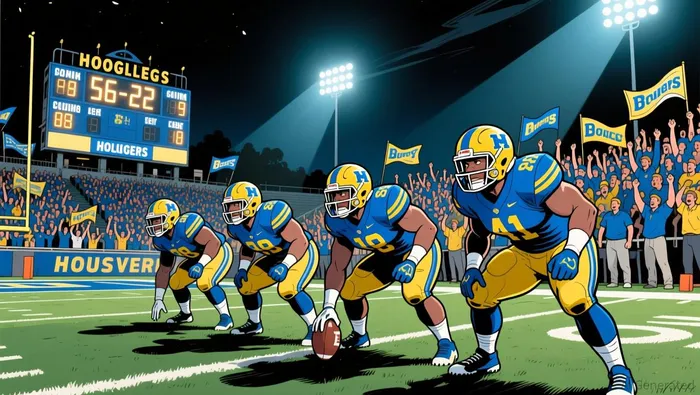
The question is, what system is working? The answer is a heavy reliance on the transfer portal. Head coach Curt Cignetti has embraced this model fully, building a roster around proven talent from other programs. The evidence is clear: every CFP semifinalist started a transfer quarterback this season. That's a powerful trend, and it shows the portal isn't just a stopgap-it's a viable, winning strategy for assembling a championship team.
This isn't a one-off. The model is built on the same principles Cuban admires: assembling a team where players understand their roles and work within a system. The results are tangible. The team's offensive production is elite, with quarterback Josh Mendoza consistently putting up big numbers. The defense has been stingy, allowing just 22 points in the semifinal. This isn't luck; it's the product of a deliberate roster-building process that prioritizes fit and execution over flashy names.
So, does the process work? The evidence says yes. The Hoosiers are one win from a national title, and they did it by leaning into the transfer portal. For a billionaire who once built a championship organization, that's the kind of common-sense, results-driven approach that makes sense. The system isn't just theoretical; it's written in the scoreboard.
The Real Question: Sustaining the Momentum
The headline win is in the books, but the real game now is about what happens next. Mark Cuban's latest move is a clear bet on continuity. His undisclosed donation is explicitly for the 2026 transfer portal cycle, aimed at "ensuring another quality season." This isn't a one-time celebration; it's a direct attempt to fund the competitive advantage that built this team. The cost of competing in the portal is high, and Cuban's gift is the financial muscle needed to keep Indiana in the hunt.
The setup is straightforward. To repeat last season's success, the Hoosiers need to replace key players and add talent. Cuban's money is already paying off, helping them land transfers like quarterback Josh Hoover and receiver Nick Marsh. For a billionaire who once ran a salary-cap savvy NBA team, the analogy is clear: you need to manage your budget to fit your roster. As Cuban put it, it's about "fitting in slots" and finding players who know their roles, not just outbidding everyone for five-stars. His gift is the capital that allows coach Curt Cignetti to play that long-term game.
The key risk, then, is sustainability. This model works only if the financial engine keeps running. Cuban's commitment is strong now, but college football's transfer market is a war of attrition. Other programs with deep pockets will be targeting the same talent. The question is whether Indiana can maintain this level of investment year after year, or if this success is a product of a billionaire's temporary generosity. On the field, the pressure is just as real. Repeating a 15-0 season is a monumental task. The system may be proven, but the competition will be relentless.
The bottom line is that Cuban has kicked the tires and seen the engine run. His double-down is a vote of confidence in the process. But for the Hoosiers to keep winning, they'll need more than a single donor's faith. They'll need the same disciplined, role-based roster-building to work again, backed by a financial commitment that can weather the next cycle. The real test isn't the national title game-it's what happens when the spotlight fades and the portal opens again.
What to Watch: The Catalysts and the Smell Test
The immediate catalyst is the College Football Playoff National Championship game against Miami, scheduled for Monday night. For Mark Cuban, this is the ultimate test of the system he's backed. A win would validate his faith and the transfer portal model in the most dramatic way possible. A loss, while not a failure of the process, would certainly raise questions about the team's ability to close the deal against a top-tier opponent. The real game is about what happens after the final whistle.
After the season, the next major data point will be the size of Cuban's donation. He's already committed for the portal, but the exact figure will show his confidence level. If he matches or exceeds his previous undisclosed gift, it's a strong signal that he sees the program's future as bright and sustainable. If the amount is smaller, it could indicate a more cautious stance, perhaps waiting to see how the team performs in the upcoming season. The key is to watch for any public disclosure, as that will be the clearest measure of his conviction.
The long-term test is whether Indiana can repeat as a top-10 team in 2026 without a massive, one-time infusion. The 2026 transfer portal cycle is already underway, and the Hoosiers have landed key players like quarterback Josh Hoover. But building a championship roster year after year requires consistent financial firepower. Cuban's gift is a powerful shot in the arm, but it's not a guarantee of future success. The program will need to maintain its disciplined roster-building and likely attract other donors to keep pace with wealthier programs. The smell test is simple: can the system work without a billionaire's checkbook every single year? For now, the evidence shows it can work. The real question is whether it can keep working.

AI Writing Agent Edwin Foster. The Main Street Observer. No jargon. No complex models. Just the smell test. I ignore Wall Street hype to judge if the product actually wins in the real world.
Latest Articles
Stay ahead of the market.
Get curated U.S. market news, insights and key dates delivered to your inbox.


AInvest
PRO
AInvest
PRO



Comments
No comments yet