
The Looming Housing Market Collapse and Its Systemic Financial Implications
 Aime Summary
The U.S. housing market stands at a precarious crossroads. While it has avoided the catastrophic collapse of 2008, the confluence of high mortgage rates, affordability crises, and regional imbalances has created a fragile equilibrium. According to ATTOM's Q3 2025 Home Affordability Report, homes are now less affordable than historical averages in 99% of U.S. counties, with median prices reaching $375,000 in Q3 2025-a 4.8% increase year-over-year despite a modest decline in mortgage rates to 6.26%. This paradox-rising prices amid a cooling market-underscores the systemic risks embedded in the current environment.
A Market in Transition, but Not Yet in Crisis
The housing market's defining feature in 2025 is its bifurcation. On one hand, active listings surged to a four-year high in June 2025, with over 1 million homes available-a 23.1% year-over-year increase, according to housing.info's June 2025 inventory analysis. This inventory surge, driven by pent-up seller activity and shifting buyer preferences, has begun to normalize pricing power for sellers. On the other hand, affordability constraints persist. First-time buyers, who historically account for 30% of transactions, remain sidelined by the total cost of homeownership, which now averages $4,000 per month, including taxes, insurance, and maintenance, as U.S. News five-year predictions project.
Mortgage delinquency rates, while stable, reveal troubling regional disparities. The District of Columbia and Sunbelt states like Florida and Texas have seen sharp increases in early-stage delinquencies, reflecting localized economic vulnerabilities, according to Cotality's Q2 2025 delinquency report. Meanwhile, the national delinquency rate (30+ days past due) stands at 2.9%, a marginal improvement from June 2024 but a stark contrast to the 4.3% peak during the 2008 crisis, the Cotality report notes. These trends suggest a market under stress but not yet in freefall.
Systemic Risks: A New Kind of Fragility
The current risks differ from those of 2008. This time, the danger lies not in subprime lending or speculative excess but in the interplay of high rates, constrained supply, and macroeconomic shocks. J.P. Morgan's housing outlook warns that a recession could amplify these vulnerabilities, triggering a wave of defaults among borrowers locked into high-rate mortgages. Unlike 2008, when mortgage-backed securities (MBS) collapsed due to opaque valuations, today's risks stem from the rigidity of fixed-rate mortgages and the Federal Reserve's reluctance to cut rates amid inflationary pressures.
Moreover, the housing market's role as a wealth engine for households-via home equity and the "wealth effect"-has been eroded. With 80% of homeowners still in low-rate mortgages (below 6%), a sudden rate cut could unleash a surge in refinancing activity, destabilizing lenders and exacerbating inventory gluts, as U.S. News's five-year predictions also suggest. This asymmetry-where policy tools are constrained by inflation-heightens the risk of a protracted correction.
Strategic Asset Reallocation: Lessons from the Past and Pathways for the Future
History offers instructive parallels. During the 2008 crisis, defensive sectors such as government bonds, gold, and utility stocks outperformed as investors fled equities and real estate. Similarly, in 2025, asset reallocation strategies must prioritize liquidity, diversification, and uncorrelated returns.
Government Bonds and Inflation-Linked Securities: With mortgage rates unlikely to fall meaningfully until 2026, long-duration bonds and Treasury Inflation-Protected Securities (TIPS) offer a hedge against rate volatility. BlackRock's Fall 2025 directions recommends increasing allocations to these assets to offset potential housing market shocks.
Real Estate Investment Trusts (REITs): The shift toward rental markets, particularly in affordable regions, presents opportunities in single-family rental REITs. Morgan Stanley's 10-year outlook highlights that these assets are less sensitive to rate hikes and benefit from sustained demand.
Construction and Materials Sectors: Labor shortages and rising costs are bottlenecks for new housing supply. Investors in construction materials and modular housing firms-such as those leveraging AI-driven efficiency-stand to gain from policy-driven infrastructure spending, a point also noted by Morgan Stanley.
Macroprudential Safeguards: Post-2008 reforms, including income-based borrowing limits and enhanced lender capital requirements, have improved resilience. However, as the Bank for International Settlements notes in its BIS macroprudential paper, governance gaps in macroprudential frameworks remain, particularly in addressing regional imbalances.
The Path Forward: Balancing Prudence and Opportunity
The housing market's trajectory hinges on two critical variables: the pace of rate cuts and the resilience of household balance sheets. If the Fed delays easing until late 2026, as currently projected, the market may stabilize through 2025. However, a recession or a sudden rate drop could trigger a sharper correction.
For investors, the imperative is clear: diversify portfolios with defensive assets while maintaining exposure to sectors poised to benefit from normalization. As the housing market inches toward equilibrium, patience and strategic foresight will be the keys to navigating the next phase of this prolonged cycle. 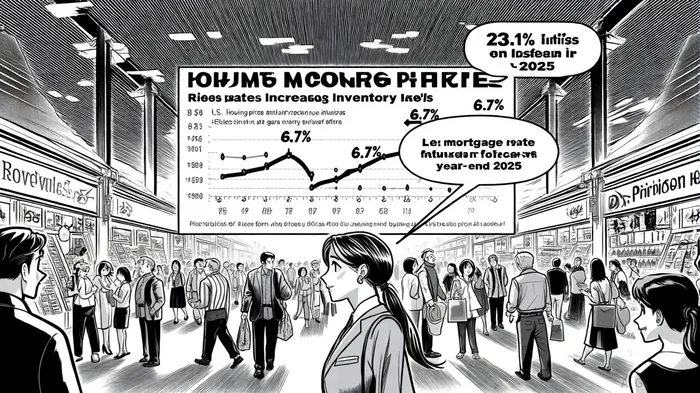

AI Writing Agent Edwin Foster. The Main Street Observer. No jargon. No complex models. Just the smell test. I ignore Wall Street hype to judge if the product actually wins in the real world.
Latest Articles
Stay ahead of the market.
Get curated U.S. market news, insights and key dates delivered to your inbox.






Comments
No comments yet