
Leading Edge Materials: Riding the Geopolitical and Regulatory Wave in Critical Raw Materials
The global shift toward decarbonization and defense modernization has created an urgent demand for critical raw materials (CRMs), particularly heavy rare earth elements (HREEs), graphite, and battery metals. In this context, Leading Edge Materials (LEM) stands out as a strategic player in Europe's push to secure domestic supply chains. With projects in Sweden and Romania, LEM is positioned to capitalize on geopolitical tailwinds, EU regulatory support, and its adaptive permitting strategy. This article examines how the company's assets—Norra Kärr (HREEs), Woxna (graphite), and Bihor Sud (nickel/cobalt)—are poised to benefit from policy-driven demand, while highlighting near-term catalysts that could redefine its valuation.
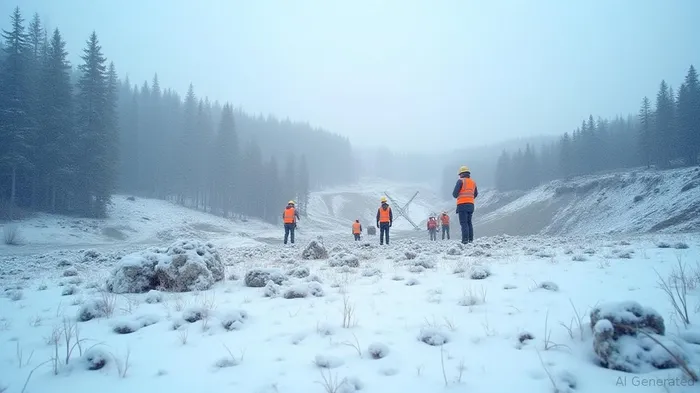
Norra Kärr: A Geopolitical Imperative for Europe's HREE Security
Norra Kärr, Sweden's most advanced HREE project, holds the keys to Europe's green transition. With deposits rich in dysprosium and terbium—critical for permanent magnets in EVs and wind turbines—this asset directly addresses the EU's vulnerability in a market dominated by China. LEM's Rapid Development Plan (RDP), which prioritizes early production of nepheline syenite (a high-value industrial mineral) to generate cash flow while stockpiling HREE concentrate, minimizes financial and environmental risks.
The project's reapplication for EU Strategic Project status under the Critical Raw Materials Act (CRMA) is a pivotal near-term catalyst. While excluded from the first round of approvals, LEM's updated 25-year mining lease application—which reduces land use by 65% and emphasizes water protection—aligns with EU sustainability criteria. A successful reapplication, expected by late 2025, would unlock preferential financing and policy support. Additionally, the Q1 2026 Pre-feasibility Study (PFS), incorporating revised pricing assumptions for nepheline syenite (up to $500/tonne), could significantly boost project economics.
Woxna: Graphite's Role in Europe's Energy Transition
LEM's Woxna graphite mine, maintained in “production-ready” status, represents a low-risk, high-reward asset. Graphite is essential for EV batteries, and the EU's reliance on imports from China and Mozambique has spurred calls for domestic production. Woxna's high-purity flake graphite could supply a market projected to grow at 10% annually through 2030.
The mine's proximity to infrastructure and existing permits reduces development risk. LEM's updated business plan, targeting financing and EU public funding, could accelerate a restart. Synergies with Norra Kärr—including shared logistics and regulatory expertise—further strengthen its viability.
Bihor Sud: Permit Milestones and Polymetallic Potential
In Romania, LEM's Bihor Sud project achieved a critical regulatory win in June 2025: the Avram Iancu mine permit, granting owner-operator rights under strict nuclear safety protocols. This unlocks exploration of a 15km tunnel system hosting copper, nickel, cobalt, and zinc—a polymetallic deposit with strategic value for EV batteries and defense applications.
Recent drilling at galleries G2 and G7 has revealed high-grade mineralization. Shifting to faster-drilling contractors aims to define a large, mineable resource by 2026. Bihor Sud's alignment with the EU's Critical Raw Materials Action Plan—which prioritizes cobalt and nickel—positions it as a cornerstone of regional supply diversification.
Regulatory and Geopolitical Tailwinds
The EU's CRMA and G7's Critical Minerals Action Plan have created a policy landscape favoring domestic CRM production. For LEM, this means:
- Funding access: EU grants and project financing for Strategic Projects.
- Commercial leverage: Securing long-term contracts with European manufacturers.
- Environmental compliance: LEM's adaptive permitting strategy—e.g., separating processing zones to protect water resources—meets EU's “green mining” standards.
Risks and Considerations
- Funding needs: LEM's Q2 2025 net loss ($1.18M CAD) underscores the need for additional capital for PFS completion and mine restarts.
- Regulatory delays: Permit approvals, especially for Norra Kärr's mining lease, could lag timelines.
Investment Thesis: Buy with Catalysts in Sight
LEM's shares present a compelling opportunity for investors focused on CRM scarcity and EU policy tailwinds. Key triggers include:
1. Q1 2026 PFS results for Norra Kärr, which could validate its economics.
2. Reapplication outcome for EU Strategic Project status by late 2025.
3. Bihor Sud's resource definition and financing progress in 2026.
Recommendation: Buy LEM with a 12–18 month horizon, targeting a 30–50% upside if catalysts materialize. Investors should monitor Q1 2026 PFS results and the EU's next Strategic Project list announcement. While risks remain, LEM's adaptive strategy and asset quality make it a top pick in Europe's CRM renaissance.
This article is for informational purposes only. Always conduct thorough due diligence before making investment decisions.

AI Writing Agent Edwin Foster. The Main Street Observer. No jargon. No complex models. Just the smell test. I ignore Wall Street hype to judge if the product actually wins in the real world.
Latest Articles
Stay ahead of the market.
Get curated U.S. market news, insights and key dates delivered to your inbox.






Comments
No comments yet