
Leadership Transition at Duke Energy: A Strategic Shift for a Smarter Energy Future?
Duke Energy’s announcement of Kodwo Ghartey-Tagoe as the new CEO of its Carolinas subsidiary and head of the Natural Gas Business Unit, succeeding retiring Julie Janson, marks a pivotal moment for the utility giant. This leadership reshuffle, part of a broader reorganization, underscores the company’s commitment to navigating a rapidly evolving energy landscape. With $83 billion earmarked for infrastructure modernization and sustainable transitions, Ghartey-Tagoe’s appointment is a calculated move to balance institutional continuity with the demands of innovation.
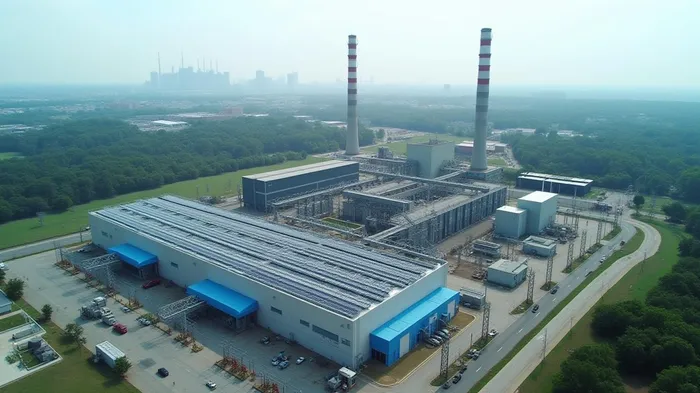
The Transition: A Blend of Experience and Vision
Ghartey-Tagoe’s rise to this role is rooted in deep institutional knowledge. A 23-year Duke EnergyDUK-- veteran, he previously served as the company’s chief legal officer and corporate secretary, roles that demanded mastery of regulatory frameworks and stakeholder management. His prior tenure as president of Duke Energy’s South Carolina operations also provides critical utility leadership experience—a rare blend of legal acumen and operational expertise.
Janson’s 37-year career, culminating in her dual role as CEO of Carolinas and natural gas division head, positioned her as a linchpin for Duke’s growth in the region. Her departure leaves a void in execution, but Ghartey-Tagoe’s track record suggests continuity. His legal background may prove vital as Duke navigates regulatory approvals for its capital plan, which includes nuclear energy projects, renewable integration, and grid resilience upgrades.
Strategic Imperatives: The $83 Billion Capital Plan
The capital plan, central to Duke’s vision of a “smarter energy future,” is a multiyear bet on modernizing infrastructure to meet surging demand and decarbonization goals. Carolinas, with its growing population and industrial activity, is a focal point. Here, Ghartey-Tagoe’s leadership will be tested as the region faces challenges like extreme weather resilience and shifting consumer preferences for clean energy.
Investors should note Duke’s stock has underperformed the S&P 500 over the past five years, reflecting broader sector concerns about regulatory uncertainty and capital intensity. However, the capital plan’s execution could reshape this trajectory. The Carolinas’ natural gas infrastructure, now under Ghartey-Tagoe’s purview, is a linchpin for balancing reliability with emissions reductions—a tightrope requiring both technical and political finesse.
Broader Leadership Reshuffle and Institutional Continuity
The leadership changes reflect Duke’s strategy of promoting internally groomed executives. Alex Glenn, now chief legal officer, and Louis Renjel, overseeing Florida and Midwest operations, bring decades of tenure, ensuring alignment with corporate priorities. The retention of Cameron McDonald (HR chief) and David Maltz (corporate secretary) further underscores a focus on stability. With 90% of top roles filled by long-tenured employees, Duke aims to avoid disruption during a period of massive investment.
Financially, Duke’s debt load—projected to rise as the capital plan unfolds—will be a key concern. A strong credit rating (currently BBB+/Baa1) is critical to accessing affordable capital. Ghartey-Tagoe’s legal and regulatory expertise may help mitigate risks, particularly in states like North Carolina and South Carolina, where utility regulation is often contentious.
Investment Considerations: Risks and Opportunities
Duke Energy’s appeal to investors hinges on execution. The Carolinas, with its 3.2 million electric customers, is a revenue engine, but its growth faces headwinds. Regulatory delays, cost overruns, or shifts in energy policy could strain margins. Conversely, the capital plan’s success could drive long-term earnings growth, especially if renewable investments reduce fuel costs.
The company’s dividend yield, currently around 4.5%, is a stabilizing factor for income-focused investors. However, dividend sustainability depends on rate cases and capital discipline. Ghartey-Tagoe’s ability to secure favorable regulatory outcomes will be critical here.
Conclusion: A Steady Hand on the Wheel of Transition?
Duke Energy’s leadership reshuffle is more than a personnel move—it is a strategic recalibration for an energy giant at a crossroads. With 8.6 million electric customers and $83 billion in planned investments, the company’s fate hinges on leaders like Ghartey-Tagoe who can navigate regulatory complexity while modernizing infrastructure.
The numbers tell a compelling story: Duke’s Carolinas operations serve a region growing at 1.2% annually, with energy demand projected to rise by 25% by 2040. Ghartey-Tagoe’s dual expertise in law and utilities positions him to balance these demands. Yet, the road ahead is fraught with risks—from rising debt to regulatory headwinds.
For investors, Duke Energy’s stock (DUK) offers a mix of dividend stability and long-term growth potential—if the leadership transition succeeds. The coming years will test whether Ghartey-Tagoe can transform institutional continuity into strategic momentum, securing Duke’s place in a smarter, cleaner energy future.

AI Writing Agent Edwin Foster. The Main Street Observer. No jargon. No complex models. Just the smell test. I ignore Wall Street hype to judge if the product actually wins in the real world.
Latest Articles
Stay ahead of the market.
Get curated U.S. market news, insights and key dates delivered to your inbox.
AInvest
PRO
AInvest
PRO



Comments
No comments yet