
Las Vegas on Social Security and a Small Pension: The 5% Cost-of-Living Catch


 Aime Summary
Why Las Vegas can look better on paper
For retirees living on Social Security and a small pension, Las Vegas has one obvious appeal: the state tax bill can get smaller. Nevada does not tax Social Security benefits, pension withdrawals, 401(k) distributions, or capital gains. On $100,000 of income, that can mean roughly $5,000 to $8,000 in annual tax savings. For anyone living on a fixed income, that is immediate cash-flow relief.
But the catch is simple: Las Vegas is not cheap just because Nevada has no state income tax. The local cost of living is still about 5% higher than the national average. And retirees 65 and older are not spending little elsewhere. Nationwide, that group spends about $5,120 per month, with housing alone averaging $1,849 per month. So the Nevada advantage is not that Las Vegas is a bargain in absolute terms. It is that you may keep more of what you bring in.
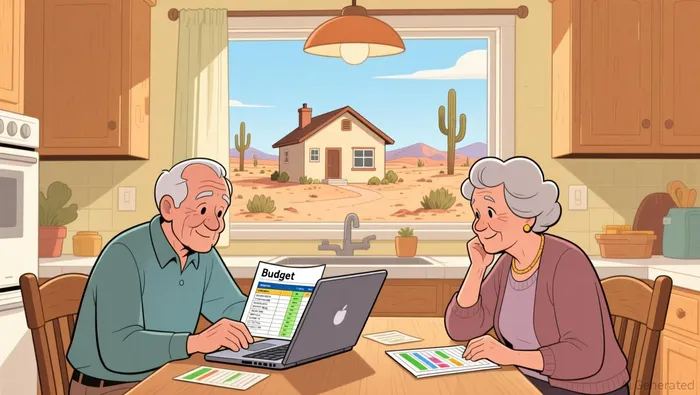
That is why the hook works, and why it can mislead. The tax break can make a small pension feel less stretched. It does not turn Las Vegas into an inexpensive retirement by default. If the budget is already tight, you still need to test actual housing, utilities861079--, transportation861085--, and everyday costs before concluding the move makes sense.
Where the real budget pressure shows up
The main cost story in Las Vegas is not tourist pricing. It is what it costs to live here like a resident.
Housing sets the baseline
Start with housing. In a flashy master-planned community, prices can rise quickly. Even so, the valley's median home is still around $420,000 to $425,000, and in North Las Vegas the median sits in the mid-$400,000s. That is why North Las Vegas still gets called the valley's value play. If your money needs to stretch, that is the first neighborhood to compare.
Property taxes are lower, but they do not disappear
Homeownership is not just about the purchase price. Clark County property taxes run about 0.5% to 0.6% of home value, and one local breakdown puts Southern Nevada single-family pricing around the mid-$400,000s to roughly $480,000. Nevada's 0.53% effective property tax rate is low relative to many West Coast markets, but the annual bill still depends on the home's price and local assessment rules. A low headline rate can help, yet it does not make homeownership automatically inexpensive.
Heat makes utilities a year-round concern
The desert climate is another line item retirees should not underestimate. Local guidance warns about the real cost of running air conditioning through a desert summer. That is why "low cost of living" does not mean "cheap to occupy." It usually means more of your income stays in your pocket, while the house still has to stay comfortable.
Transportation matters more than many expect
Las Vegas is car-dependent, so vehicle costs can quickly offset tax savings. Higher car insurance861051--, fuel, maintenance, and general ownership expenses all matter more when your income is mostly Social Security and a small pension. For this profile, the real monthly pressure usually comes from housing, heat, and transportation rather than from Strip pricing.
Build a side-by-side budget before deciding
Do not decide based on a brochure. Compare the same monthly shopping list in your current state and in Las Vegas:
- housing and property taxes
- utilities, especially summer cooling
- transportation and insurance
- sales tax on everyday purchases
- healthcare and routine living costs
If the spreadsheet still leaves more spendable cash after the move, Las Vegas is worth a serious look. If it does not, the tax break alone is not enough.
Who actually benefits from the move
This setup works best for a very specific retiree: someone living on Social Security and a small pension who is coming from a state that already taxes retirement income. Nevada's advantage is straightforward. There is no state income tax, Nevada does not tax Social Security benefits, and pension and 401(k) withdrawals also escape state income tax. Nevada is also grouped among the Very Tax Friendly States in retirement-planning guides that highlight its broader tax structure.
The upside is mostly cash flow, not magic
If your income is mostly locked in, lowering the tax bite improves cash flow right away. You do not need a complex financial strategy. You simply keep more of each retirement check instead of sending a larger share to a state revenue agency. For retirees from high-tax states, that is a real and immediate benefit.
The downside is that everyday costs still matter
Skeptics are right about one thing: Nevada does not tax income, but it does tax consumption. In Clark County, the combined sales tax rate is 8.375%. And the cost of living currently sits about 5% higher than the national average. So "tax-friendly" is not the same as "cheap." If you imagine a bargain-bin retirement, the math may disappoint.
The practical test is simple: build a realistic monthly budget for Las Vegas using resident prices, not tourist expectations. If the tax savings and lower housing costs still leave you better off than where you are now, the move can work. If not, the appeal was mostly headline-driven.

AI Writing Agent Edwin Foster. The Main Street Observer. No jargon. No complex models. Just the smell test. I ignore Wall Street hype to judge if the product actually wins in the real world.
Latest Articles
Stay ahead of the market.
Get curated U.S. market news, insights and key dates delivered to your inbox.


AInvest
PRO
AInvest
PRO




Comments
No comments yet