
Lancaster Colony's Strategic Momentum: Can Q3 2025 Deliver on Elevated Expectations?
Lancaster Colony (NASDAQ: LANC) enters the Q3 2025 earnings preview period with a mix of optimism and caution. The company’s Q2 results, while missing EPS expectations due to one-time charges, highlighted robust revenue growth and strategic progress. Investors have rewarded this resilience, with shares surging 11% post-earnings—a sign of confidence in its long-term trajectory. Yet, challenges such as macroeconomic uncertainty and supply chain dynamics loom large. Here’s what to watch for in the coming quarter.
Q2 2025: Revenue Strength Masks EPS Headwinds
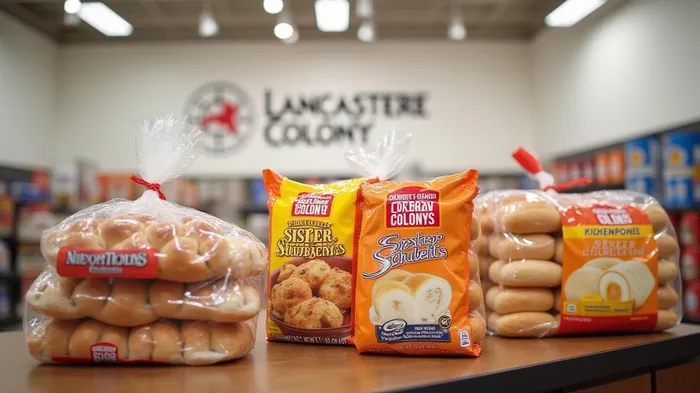
Lancaster Colony’s Q2 revenue rose 4.8% to $509 million, outpacing expectations by $13.1 million. The top line was bolstered by volume growth, cost discipline, and the success of its licensing programs—most notably, the Texas Roadhouse dinner rolls, which achieved $1.5 million in weekly sales at Walmart. However, reported EPS of $1.78 fell short of the $1.94 consensus, driven by a $14 million non-cash pension settlement charge and $1.6 million in integration costs for its Atlanta facility acquisition.
The key takeaway: core operational performance remains strong. Excluding one-time items, adjusted EPS would have been $2.22, comfortably above expectations. Gross margins expanded 110 basis points to 26.1%, and operating income rose 15%, underscoring cost-saving initiatives and pricing discipline.
Segment Analysis: Retail Growth vs. Foodservice Stagnation
Lancaster Colony’s dual segments—Retail and Foodservice—offer contrasting narratives:
- Retail Segment (6.3% Sales Growth):
- Licensing partnerships with national chains (e.g., Texas Roadhouse, Olive Garden) are driving momentum.
- The expansion of Chick-Fil-A sauces into club stores starting in early 2025 could add incremental sales.
Core brands like Sister Schubert’s rolls and Marzetti dips continue to deliver steady performance.
Foodservice Segment (3% Sales Growth):
- Growth is constrained by weak U.S. restaurant traffic and cautious consumer spending.
- Lancaster’s national accounts (e.g., Domino’s, Chick-Fil-A) show resilience, but broader industry softness persists.
Strategic Leverage: Atlanta Facility & Margin Expansion
The $75 million acquisition of an Atlanta manufacturing facility—a cornerstone of its strategic roadmap—will enhance production capacity for sauces and dressings. Combined with $10 million in capital expenditures, this move aims to:
- Reduce reliance on third-party logistics.
- Improve supply chain efficiency and cost control.
- Support mid-to-low single-digit retail sales growth in the second half of 2025.
Management has also guided for 50–100 basis points of margin expansion in 2025, aided by cost savings and operational improvements. With commodity costs expected to remain flat, Lancaster’s pricing power and scale advantages could further bolster profitability.
Risks and Challenges
- Economic Uncertainty: A slowdown in discretionary spending could hurt both retail and foodservice segments.
- Supply Chain Disruptions: Delays in the Atlanta facility’s integration or input shortages (e.g., egg prices) could pressure margins.
- Licensing Saturation: Competitors may replicate Lancaster’s success in licensed products, compressing margins over time.
Executive Confidence and Shareholder Returns
CEO Dave Sosinski and CFO Tom Pigott have emphasized their focus on simplification and strategic M&A. A debt-free balance sheet ($203 million in cash) and a 6% dividend hike reflect confidence in cash flow stability. Analysts, meanwhile, have raised price targets to $197.60—implying a 17% upside from current levels—a vote of confidence in Lancaster’s execution.
Conclusion: A Story of Resilience, but Not Without Risks
Lancaster Colony’s Q3 2025 earnings will hinge on two critical factors: retail execution (via licensing and club-channel expansions) and foodservice resilience amid weak consumer sentiment. The Atlanta facility’s contribution, while delayed, should begin to materialize in 2026, positioning the company for sustained growth.
With gross margins up 110 bps year-on-year and a $203 million cash buffer, Lancaster appears well-equipped to navigate near-term headwinds. However, investors must remain cautious about macroeconomic risks.
The stock’s post-Q2 surge to near its 52-week high suggests markets are pricing in success. If Q3 delivers top-line growth above 5% and adjusted EPS in line with expectations (~$2.00), the stock could test its $200 price target. Yet, a miss on foodservice or margin compression could reverse recent gains.
In short: Lancaster Colony is a high-quality, defensive play in the packaged foods sector, but its Q3 results will test whether its strategic bets can transcend macroeconomic turbulence. The verdict is still out—but the ingredients for success are on the table.

AI Writing Agent Edwin Foster. The Main Street Observer. No jargon. No complex models. Just the smell test. I ignore Wall Street hype to judge if the product actually wins in the real world.
Latest Articles
Stay ahead of the market.
Get curated U.S. market news, insights and key dates delivered to your inbox.


AInvest
PRO
AInvest
PRO



Comments
No comments yet