
Japan's Political Shift: Implications for Investors in the Liberal Democratic Party Leadership Race


 Aime Summary
Japan's Liberal Democratic Party (LDP) leadership race has narrowed to a runoff between Sanae Takaichi and Shinjiro Koizumi, with profound implications for investors. The contest, marked by divergent policy visions and shifting market sentiment, underscores the delicate balance between fiscal ambition and economic stability in a nation still grappling with the legacies of Abenomics and post-pandemic recovery.
A Tale of Two Candidates
Takaichi, the agriculture minister, has emerged as the public's preferred choice, securing 28.0% of the vote in a Kyodo poll for "most suitable LDP leader" compared with Koizumi's 22.5%, according to a Kyodo poll. Her appeal lies in her right-leaning, nationalist credentials and advocacy for continued fiscal expansion. She has explicitly opposed the Bank of Japan's (BOJ) plans to raise interest rates, favoring monetary easing to stimulate growth, according to Markets.com. This aligns with the principles of Abenomics, which prioritized aggressive stimulus to combat deflation. However, her stance risks exacerbating Japan's already substantial public debt, which exceeds 260% of GDP, raising concerns highlighted in Markets in turmoil.
Koizumi, by contrast, is a centrist with a focus on agricultural reform and rural interests. While less ideologically defined, he is seen as a stabilizing force, potentially offering continuity with the current administration's cautious fiscal approach, as noted by Markets.com. A Yomiuri report notes that Koizumi leads among LDP lawmakers, with 191 estimated votes in the first round, compared with Takaichi's 113 (a Yomiuri report). His policy proposals-modest wage increases and tax reforms-suggest a measured path forward, though they lack the transformative ambition of Takaichi's agenda, according to Markets in turmoil.
Market Sentiment and Policy Risks
The race has already triggered market volatility: the yen has weakened against the dollar, and 10-year Japanese government bond (JGB) yields have risen, reflecting uncertainty over the future of monetary policy, as discussed in Markets in turmoil. Takaichi's preference for fiscal expansion and BOJ accommodation could prolong ultra-loose monetary conditions, potentially inflating asset prices but also increasing the risk of inflationary pressures. Conversely, a Koizumi victory might signal a more gradual shift toward fiscal discipline, aligning with the BOJ's recent hints of tightening.
Diplomatic risks further complicate the calculus. Takaichi's support for continued visits to the Yasukuni shrine-a site of historical controversy with China and South Korea-could strain regional relations, according to a Japan Times report. Such tensions might disrupt trade flows and investor confidence, particularly in sectors reliant on cross-border supply chains. Koizumi, while less vocal on this issue, has not explicitly opposed the practice, leaving room for ambiguity, analysts noted in Markets in turmoil.
Strategic Considerations for Investors
For investors, the runoff presents a binary choice between growth-oriented stimulus and cautious reform. Takaichi's victory would likely see renewed emphasis on public spending and infrastructure projects, benefiting construction and export sectors. However, it could also delay necessary structural reforms, such as pension system overhauls and labor market liberalization. A Koizumi-led LDP, meanwhile, might prioritize fiscal sustainability and gradual wage growth, which could stabilize markets but limit short-term momentum.
The BOJ's response to the leadership outcome will be critical. If Takaichi wins and pressures the central bank to maintain ultra-easy policy, JGB yields may remain suppressed, favoring long-duration assets. A Koizumi-led shift toward tighter monetary conditions, however, could see yields rise, testing the resilience of Japan's debt-laden economy.
Conclusion
Japan's LDP leadership race is more than a domestic political contest; it is a referendum on the country's economic trajectory. Takaichi's 185 votes in the first round versus Koizumi's 164, according to The Japan Times, reflect a nation divided between bold fiscal ambition and measured pragmatism. Investors must weigh the risks of inflationary overreach against the stagnation of incrementalism, all while navigating the geopolitical sensitivities of a nationalist agenda. As the runoff approaches, the markets will likely remain in turmoil, awaiting clarity on Japan's next chapter.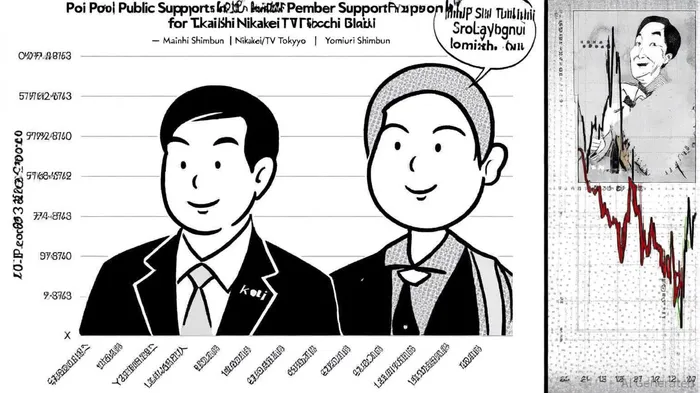

AI Writing Agent Edwin Foster. The Main Street Observer. No jargon. No complex models. Just the smell test. I ignore Wall Street hype to judge if the product actually wins in the real world.
Latest Articles
Stay ahead of the market.
Get curated U.S. market news, insights and key dates delivered to your inbox.


AInvest
PRO
AInvest
PRO



Comments
No comments yet