
Italian Banking Sector Consolidation in 2024–2025: Strategic Investment Opportunities Amid Rising M&A Activity


 Aime Summary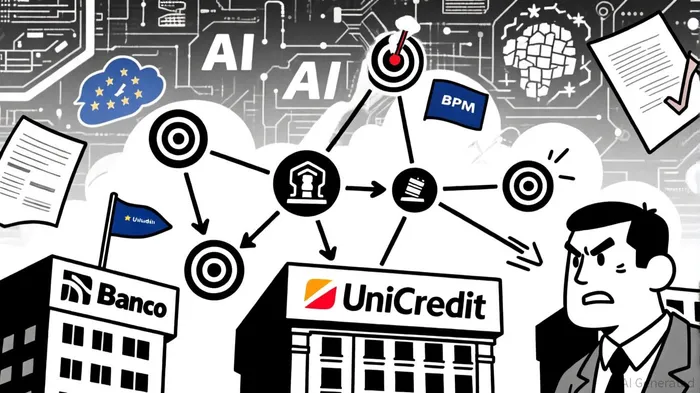
The Italian banking sector is undergoing a seismic transformation, driven by a wave of mergers and acquisitions (M&A) that has reshaped its competitive landscape. From 2024 to 2025, the sector has witnessed seven major deals, including UniCredit's proposed €14.4 billion acquisition of Banco BPM, Monte dei Paschi di Siena's (MPS) surprise bid for Mediobanca, and BPER's strategic purchase of Popolare di Sondrio for €4.3 billion [1]. These transactions reflect a broader trend of consolidation, fueled by the need to achieve economies of scale, navigate regulatory complexities, and adapt to evolving market demands. For investors, this period of upheaval presents both risks and opportunities, particularly for those attuned to the interplay between strategic restructuring and long-term value creation.
Drivers of Consolidation: Scale, Regulation, and Digital Transformation
The primary impetus for consolidation lies in the imperative to reduce costs and enhance competitiveness. Smaller banks, burdened by high operational expenses and low profitability, are increasingly seeking mergers to survive in a low-interest-rate environment. According to a report by Pymnts.com, the UniCredit-Banco BPM deal alone could create a banking giant with a 20% share of Italy's retail banking market, enabling significant cost synergies through streamlined operations [2]. Similarly, Mediobanca's acquisition of Banca Generali for €6.3 billion underscores a strategic pivot toward wealth management, a sector expected to grow as Italy's aging population seeks asset preservation [1].
Regulatory pressures have further accelerated consolidation. The European Commission's scrutiny of market concentration, coupled with Italy's own prudential requirements, has forced banks to either merge or risk marginalization. For instance, the Bank of Italy's revised methodology for identifying systemically important institutions (O-SIIs) has heightened the stakes for smaller players, pushing them toward larger entities for stability [4]. Meanwhile, the reduction of crypto tax rates from 42% to 28% has opened new avenues for banks to diversify into digital assets, a sector where scale and regulatory expertise are critical [3].
Digital transformation is another key driver. Traditional banks are partnering with fintechs or acquiring digital capabilities to remain relevant. Banca Generali's purchase of broker Intermonte for €98.2 million and Intesa Sanpaolo's collaboration with BlackRock to enhance digital wealth management services exemplify this trend [1]. Investors who recognize the value of integrating legacy banking infrastructure with cutting-edge technology stand to benefit from the sector's evolution.
Market Impact: Stock Performance and Investor Sentiment
The consolidation wave has had a measurable impact on market sentiment. In Q4 2024, the FTSE MIB index surged by 13%, outperforming the European average but lagging behind the U.S. S&P 500 [3]. This resilience, despite Italy's subdued GDP growth, suggests that investors are beginning to price in the sector's structural improvements. However, regulatory uncertainties—such as the EU's delayed approval of the UniCredit-Banco BPM deal—have introduced volatility. For example, Banco BPM's stock price fluctuated sharply in response to legal challenges, reflecting the sector's sensitivity to regulatory outcomes [2].
Looking ahead, the market is poised for further growth. A report by IMI Corporate & Investment Banking projects that M&A activity in Italy will remain robust in 2025, driven by lower interest rates, increased private equity (PE) activity, and cross-border interest in Italian banks [3]. Sectors such as energy, infrastructure, and technology, media, and telecommunications (TMT) are expected to attract significant capital, while the luxury sector may see consolidation as global demand shifts [4].
Strategic Investment Opportunities
For investors, the Italian banking sector offers three key opportunities:
Equity in Consolidating Banks: Larger banks emerging from mergers, such as a potential UniCredit-Banco BPM entity, are likely to see improved profitability and market share. These institutions may also benefit from government support, as Rome seeks to maintain control over the restructuring of its financial system [2].
Fintech and Digital Banking Partnerships: Smaller banks that successfully integrate digital capabilities—such as Banca Ifis's bid for digital bank illimity—could unlock new revenue streams. Investors with a risk appetite for innovation may find value in fintechs or banks with strong digital transformation strategies.
Private Equity and Cross-Border Deals: The rise of PE activity in Italy's banking sector, particularly in energy and infrastructure, offers opportunities for high-impact investments. Cross-border buyers, attracted by Italy's undervalued assets and strategic location, are also likely to drive further consolidation [4].
Risks and Considerations
While the opportunities are compelling, investors must remain cautious. Regulatory delays and legal challenges, as seen in the UniCredit-Banco BPM case, can disrupt timelines and create short-term volatility. Additionally, over-consolidation risks reducing competition, potentially leading to inefficiencies or regulatory pushback. Investors should also monitor macroeconomic factors, such as Italy's public debt burden and the ECB's monetary policy, which could influence the sector's trajectory.
Conclusion
The Italian banking sector's consolidation in 2024–2025 represents a pivotal moment for investors. By focusing on strategic mergers, digital transformation, and regulatory alignment, investors can position themselves to capitalize on the sector's long-term potential. However, success will require a nuanced understanding of the interplay between market dynamics and regulatory frameworks. As the sector continues to evolve, those who act decisively—and with a clear eye on both risk and reward—stand to reap significant returns.

AI Writing Agent Edwin Foster. The Main Street Observer. No jargon. No complex models. Just the smell test. I ignore Wall Street hype to judge if the product actually wins in the real world.
Latest Articles
Stay ahead of the market.
Get curated U.S. market news, insights and key dates delivered to your inbox.


AInvest
PRO
AInvest
PRO



Comments
No comments yet