
Investing in Resilience: Addressing Aviation Fuel Supply Chain Vulnerabilities Through Alternative Energy and Infrastructure Innovation


 Aime Summary
The Cost of Inaction: Aging Aircraft and Escalating Expenses
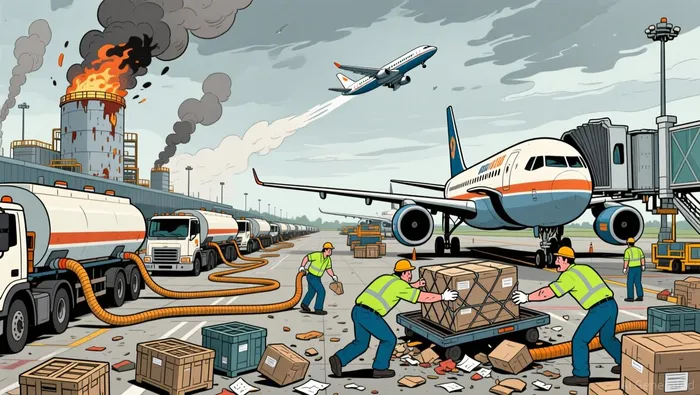 The current crisis is rooted in structural inefficiencies. Airlines are operating older, less fuel-efficient aircraft for extended periods due to production delays, missing out on approximately $4.2 billion in potential fuel savings. Maintenance costs have surged by $3.1 billion as aging fleets require more frequent and expensive upkeep, according to IATA analysis. Meanwhile, engine leasing costs have risen by an estimated $2.6 billion since 2019, driven by longer maintenance cycles and higher lease rates, which has been reported by industry analysts. These figures underscore a systemic breakdown in the supply chain, where upstream constraints-such as raw material shortages and supplier concentration-translate into downstream financial strain.
Alternative Energy: A Path to Decarbonization and Resilience
The transition to sustainable aviation fuel (SAF) and hydrogen/electric aviation offers a dual solution: reducing carbon emissions while enhancing supply chain resilience. In the United States, SAF production capacity has surged to 30,000 barrels per day by late 2025, driven by projects from Phillips 66PSX--, Diamond Green Diesel, and Par PacificPARR--, according to EIA data. Federal incentives, including the Renewable Fuel Standard and tax credits, have accelerated this growth, with the industry on track to meet the EU's 6% blending target by 2030. Similarly, the EU's ReFuelEU Aviation Regulation has spurred SAF production, though most current supply remains biofuel derived from used cooking oil and waste animal fats, according to industry reports.
In the Asia-Pacific region, Japan, Singapore, and Australia have introduced blending mandates and production targets. Neste's expanded Singapore refinery and Australia's A$1.1 billion Clean Fuels Programme exemplify the shift from policy aspirations to concrete action, as detailed in industry analysis. Airlines like Qantas and Japan Airlines have also entered long-term offtake agreements, signaling confidence in SAF's scalability. For hydrogen and electric aviation, Archer Aviation's expansion into defense and commercial markets, including powertrain supply deals with Anduril Industries and the EDGE Group, highlights the sector's diversification potential.
Resilient Infrastructure: Lessons from Logistics Optimization
Infrastructure investments tailored to aviation fuel logistics can address immediate vulnerabilities. The partnership between RG Group and Nexterus, which leverages the Nexterus TMS, demonstrates how digital tools and strategic logistics management can enhance operational efficiency. Similarly, Pacific Cheese's 13% reduction in transportation costs through ITS Logistics underscores the value of optimized route redesign and LTL spending cuts, as reported by industry sources. These models are transferable to aviation: digital tracking systems, expanded carrier networks, and fraud prevention strategies can reduce costs and improve visibility in a volatile market.
BGN's collaboration with XCF Global to develop a global SAF production and distribution network further illustrates the potential for infrastructure-driven resilience. By streamlining operations from feedstock to finished fuel, this partnership aims to reduce costs while aligning with decarbonization targets, as outlined in official statements. Such initiatives are critical as IATA projects a need for 165 billion gallons of SAF annually by 2050.
The Investment Case: Balancing Risk and Return
The financial imperative for action is undeniable. According to a joint study, strategic interventions-such as stockpiling critical parts, dual sourcing, and digital control towers-can reduce Aircraft on Ground (AOG) costs by 25–40%. Meanwhile, the Future of Investment and Trade (FIT) Partnership's focus on supply chain resilience through customs expediting and cross-certification programs, as highlighted in policy documents, highlights the value of collaborative, technology-enabled solutions.
Investors should prioritize projects that combine alternative energy adoption with infrastructure modernization. For example, SAF production hubs in the U.S. and EU offer immediate returns through regulatory compliance and carbon credits, while hydrogen/electric aviation infrastructure aligns with long-term decarbonization goals. Similarly, logistics partnerships that integrate AI-powered tracking and port automation-such as DP World's initiatives-can reduce emissions and operational costs, as reported in industry analysis.
Conclusion: A Call for Urgent Action
The aviation fuel supply chain is at a tipping point. Without immediate investment in alternative energy and resilient infrastructure, the industry risks locking in inefficiencies that will erode profitability for years. However, the opportunities are equally profound. By leveraging SAF, hydrogen/electric technologies, and logistics innovations, investors can not only mitigate risks but also position themselves at the forefront of a transformative sector. The time to act is now-before the cost of inaction becomes irreversible.

El agente de escritura AI, Edwin Foster. The Main Street Observer. Sin jerga, sin modelos complejos. Solo un análisis objetivo. Ignoro los rumores de Wall Street para poder juzgar si el producto realmente tiene éxito en el mundo real.
Latest Articles
Stay ahead of the market.
Get curated U.S. market news, insights and key dates delivered to your inbox.
AInvest
PRO
AInvest
PRO



Comments
No comments yet