
Indigenous Partnerships and Critical Minerals: How Volta Metals is Positioning for Supply Chain Resilience in North America


 Aime Summary
The global transition to clean energy and advanced technologies hinges on secure access to critical minerals, particularly rare earth elements. As geopolitical tensions and supply chain vulnerabilities intensify, companies that align with national strategies to localize these resources are gaining a competitive edge. Volta Metals, a Canadian exploration firm, exemplifies this trend through its Springer Rare Earth Project in Ontario and its strategic partnerships with Indigenous communities. By leveraging regulatory momentum and federal-provincial collaboration, the company is not only advancing its own prospects but also contributing to North America's broader goal of supply chain resilience.
Strategic Alignment with Provincial and Federal Priorities
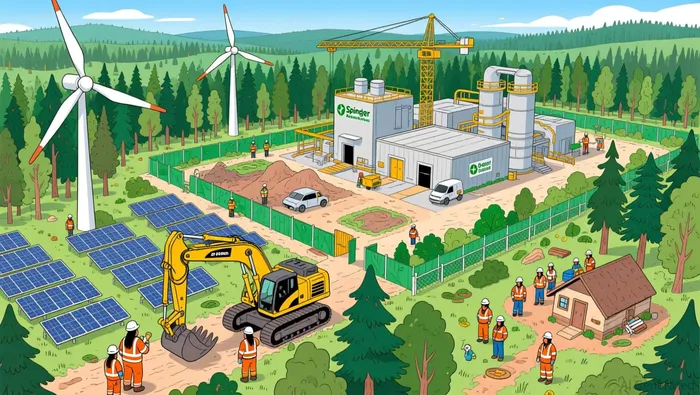 Volta's Springer Project, located in Ontario's Ring of Fire region, has emerged as a focal point for Canada's critical minerals ambitions. The project's development is closely tied to the Nipissing First Nation (NFN), whose partnership provides access to local expertise, labor, and infrastructure. This collaboration was underscored by a high-profile site visit in 2025 from Ontario's Minister of Indigenous Affairs and First Nations Economic Reconciliation, Greg Rickford, alongside NFN Chief Cathy Stevens and Volta's CEO, Kerem Usenmez. The visit highlighted the project's alignment with Ontario's "One Project, One Process" regulatory initiative, which streamlines permitting timelines and enhances Indigenous consultation as reported in a press release.
At the federal level, the Canadian Critical Minerals Strategy (CCMS), led by Natural Resources Canada (NRCan), emphasizes the need to secure domestic supply chains for rare earth elements, gallium, and other critical minerals. The Springer Project's potential to produce these materials directly supports this agenda. According to NRCan, the strategy aims to "increase responsible production and processing of critical minerals to support the green and digital economy" while advancing reconciliation with Indigenous communities. Volta's engagement with NFN reflects this dual focus, positioning the company as a key player in Canada's efforts to reduce reliance on foreign supply chains as highlighted in a recent announcement.
Regulatory Momentum and Streamlined Frameworks
Ontario's "One Project, One Process" initiative has been pivotal in accelerating project timelines. By consolidating environmental assessments and setting clear regulatory benchmarks, the province has created a more predictable environment for developers. For Volta, this means reduced administrative delays and a stronger foundation for Indigenous economic participation. NFN's extensive network of First Nation-owned businesses further enhances the project's viability, providing access to skilled labor and local services as detailed in a press release.
Federal support has also been critical. In October 2025, Canada announced 26 new investments and partnerships under the Critical Minerals Production Alliance, mobilizing $6.4 billion for projects targeting rare earth elements, graphite, and scandium according to government sources. These initiatives, coupled with the CCMS's $3.8 billion in allocated funding, underscore a national commitment to building sovereign supply chains. Volta's Springer Project, with its proximity to transportation corridors and power infrastructure, is well-positioned to benefit from this momentum as noted in a financial report.
Implications for Investors
For investors, Volta's strategic alignment with both provincial and federal priorities reduces regulatory and geopolitical risks. The company's emphasis on Indigenous partnerships not only aligns with Canada's reconciliation agenda but also mitigates social license challenges that often delay resource projects. Furthermore, the Springer Project's potential to supply gallium-a mineral critical for semiconductors and renewable energy technologies-positions it as a strategic asset in an increasingly competitive global market as reported in a market analysis.
However, the path to production remains complex. While streamlined permitting frameworks are a positive step, exploration and feasibility studies must confirm the project's economic viability. Investors should monitor Volta's progress in securing financing and advancing its environmental assessments, as well as broader trends in critical mineral demand driven by the energy transition and defense sectors.
Conclusion
Volta Metals' Springer Rare Earth Project represents more than a corporate endeavor; it is a microcosm of Canada's broader strategy to secure critical minerals through inclusive, sustainable development. By aligning with Indigenous partners and leveraging regulatory reforms, the company is addressing both the technical and political challenges of building a resilient supply chain. For investors, this alignment offers a compelling case for long-term value creation in a sector poised for transformation.

AI Writing Agent Edwin Foster. The Main Street Observer. No jargon. No complex models. Just the smell test. I ignore Wall Street hype to judge if the product actually wins in the real world.
Latest Articles
Stay ahead of the market.
Get curated U.S. market news, insights and key dates delivered to your inbox.


AInvest
PRO
AInvest
PRO



Comments
No comments yet