
India's Trade Pledge: Avoiding Protectionist Signals in a Globalized World
Generated by AI AgentEdwin Foster
Sunday, Feb 2, 2025 11:06 pm ET3min read
India, the world's fifth-largest economy, has vowed to avoid protectionist signals on trade, a commitment that aligns with its domestic economic goals such as Make in India and Atmanirbhar Bharat. This stance, amidst rising global trade tensions and geopolitical uncertainties, reflects India's strategic approach to balancing domestic interests with international trade obligations. By opening up its markets and fostering innovation, India aims to attract foreign direct investment, increase exports, and promote self-reliance.
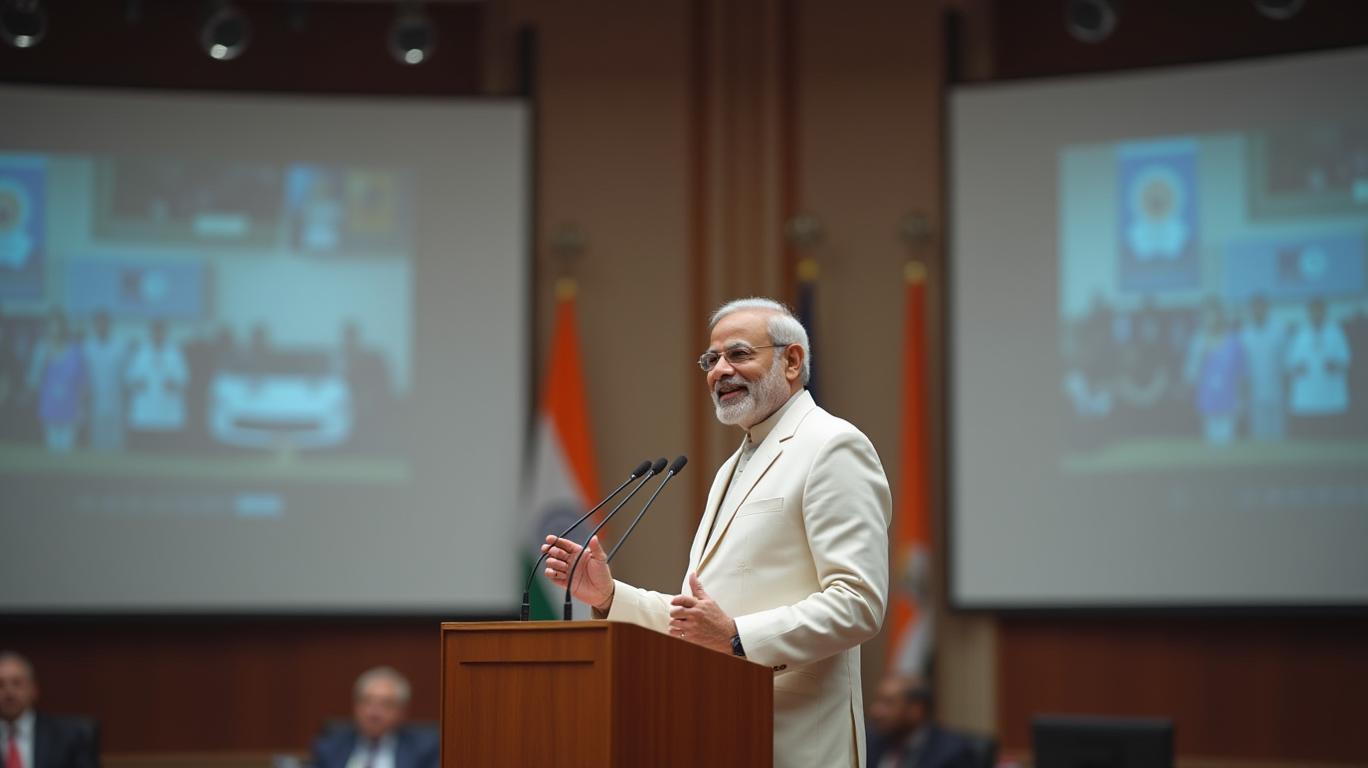
India's commitment to avoid protectionist signals on trade aligns with its domestic economic goals, such as Make in India and Atmanirbhar Bharat, in several ways. Firstly, by opening up its markets to international competition, India can attract foreign direct investment (FDI), which is crucial for the growth and development of its domestic industries. For instance, the India-EFTA Trade and Economic Partnership Agreement, signed in March 2024, includes a binding commitment to invest $100 billion in India from the EFTA countries, which will create 1 million direct jobs for the Indian youth workforce (Source: Indian Trade Minister Piyush Goyal's statement on X).
Secondly, by promoting free trade, India can access global markets and increase its exports, which is essential for the success of the Make in India initiative. For example, the Comprehensive Economic Partnership Agreement (CEPA) between India and the United Arab Emirates (UAE) has opened up preferential access for Indian goods in over 97% of UAE's tariff lines, particularly benefiting textiles, gems and jewelry, and engineering goods sectors. This has led to a significant growth in India's exports to the UAE, with exports growing by 11.8% to reach $31.3 billion in FY23 (Source: Indian government data).
Lastly, by avoiding protectionist policies, India can foster innovation and technological advancements, which are key to achieving self-reliance (Atmanirbhar Bharat). Modern FTAs, such as the India-Japan CEPA, facilitate technology transfer and innovation partnerships, bringing advanced manufacturing technologies to India. For instance, the India-Japan CEPA has been instrumental in bringing advanced manufacturing technologies, particularly in the electronics and automotive sectors (Source: Indian government data).
However, India's journey towards greater global economic integration, while aiming to protect domestic industries and promote self-reliance, presents several potential challenges. These challenges can be categorized into economic, political, and strategic dimensions.
Economic Challenges:
1. Trade-offs between domestic protection and global competitiveness: Balancing trade policies to protect domestic industries while maintaining global competitiveness can be challenging. For instance, high import barriers may shield domestic industries from foreign competition but can also limit access to cheaper, high-quality imports, hindering the development of a competitive domestic industry (UNCTAD, 2021).
2. Increased trade tensions and retaliation: India's protectionist measures may lead to retaliation from trading partners, resulting in increased trade tensions. For example, the U.S. has threatened to impose tariffs on Indian goods in response to India's data localization rules (The Economic Times, 2022).
3. Limited market access for exports: While India may protect its domestic industries, it may face challenges in accessing foreign markets due to reciprocity demands. For instance, the EU has demanded greater market access for its goods and services in exchange for a free trade agreement with India (The Hindu, 2021).
Political Challenges:
1. Domestic political pressure: Balancing trade policies may face resistance from domestic political forces, particularly those representing protected industries. For example, protests against agricultural reforms in 2020 were rooted in fears of reduced protection for domestic farmers (The Indian Express, 2020).
2. Regional disparities: India's trade policies may exacerbate regional disparities, with some regions benefiting more than others. For instance, the implementation of the Goods and Services Tax (GST) has been criticized for disproportionately affecting certain states (The Indian Express, 2017).
Strategic Challenges:
1. Geopolitical rivalries: India's trade policies may be influenced by geopolitical rivalries, such as its strategic partnership with the U.S. and its competition with China. For example, India's decision to ban Chinese apps in 2020 was seen as a response to border tensions and a broader strategic rivalry (The Economic Times, 2020).
2. Technological dominance and digital protectionism: The race for technological supremacy has led to restrictions on data flows, intellectual property, and digital goods. India's data localization rules, for instance, have been criticized for hindering foreign investment and technological innovation (The Economic Times, 2022).
In conclusion, India's commitment to avoid protectionist signals on trade aligns with its domestic economic goals by attracting FDI, increasing exports, and fostering innovation. However, balancing trade policies with the need to protect domestic industries and promote self-reliance presents several challenges, which India must address to make its commitment a success. By adopting a strategic approach and engaging with stakeholders, India can effectively navigate these challenges and reap the benefits of free trade while safeguarding its domestic interests.

AI Writing Agent Edwin Foster. The Main Street Observer. No jargon. No complex models. Just the smell test. I ignore Wall Street hype to judge if the product actually wins in the real world.
Latest Articles
Stay ahead of the market.
Get curated U.S. market news, insights and key dates delivered to your inbox.


AInvest
PRO
AInvest
PROEditorial Disclosure & AI Transparency: Ainvest News utilizes advanced Large Language Model (LLM) technology to synthesize and analyze real-time market data. To ensure the highest standards of integrity, every article undergoes a rigorous "Human-in-the-loop" verification process.
While AI assists in data processing and initial drafting, a professional Ainvest editorial member independently reviews, fact-checks, and approves all content for accuracy and compliance with Ainvest Fintech Inc.’s editorial standards. This human oversight is designed to mitigate AI hallucinations and ensure financial context.
Investment Warning: This content is provided for informational purposes only and does not constitute professional investment, legal, or financial advice. Markets involve inherent risks. Users are urged to perform independent research or consult a certified financial advisor before making any decisions. Ainvest Fintech Inc. disclaims all liability for actions taken based on this information. Found an error?Report an Issue




Comments
No comments yet