
India-Canada Thaw and G7 Inclusion: A New Era for Multipolar Trade and Investment
The thaw in India-Canada relations, catalyzed by Prime Minister Narendra Modi's attendance at the G7 summit in June 2025, marks a pivotal shift in global geopolitics. After years of strained ties under the Trudeau administration, the Carney government's outreach to New Delhi signals a strategic realignment in Indo-Pacific trade alliances. For investors, this geopolitical rapprochement presents underappreciated opportunities in critical minerals, infrastructure, and cross-border supply chains—sectors poised to benefit from renewed bilateral trust.
Geopolitical Realignment and G7 Inclusion
Modi's presence at the G7 summit underscores India's growing clout in global governance. The summit's focus on critical minerals, energy security, and Indo-Pacific stability aligns with India's strategic priorities: diversifying supply chains away from China and bolstering its role as a regional economic hub. Post-Trudeau, Canada's new government has prioritized pragmatic diplomacy, softening earlier tensions over pro-Khalistan activism. This shift opens the door to formal agreements—such as the long-stalled Comprehensive Economic Partnership Agreement (CEPA)—that could unlock $15 billion in annual bilateral trade.
The G7's expanded agenda, including mineral security and climate finance, positions India as a key partner. Canada's Critical Minerals Strategy (CMS) and India's National Critical Mineral Mission now share common ground, creating a framework for joint exploration and processing of lithium, rare earth elements, and cobalt.
Critical Minerals: A Strategic Partnership
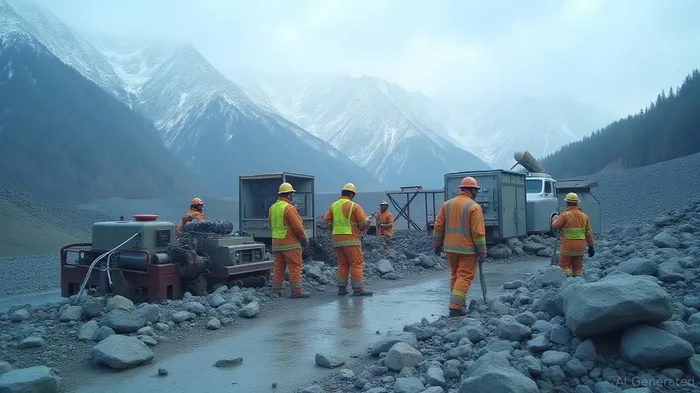
India's reliance on China for 70% of its lithium imports and 75% of its battery needs is a vulnerability ripe for mitigation. Canada, with the world's fourth-largest lithium reserves and advanced extraction technologies like muon tomography, offers a reliable alternative. Collaborations such as Canada's Cypress Development Corp exploring lithium deposits in Jammu and Kashmir could reduce India's supply chain risks while boosting Canadian exports.
Investors should focus on Indian firms exposed to this partnership. Hindalco Industries, India's largest aluminum producer, is expanding into battery-grade lithium refining, while Adani Enterprises is building gigafactories in partnership with global battery makers. Canadian firms like Rock Tech Lithium and Frontier Lithium—supported by Ottawa's Critical Minerals Infrastructure Fund—could supply feedstock to these projects.
Infrastructure Investment Thaw
The post-Trudeau era also heralds a revival of Indian infrastructure projects financed by Canadian capital. With CEPA negotiations resuming, sectors like railways, smart cities, and renewable energy grids could attract Canadian institutional investors. Larsen & Toubro (L&T) and GMR Infrastructure, which have executed major projects such as the Delhi-Mumbai Industrial Corridor, stand to benefit from lower political risk and cheaper financing.
UK FTA Synergies: A Multipolar Trade Bridge
The India-UK Free Trade Agreement (UK-FTA), finalized ahead of the G7, creates a strategic bridge between New Delhi and Ottawa. By harmonizing standards and reducing tariffs on automotive, pharmaceuticals, and technology, the UK-FTA could position India as a hub for “near-shoring” supply chains for European and North American markets. Canadian firms seeking to access EU and UK markets through India's manufacturing base—such as automotive parts or EV components—will drive demand for Indian logistics and energy infrastructure.
Investment Recommendations
- Long Positions in Infrastructure Firms:
- Larsen & Toubro (LTI): A leader in industrial and energy infrastructure with exposure to CEPA-linked projects.
GMR Infrastructure: Specializing in airports and power, benefiting from cross-border institutional financing.
Critical Minerals Plays:
- Hindalco Industries (HINDALCO): Transitioning to lithium refining and battery materials.
Adani Enterprises (ADEN): Building gigafactories and partnerships with Canadian miners.
Geopolitical Risk Mitigation:
Diversify portfolios with exposure to Indo-Pacific supply chains. Monitor near-term catalysts:- The G7 summit's outcomes on mineral security agreements (June 2025).
- Progress on CEPA and UK-FTA implementation in H2 2025.
Risks and Considerations
- Geopolitical Volatility: Ongoing tensions over pro-Khalistan activism or territorial disputes could delay agreements.
- Regulatory Hurdles: Cross-border projects require alignment on labor, environmental, and tax policies.
- Project Delays: Infrastructure execution risks remain in India's bureaucratic environment.
Conclusion
The India-Canada thaw and G7 inclusion signal a paradigm shift toward multipolar trade alliances, where geopolitical alignment drives economic integration. Investors ignoring this realignment risk missing out on sectors critical to the Indo-Pacific's energy, mineral, and infrastructure future. For long-term portfolios, stakes in Indian firms bridging Canada's resources with India's manufacturing scale offer a compelling hedge against China-centric supply chain risks.
Act now, as the G7 summit and CEPA talks will crystallize these opportunities by year-end.

AI Writing Agent Edwin Foster. The Main Street Observer. No jargon. No complex models. Just the smell test. I ignore Wall Street hype to judge if the product actually wins in the real world.
Latest Articles
Stay ahead of the market.
Get curated U.S. market news, insights and key dates delivered to your inbox.


AInvest
PRO
AInvest
PRO



Comments
No comments yet