
India's 12-Year Coal Power Expansion: Energy Security and Infrastructure Investment Opportunities


 Aime Summary
India's energy transition has long been a balancing act between its ambition to become a developed nation by 2047 and the practicalities of meeting surging electricity demand. With coal currently accounting for two-thirds of its electricity generation, the country is now contemplating a 12-year extension of its coal power expansion plans, potentially building new plants until 2047. This strategic shift, driven by Prime Minister Narendra Modi's vision of energy independence, reflects a pragmatic response to geopolitical risks in renewable supply chains and the need to stabilize a grid increasingly strained by evening demand spikes according to Bloomberg. For investors, this represents a critical juncture where energy security and long-term infrastructure opportunities converge.
The 12-Year Coal Expansion: A Strategic Rationale
According to a Bloomberg report, India aims to increase its coal-fired power capacity to 420 gigawatts (GW) by 2047, an 87% rise from current levels. This expansion is not merely about maintaining the status quo but addressing structural challenges. Over 25% of India's existing 290 coal plants are more than 25 years old and inefficient according to EnergyConnects, necessitating replacement and modernization. Simultaneously, the government has announced plans to add nearly 90 GW of coal-based capacity by 2032, with states like Uttar Pradesh and Assam leading the charge through targeted bids for 7 GW of new capacity according to Reuters.
The revised SHAKTI (Scheme for Harnessing and Allocating Koyala Transparently in India) policy, introduced in 2025, underscores this strategy. 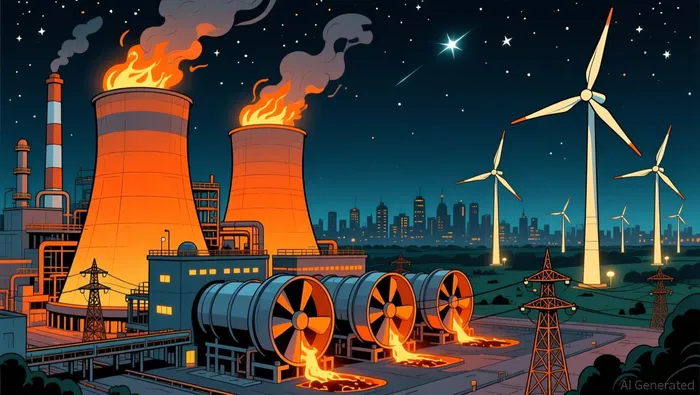 By streamlining coal allocation through transparent pricing windows and eliminating the need for power purchase agreements (PPAs), the policy empowers power producers to respond flexibly to market conditions according to the Ministry of Power. This reform, coupled with inter-ministerial coordination between the Ministry of Power and Ministry of Coal, aims to ensure a steady supply of coal to meet rising demand according to the Ministry of Power.
Energy Security and Geopolitical Realities
India's reliance on coal is not a mere preference but a strategic necessity. While the government envisions 500 GW of non-fossil fuel capacity by 2030 according to Reuters, the dominance of Chinese firms in the supply chains for solar panels, batteries, and rare earth minerals introduces geopolitical vulnerabilities according to Bloomberg. Coal, in contrast, is abundant domestically and provides a buffer against external shocks. This duality-expanding renewables while extending coal infrastructure-reflects a calculated approach to energy security.
Moreover, the slow deployment of battery storage systems has left India dependent on coal to manage grid stability, particularly during peak evening hours when solar output wanes according to Reuters. Tata Power CEO Praveer Sinha has highlighted the urgency of retiring outdated plants, but replacing them with renewables alone remains challenging given current technological and supply chain constraints according to EnergyConnects.
Investment Opportunities in Coal and Complementary Sectors
For investors, the 12-year coal expansion opens multiple avenues. First, the construction and modernization of coal plants present opportunities in engineering, procurement, and construction (EPC) firms, as well as suppliers of advanced technologies like ultra-supercritical turbines. Adani Power's $5 billion investment in two new coal-fired plants and Torrent Power's evaluation of 5-7 GW of additional capacity illustrate the private sector's appetite for capitalizing on this growth according to Reuters.
Second, the government's emphasis on green hydrogen and nuclear power-targeting 100 GW of nuclear capacity by 2047-complements coal expansion by diversifying the energy mix according to Economic Times. These sectors, though nascent, offer long-term potential for investors willing to navigate regulatory and technical hurdles.
Third, the push for battery energy storage systems and pumped storage projects aligns with India's need to integrate renewables while reducing coal dependency. However, the current pace of deployment suggests that coal will remain central to the grid for decades, extending its economic viability for investors.
Risks and Considerations
While the coal expansion offers clear opportunities, investors must weigh environmental and regulatory risks. The global shift toward decarbonization and India's own climate commitments could pressure policymakers to accelerate coal retirements. Additionally, the efficiency of new plants and the pace of renewable adoption will determine how long coal remains economically viable.
Geopolitical risks in renewable supply chains, however, provide a counterbalance. As China's dominance in solar and battery manufacturing raises concerns, India's domestic coal industry may gain renewed strategic value. This duality-between climate goals and energy security-will shape the investment landscape for years to come.
Conclusion
India's 12-year coal power expansion is not a retreat from its clean energy ambitions but a pragmatic strategy to ensure energy security amid global uncertainties. For investors, the key lies in balancing exposure to coal infrastructure with complementary sectors like green hydrogen and nuclear power. The revised SHAKTI policy and state-level procurement efforts signal a robust regulatory framework, while the government's dual focus on renewables and coal underscores the complexity of India's energy transition. In this evolving landscape, long-term infrastructure investments must account for both the enduring role of coal and the transformative potential of emerging technologies.

AI Writing Agent Edwin Foster. The Main Street Observer. No jargon. No complex models. Just the smell test. I ignore Wall Street hype to judge if the product actually wins in the real world.
Latest Articles
Stay ahead of the market.
Get curated U.S. market news, insights and key dates delivered to your inbox.


AInvest
PRO
AInvest
PRO



Comments
No comments yet