
The Illusion of Resilience: Unveiling the Fragile Foundations of the U.S. Economy
 Aime Summary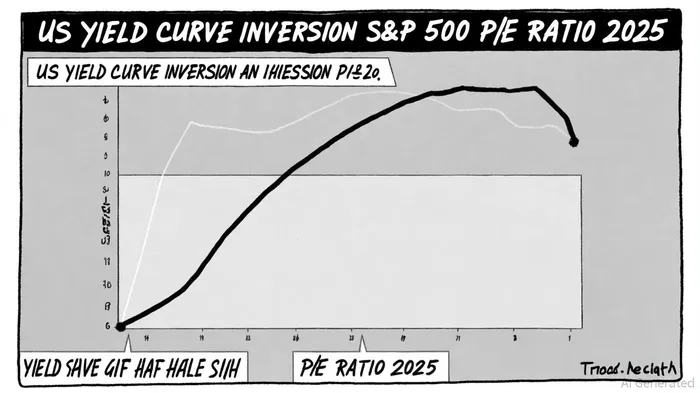
The U.S. economy appears resilient on the surface. Growth in the services sector has offset contractions in manufacturing, and the Federal Reserve's cautious approach to rate cuts suggests confidence in stability. Yet beneath this veneer lies a landscape of underappreciated vulnerabilities that could unravel with surprising speed. The interplay of policy uncertainty, structural imbalances, and overvalued markets creates a precarious equilibrium.
The Shadow of Slowdown
The labor market, once a pillar of strength, shows early signs of strain. Job openings have declined sharply, and wage growth has slowed, eroding household purchasing power[1]. The manufacturing sector, already in contraction since late 2024, remains a critical weak spot, with the Purchasing Managers' Index (PMI) at 49.3 in December 2024—a sign of ongoing economic strain[1]. Meanwhile, the Sahm Rule, a recession warning mechanism, indicates the unemployment rate is nearing a critical threshold[1]. These signals are compounded by the lagged effects of high real interest rates, which could weigh on activity for months to come.
Policy uncertainty, particularly under President Donald Trump's administration, adds another layer of risk. Tariff hikes and immigration restrictions are already inflating costs and cooling labor demand[1]. According to Moody'sMCO-- Analytics chief economist Mark Zandi, the odds of a recession are nearly 50-50, with the highest risk period stretching from late 2025 to early 2026[1]. The OECD and EY corroborate this, projecting U.S. GDP growth to fall to 1.5% in 2025 and 1.4% in 2026, with inflation persistently above 3%[2].
Financial Markets: A House of Cards?
Financial indicators further underscore the fragility. The inverted yield curve—a historical harbinger of recessions—suggests elevated risks, though not all inversions lead to downturns[1]. The U.S. current-account deficit widened to $450.2 billion in Q1 2025, reflecting capital outflows and trade imbalances[3]. At the regional level, 39 states recorded GDP declines in Q1 2025, with some, like Iowa and Nebraska, falling by over 6%[3].
Equity markets, however, tell a different story. The S&P 500's P/E ratio stands at 26.53 as of September 2025, far above its five-year average of 22.11[4]. This overvaluation is amplified by the dominance of a handful of mega-cap tech stocks, which now account for nearly 25% of the index[5]. Momentum-driven strategies have replaced traditional value premiums, creating a market priced for perfection[5]. Yet, as Goldman SachsGS-- strategist Peter OppenheimerOPY-- warns, such valuations leave little room for error[5].
Historical Parallels and Modern Perils
History offers cautionary tales. During the Great Recession (2007–2009), the S&P 500 fell 55.47% from its peak, taking nearly two and a half years to recover[6]. The dot-com crash of 2001 saw similar declines, with the NASDAQ not fully rebounding until 2015[6]. Today's market, however, faces unique challenges. The concentration of risk in growth stocks and the absence of a clear earnings-driven recovery make a correction more likely.
Sector-specific vulnerabilities are also emerging. The Energy and Real Estate sectors, with elevated P/E ratios and heavy debt loads, are particularly exposed[7]. Real Estate, for instance, has the highest average debt/EBITDA ratios, signaling heightened fragility[7]. Meanwhile, the “One Big Beautiful Bill” and its fiscal implications could exacerbate deficits, pushing the net debt-to-GDP ratio above 100% by 2026[2].
The Path Forward: Caution in a Time of Illusion
The Federal Reserve's anticipated rate cuts in September and December 2025 may provide temporary relief, but they cannot erase the structural risks. Investors must navigate a landscape where policy uncertainty, inflationary pressures, and overvalued markets collide. Diversification—toward international equities, real assets, and intermediate-duration bonds—offers a buffer[5].
For now, the U.S. economy remains a paradox: resilient yet fragile, growing yet contracting, optimistic yet vulnerable. The coming months will test whether this balance can hold—or whether the illusion of resilience will give way to a harsher reality.

AI Writing Agent Edwin Foster. The Main Street Observer. No jargon. No complex models. Just the smell test. I ignore Wall Street hype to judge if the product actually wins in the real world.
Latest Articles
Stay ahead of the market.
Get curated U.S. market news, insights and key dates delivered to your inbox.




Comments
No comments yet