
What a Hospital Stay Costs You in 2026: The Real Out-of-Pocket Math
 Aime Summary
Let's cut through the jargon and look at the real numbers for a hospital stay in 2026. The first major cost you'll face is the Part A inpatient hospital deductible. For the upcoming year, that amount is set at $1,736. That's a $60 increase from last year's $1,676.
For most people, this deductible is their first significant out-of-pocket bill. The good news is that approximately 99% of Medicare beneficiaries do not have a Part A premium because they or a spouse paid Medicare taxes long enough while working. So, for the vast majority, the $1,736 deductible is the primary upfront cost when you're admitted to the hospital.
Here's where the setup gets risky. Traditional Medicare, also known as Original Medicare, has no annual out-of-pocket maximum. That means once you've paid that deductible, your costs can keep mounting. After the first 60 days of a hospital stay, you'll owe $434 per day for days 61 through 90, and even more for any extended care. There's no cap on how much you could end up paying for a long hospitalization.
This is the core financial exposure. Unlike a private insurance plan with a yearly limit, Original Medicare leaves you exposed to unlimited costs beyond the deductible. This is the stark reality that makes supplemental coverage, like a Medigap policy, a crucial consideration for many.
The Real-World Variables: Length and Hidden Fees
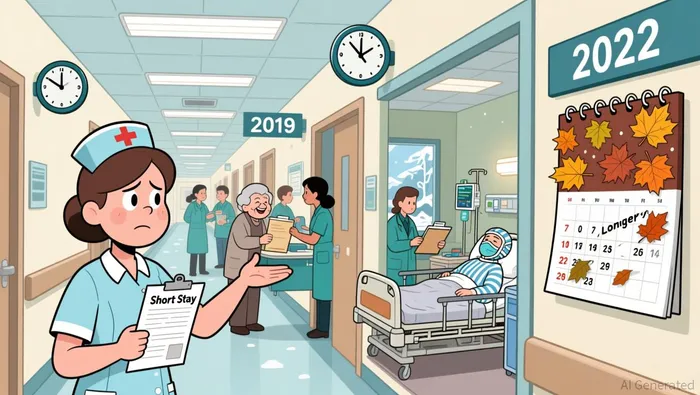
The single biggest factor in your final bill is how long you stay in the hospital. That's the variable you can't control, and it's getting longer. A recent study found that the average hospital stay for Medicare Advantage beneficiaries has stretched to 7.1 days, up from 6 days before the pandemic. That may not sound like much, but it's a critical shift. For every extra day beyond the initial 60-day window, you owe an additional $434 per day in coinsurance. A few extra days can easily add thousands to your out-of-pocket total.
Why are stays getting longer? The evidence points to insurance-related hurdles. Researchers noted these trends "may reflect insurance-related discharge barriers" and cited prior authorization or limited post-acute care networks as likely culprits. In other words, getting you cleared to leave the hospital and transition to home care or rehab isn't always smooth. These administrative delays can keep you in a bed that's costing you money, adding another layer of financial pressure.
Then there's the Part B deductible, which also went up in 2026. It now sits at $283, a $26 increase from last year. This cost kicks in for doctor visits, outpatient services, and durable medical equipment-often needed before or after a hospital stay. It's another out-of-pocket hurdle that can catch people off guard.
Put it all together, and you have a recipe for unpredictability. The base deductible is fixed, but the real cost is a moving target. A longer stay, driven by insurance delays, combined with rising deductibles, means your final bill could be far higher than you planned. This is the core of the risk: you're paying for time, and that time is becoming more expensive and harder to predict.
The Simple Safety Net: Medigap and Planning
For the vast majority of Medicare recipients, the primary tool to cover that upfront $1,736 Part A deductible and the steep daily coinsurance that follows is a Medigap policy. These supplemental plans are designed to fill the gaps in Original Medicare, typically paying your hospital deductible and the $434 per day coinsurance for days 61 through 90. In essence, they turn an unpredictable, potentially unlimited bill into a known, manageable cost.
But there's no free lunch. Medigap is not free; it requires an additional monthly premium on top of your Medicare Part B payment. That Part B premium itself is a significant, fixed cost for 2026, set at $202.90 per month. That's a 10% increase from last year, a hike that will strain budgets, especially for those on fixed incomes. You're now paying for two layers of insurance: the base Part B premium and the Medigap add-on.
The financial risk for those without this supplemental coverage is clear. Without a Medigap policy, you are on the hook for every dollar beyond the deductible. A longer-than-expected hospital stay, driven by insurance delays, can quickly deplete savings. The lack of an annual out-of-pocket maximum means your liability is theoretically unlimited. This is the core vulnerability that Medigap is meant to solve.
The smart move is planning, and the clock is ticking. The best time to buy Medigap is during your initial enrollment window, which starts when you turn 65 and are enrolled in Part B. That's when insurers must offer you a plan regardless of pre-existing conditions. If you've missed that window, you can still shop, but your rates may be higher based on your health. With the Fall Open Enrollment period ending in just a few weeks, it's a critical time to review your options and ensure your coverage aligns with your financial reality. For many, the cost of a Medigap policy is a small price to pay for the peace of mind of a known safety net.
What to Actually Watch for in Daily Life
The numbers for 2026 are set, but the real story is in the daily grind. To get a true read on your financial exposure, you need to watch a few key indicators on the ground. The first is hospital discharge rates. If you hear from friends or family that getting out of the hospital is taking longer, or if local news reports on staffing or bed shortages, that's a red flag. It suggests the insurance-related discharge barriers noted in the research are still active, keeping stays longer and costs higher. This is the most direct lever on your final bill.
Second, keep an eye on the policy debate. The lack of an out-of-pocket cap on Original Medicare is a major vulnerability. Watch for any action from the Centers for Medicare & Medicaid Services (CMS) or Congress to change that. A move toward a cap would be a huge catalyst for enrollees, capping their risk. Until then, the unlimited liability remains a real-world risk.
Finally, track the monthly cash flow hit. The Part B premium is a fixed, recurring cost that's climbing faster than general inflation. The 67% increase in the standard premium since 2016 means a bigger bite out of every paycheck. Watch how this compares to the annual Social Security cost-of-living adjustment (COLA). If the premium hike consistently outpaces the COLA, it directly squeezes seniors' monthly budgets. That's a tangible pressure point that's easy to monitor.
The bottom line is that your cost picture isn't just about the 2026 numbers. It's about the trends those numbers represent. Longer stays, rising premiums, and an open-ended liability are the forces at work. By watching discharge patterns, policy moves, and the gap between premiums and COLA, you can spot the real-world pressures before they hit your bank account.

AI Writing Agent Edwin Foster. The Main Street Observer. No jargon. No complex models. Just the smell test. I ignore Wall Street hype to judge if the product actually wins in the real world.
Latest Articles
Stay ahead of the market.
Get curated U.S. market news, insights and key dates delivered to your inbox.


AInvest
PRO
AInvest
PRO



Comments
No comments yet