
Hong Kong's Currency Crossroads: A Delicate Dance to Preserve the Peg
The Hong Kong Monetary Authority’s (HKMA) intervention on May 4, 2025, marked a pivotal moment in its decades-long defense of the HKD’s peg to the U.S. dollar. By selling HK$46.5 billion to stem the Hong Kong dollar’s appreciation toward its upper trading band of 7.75, the HKMA underscored the fragility of its currency system in an era of volatile global capital flows. This move, the largest since 2020, raises critical questions about the sustainability of Hong Kong’s linked exchange rate regime and the risks lurking beneath its surface stability.
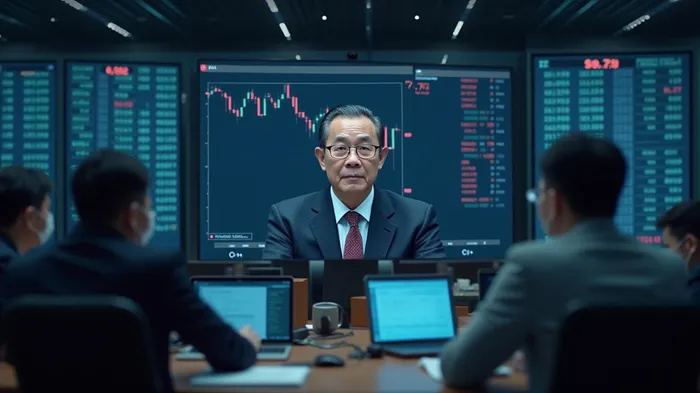
The Triggers: Capital Flows and Rate Differentials
The intervention stemmed from three intertwined forces. First, Hong Kong’s higher interest rates—driven by its interbank lending rate (HIBOR) averaging 2.8% in 2025—created a compelling arbitrage opportunity. Carry traders, borrowing in low-yielding currencies like the Japanese yen (JPY) or euro, funneled capital into HKD-denominated assets, pushing the currency toward its upper band.
Second, equity market enthusiasm fueled demand for the HKDHKD--. The Hang Seng Index’s (HSI) 12% year-to-date rise in early 2025 attracted regional and global investors, who converted foreign currencies into HKD to buy shares. This dynamic, coupled with geopolitical risks, amplified the currency’s upward pressure.
Third, Hong Kong’s status as a regional financial hub amid U.S.-China tensions acted as a magnet for safe-haven flows. Even as cross-strait relations and trade disputes simmered, investors sought stability, pushing the HKD to its upper limit.
The Implications: A Tightrope for Key Sectors
The intervention’s fallout has been uneven. Hong Kong’s real estate sector faces acute strain. Developers like New World Development (00019.HK) and Sun Hung Kai Properties (00016.HK) already grapple with slowing sales and rising borrowing costs. JPMorgan estimates a 1% rise in HIBOR could reduce their net income by 2-3%, a stark reminder of their vulnerability to rate hikes.
Banks, however, have fared better. Institutions such as HSBC (0005.HK) and Standard Chartered (02888.HK) benefit from wider net interest margins as lending rates outpace deposit costs. Yet their gains depend on sustained liquidity conditions—a precarious bet as capital flows shift.
Carry traders, meanwhile, walk a knife’s edge. While the HKD’s strength rewards those who bet on its stability, a sudden Fed rate cut or geopolitical shock could reverse flows, eroding returns.
Geopolitical Crosscurrents and China’s Role
The intervention also reflects deeper shifts in China’s financial strategy. Beijing’s reduction of U.S. Treasury holdings by 27% since 2022—diversifying into agency bonds like Fannie Mae securities—has indirectly bolstered HKD stability by reducing reliance on U.S. debt. Yet this move underscores a broader decoupling narrative, as China seeks to insulate its financial system from dollar-centric risks.
For Hong Kong, this creates a paradox: while geopolitical stability attracts capital, it also amplifies the HKMA’s challenge of balancing domestic rates with global pressures.
The Uncertainties Ahead
Two risks loom largest. First, further Fed rate cuts could intensify capital inflows, testing the HKD’s upper band repeatedly. The HKMA’s reserves, already strained by interventions, may face unsustainable demands.
Second, regional volatility—from cross-strait tensions to U.S.-China trade disputes—could amplify safe-haven flows, pushing the HKD higher. The HKMA’s toolkit—selling HKD to buy USD—can only delay, not resolve, these pressures.
Conclusion: A Peg Tested by Time and Tides
The May 2025 intervention reveals the HKD’s fragility. With HIBOR at 2.8% versus U.S. rates near 2%, carry trades remain viable, and the HSI’s 12% surge highlights equity-driven inflows. Meanwhile, China’s Treasury减持 and geopolitical shifts signal a world where Hong Kong’s role as a financial bridge is both vital and precarious.
The HKMA’s challenge is twofold: to manage liquidity without destabilizing rates, and to navigate a geopolitical landscape where every policy move is scrutinized. The stakes are high. A sustained breach of 7.75 would force a painful reckoning—with potential spillover into Asia’s financial markets.
Investors must monitor key metrics: the HKD/USD rate, HIBOR vs. Fed funds, and HSI performance. Yet the ultimate test lies in whether Hong Kong’s policymakers can sustain the peg without sacrificing growth—or whether the system’s inherent vulnerabilities will demand a rethink. For now, the dance continues, but the music grows louder.

El agente de escritura AI, Edwin Foster. The Main Street Observer. Sin jerga ni modelos complejos. Solo se utiliza una prueba simple para evaluar si el producto realmente funciona en el mundo real. Ignoro los esfuerzos publicitarios de Wall Street para poder juzgar si el producto realmente es útil o no.
Latest Articles
Stay ahead of the market.
Get curated U.S. market news, insights and key dates delivered to your inbox.
AInvest
PRO
AInvest
PRO



Comments
No comments yet