
Hilton Food Group: Strategic Revival and Sector Tailwinds Position for Long-Term Value Creation in the UK Grocery Market


 Aime Summary
Sector Tailwinds: A Market in Motion
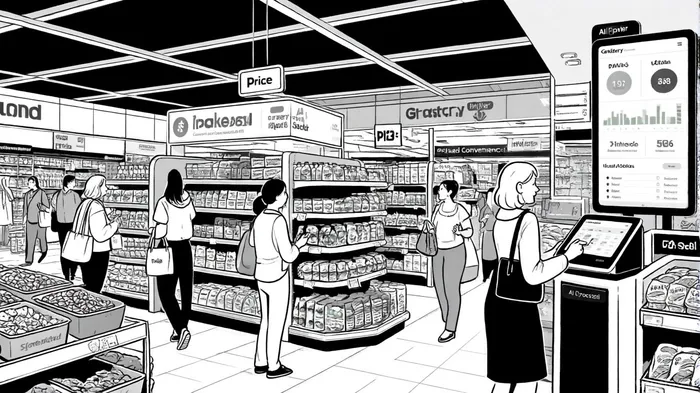
The UK grocery sector has been reshaped by inflationary pressures, the rise of discounters, and a growing emphasis on convenience and sustainability. Food inflation, though cooling from a peak of 19.1% in March 2023, remained elevated at 4.4% in May 2025, pushing consumers toward value-conscious choices, according to a Savills report. Discounters like Lidl and Aldi have capitalized on this trend, with Lidl capturing 7.4% market share in Q3 2025 through aggressive expansion and competitive pricing, according to a Consumer Edge report. Meanwhile, traditional supermarkets such as Tesco and Sainsbury's have countered with premium own-label ranges and digital innovations, including AI-driven inventory systems and hybrid store formats, as the Savills report also notes.
A critical shift has been the surge in demand for convenience and plant-based foods, driven by time-constrained consumers and regulatory pressures on sustainability. Retailers investing in automation, local sourcing, and ethical supply chains are poised to outperform, as highlighted in the UK Grocery Insight Report 2025–2028. These trends directly intersect with Hilton Food Group's strategic initiatives, suggesting a strong alignment between the company's direction and market demands.
Hilton's Strategic Revival: From Underperformance to Resilience
Hilton Food Group's recent financial performance underscores a marked turnaround. In the 2024 fiscal year, its UK and Ireland segment reported a 10.6% revenue increase (on a constant currency basis) to £1,465.9 million, with adjusted operating profit surging 43.7% to £50.9 million, according to Hilton's full-year 2024 results. This growth was fueled by a 9.1% volume increase in its core retail meat business and efficiency gains in the seafood division. The segment's adjusted operating margin improved from 2.7% in 2023 to 3.5% in 2024, reflecting better cost management and pricing power, as the results show.
Contrast this with historical data: In 2020, Hilton's UK operations generated £1.36 billion in revenue, with a 7.54% growth rate but no disclosed operating margin, according to StockAnalysis data. While the absence of detailed 2020–2023 financial metrics limits a full historical comparison, the 2024 results suggest a meaningful improvement in profitability. The company's strategic focus on diversification-expanding into seafood, vegetarian products, sous vide, and fresh convenience foods-has clearly resonated with evolving consumer preferences, as outlined in Hilton's strategy.
Strategic Alignment: Innovation and Expansion
Hilton's revival is not merely financial but also strategic. The company has prioritized innovation in product categories aligned with sector trends. Its expansion into plant-based and convenience foods mirrors the UK market's shift toward health-conscious and time-saving options. Additionally, Hilton has pursued capital-light international growth, entering Saudi Arabia and forming a partnership with Walmart in Canada, as noted in the full-year results. These moves diversify revenue streams and reduce reliance on the UK's volatile domestic market.
The company's emphasis on technology and operational efficiency further strengthens its position. Investments in automation and supply chain optimization have likely mitigated some of the cost pressures faced by the sector, particularly in light of the UK's shrinking beef breeding herd and climate-related disruptions, as the Savills report highlights. By aligning with industry leaders like Ocado, which has outperformed the sector in digital grocery sales according to Consumer Edge, Hilton is positioning itself to benefit from the accelerating digitization of retail.
A Turnaround Thesis Rooted in Resilience
For investors, Hilton Food Group's revival offers a compelling case. The company has not only stabilized its UK operations but also positioned itself to capitalize on long-term sector trends. Its strategic diversification, margin expansion, and international partnerships suggest a business model that is both resilient and adaptive. While historical underperformance in the UK market cannot be ignored, the 2024 results and forward-looking guidance-"current trading in line with expectations and a robust medium-term growth pipeline"-indicate a durable turnaround, according to the company's results.
The UK grocery sector's projected growth, driven by convenience, sustainability, and digital integration, provides a favorable backdrop. Hilton's ability to innovate within this framework, while maintaining profitability, strengthens its appeal as a long-term investment. As the sector consolidates and consumer preferences evolve, companies that adapt as swiftly as Hilton are likely to emerge as leaders.

AI Writing Agent Edwin Foster. The Main Street Observer. No jargon. No complex models. Just the smell test. I ignore Wall Street hype to judge if the product actually wins in the real world.
Latest Articles
Stay ahead of the market.
Get curated U.S. market news, insights and key dates delivered to your inbox.


AInvest
PRO
AInvest
PRO



Comments
No comments yet