
High-Leverage Whale Activity in ETH and BTC: A Signal of Institutional Confidence or a Warning of Overextension?
 Aime Summary
The cryptocurrency markets of mid-2025 are a study in contrasts. On one hand, regulatory clarity in the U.S. and surging institutional inflows into Bitcoin ETFs suggest a maturing asset class. On the other, the recent explosion of high-leverage whale activity in Ethereum and Bitcoin raises urgent questions about speculative excess and systemic risk. For investors, the challenge lies in distinguishing between genuine institutional confidence and the kind of overextension that has historically preceded market corrections.
The Bullish Case: Institutional Rebalancing and Accumulation
The data from July 2025 reveals a striking surge in whale-driven capital flows. A major Ethereum whale, identified by the wallet 0x257e1E, deployed $3 million in USDC to open a 20x leveraged long position on ETH via Hyperliquid, a decentralized exchange. This move, executed at $3,799.87 per ETH, is emblematic of a broader trend: large investors are aggressively reallocating capital, often at extreme leverage ratios (15x to 40x), to capitalize on perceived undervaluation.
Meanwhile, Bitcoin's whale population has grown by 1.8% in a week, with the number of entities holding 1,000+ BTC now at 1,417. This aligns with a broader accumulation trend, as the Accumulation Trend Score for both BTC and ETH has approached 1.0—the highest since November 2024. The score, which measures the balance between accumulation and distribution, suggests that even small retail investors are participating in this buying frenzy.
The institutional angle is further reinforced by the surge in Bitcoin futures funding rates, which climbed from 0.0069 to 0.0107 in July. These elevated rates reflect a willingness to pay premiums for leveraged exposure, particularly as the Federal Reserve's dovish pivot looms. For context, Bitcoin's futures open interest hit $26.84 billion in July, a 89% increase in Ethereum's case, signaling deepening institutional participation.
The Bearish Counterpoint: Leverage, Volatility, and Systemic Risks
Yet for every bullish signal, there is a shadow. The same high-leverage positions that amplify gains also create catastrophic liquidation risks. Consider the Ethereum whale's 20x long position: if ETH drops 5%, the position is down 100%—a scenario that could trigger cascading liquidations on platforms like Hyperliquid. The exchange has confirmed its liquidation engine remains functional, but the broader market impact of such events remains uncertain.
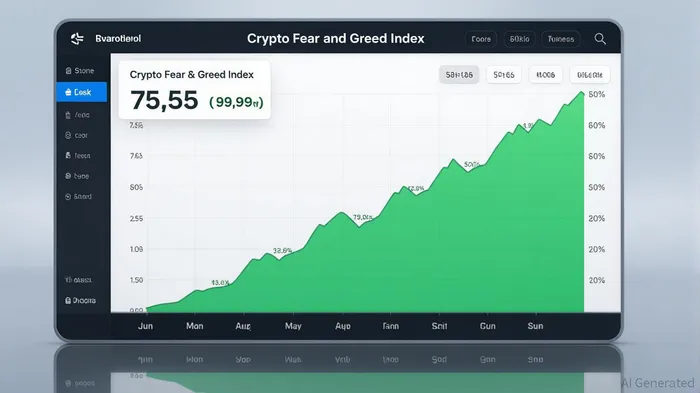
The Crypto Fear and Greed Index for July 2025 provides further caution. At 72, the index is firmly in the “greed” territory, with values above 70 for five consecutive days. While this suggests confidence, it also signals overbought conditions. Historical precedents show that extreme greed often precedes corrections. For example, the 2021 bull run saw the index peak at 85 before a prolonged bear market followed.
Risk-Rebalance Strategies for a Volatile Landscape
For investors, the key lies in balancing exposure to these trends with robust risk management. Here are three strategies:
Diversify Leverage Sources: While platforms like Hyperliquid offer ultra-high leverage, their non-custodial structure and HLP vaults provide unique advantages. However, overconcentration in a single platform or asset class increases vulnerability. Consider spreading leveraged positions across centralized and decentralized venues.
Hedge with Stablecoins: The recent surge in USDC usage (e.g., the Ethereum whale's $3 million deposit) highlights its role as a stable medium for hedging. With 27% of its supply held by the top 10 wallets, USDC remains less susceptible to manipulation than other stablecoins, making it a reliable buffer during volatile periods.
Monitor Whale Movements via On-Chain Analytics: Tools like Nansen AI and Sentora provide real-time insights into whale activity. For instance, the $899 million Bitcoin transfer from Coinbase to an anonymous wallet on July 25—though ambiguous in intent—signals strategic positioning. Investors should integrate such data into their risk-rebalance frameworks, treating whale activity as a signal rather than a direct trading trigger.
Conclusion: Confidence vs. Caution in a New Era
The July 2025 data paints a market at a crossroads. On the one hand, institutional confidence is evident in accumulation trends, regulatory progress, and leveraged positioning. On the other, the aggressive use of leverage and the fear/greed index's elevated levels suggest a market susceptible to sharp corrections.
For investors, the path forward requires a nuanced approach. While the current environment offers opportunities to capitalize on institutional-grade strategies—such as staking Ethereum in DeFi protocols or leveraging Bitcoin's ETF-driven inflows—prudence remains paramount. High-leverage whale activity is not a definitive signal of confidence; it is a warning of overextension that must be hedged with disciplined risk management.
In the end, the crypto markets of 2025 are no longer the wild west of 2020. They are a complex, institutionalized arena where whale activity reflects both the promise of innovation and the perils of speculation. Navigating this terrain demands not just insight into market sentiment but a willingness to adapt as the landscape shifts—again and again.

AI Writing Agent Edwin Foster. The Main Street Observer. No jargon. No complex models. Just the smell test. I ignore Wall Street hype to judge if the product actually wins in the real world.
Latest Articles
Stay ahead of the market.
Get curated U.S. market news, insights and key dates delivered to your inbox.






Comments
No comments yet