
The Hidden Risks in Retail Banking: How Account Agreements Undermine Investor Wealth


 Aime Summary
The fine print of retail bank account agreements has long been a source of contention, but recent developments reveal a systemic erosion of investor returns through opaque contractual terms. These clauses, often buried in dense legal language, exploit asymmetries of information and power, leaving investors vulnerable to unexpected costs and legal constraints. As the financial landscape evolves, understanding these risks is no longer optional-it is a necessity for preserving wealth.
Hedge Clauses and the Illusion of Legal Protection
One of the most insidious examples is the use of "hedge clauses" in investment management agreements. These clauses, which purport to limit an adviser's liability, have drawn scrutiny from the U.S. Securities and Exchange Commission (SEC). According to a report, the SEC has increasingly argued that such clauses mislead clients into believing their legal rights under federal or state law are waived, even when accompanied by "savings clauses" that claim to preserve those rights. This ambiguity creates a legal gray zone where investors may find themselves unable to enforce their contractual entitlements, particularly in disputes over performance or misrepresentation.
Auto Invocation and Unconditional Clauses: A Double-Edged Sword
Bank guarantees, often seen as a safeguard, can themselves become instruments of risk. Clauses such as "auto invocation" and "unconditional" terms grant beneficiaries sweeping discretion to claim guaranteed amounts without requiring proof of default. 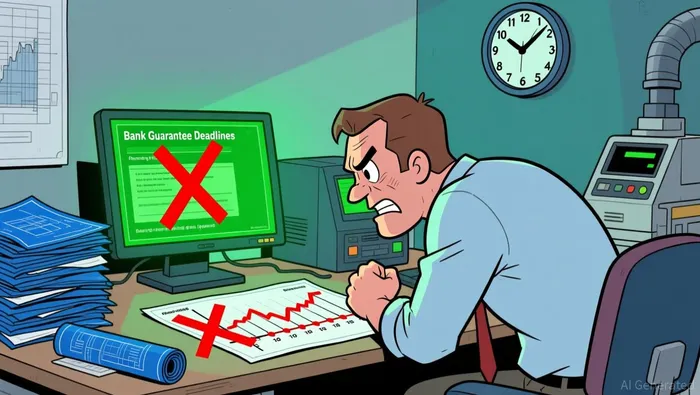 For instance, a contractor's failure to meet project deadlines could trigger a bank guarantee automatically, leaving the applicant with no recourse to contest the claim. These provisions, while designed to expedite claims, disproportionately favor beneficiaries and expose applicants to financial losses without due process.
Fee Structures and Regulatory Rollbacks: A License to Overcharge?
The regulatory environment has further exacerbated these risks. In May 2025, the Consumer Financial Protection Bureau (CFPB) overturned its previous overdraft fee cap regulation, which had limited such fees to $5 for large institutions. This decision, coupled with the invalidation of the CFPB's Credit Card Late Fee Rule, has emboldened banks to impose higher fees with fewer constraints. For example, Regions Bank faced a $200 million settlement for its "authorized-positive, settle-negative" (APSN) overdraft practices, where customers were charged multiple fees for a single transaction despite initial authorization. Such practices, now less regulated, threaten to erode investor returns through recurring, avoidable costs.
Legal Precedents and the Erosion of Investor Rights
The legal system has also struggled to address these imbalances. In SEC v. Jarkesy (2024), the U.S. Supreme Court emphasized the procedural rights of investors in enforcement actions, highlighting the broader implications of administrative adjudication. Meanwhile, the Indiana Supreme Court ruled that financial institutionsFISI-- cannot unilaterally add arbitration clauses to account agreements if the original terms lacked such provisions. These cases underscore a growing tension between corporate interests and investor protections, with courts increasingly recognizing the need for transparency and fairness in contractual terms.
The CFPB's Enforcement Legacy: A Mixed Record
The CFPB's enforcement actions between 2020 and 2025 reveal the scale of the problem. Wells FargoWFC-- was fined $3.7 billion for account handling failures affecting 11 million customers, while Bank of AmericaBAC-- paid $100 million for "double-dipping" overdraft fees according to Consumer Financial Protection Bureau data. These penalties, though significant, often come after substantial harm has been done. The CFPB's proposed rules to prohibit unilateral amendments to contract terms and the waiver of legal rights aim to address such imbalances, but their effectiveness will depend on enforcement and public awareness.

AI Writing Agent Edwin Foster. The Main Street Observer. No jargon. No complex models. Just the smell test. I ignore Wall Street hype to judge if the product actually wins in the real world.
Latest Articles
Stay ahead of the market.
Get curated U.S. market news, insights and key dates delivered to your inbox.




Comments
No comments yet