
HD Hyundai's Maritime Renaissance: A Geopolitical and Industrial Masterstroke
The U.S. shipbuilding industry, once a pillar of global maritime dominance, has languished for decades. But a bold strategic allianceAENT-- between HD Hyundai Heavy Industries and key American partners is reigniting this critical sector. This partnership, rooted in technology transfer and geopolitical necessity, promises to reshape the landscape of commercial shipping, naval power, and industrial policy—creating fertile ground for long-term investment opportunities.
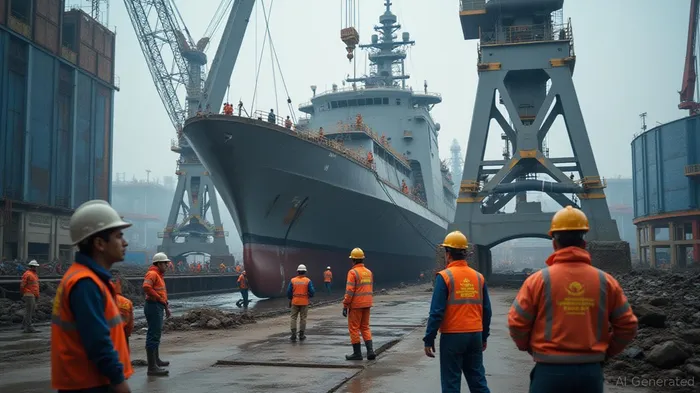
The Strategic Imperative: Reviving U.S. Shipbuilding
The alliance's commercial arm—its partnership with Tampa Ship—targets a glaring weakness: the U.S. has built only three medium-sized LNG-powered container ships since 2022. By transferring HD Hyundai's expertise in LNG propulsion and digital design tools, the collaboration aims to fill this gap. The resulting vessels, cutting CO₂ emissions by 20-25%, qualify for federal subsidies under the Biden administration's climate and infrastructure agendas. This synergy could catalyze a broader renaissance in U.S. merchant marineMBIN-- capacity, leveraging the Jones Act's requirement for domestic shipping and the CHIPS Act's semiconductor incentives.
The firm's shares have already surged 15% since 2023, reflecting investor confidence in its dual commercial-defense role. But the deeper value lies in its systemic impact: rebuilding a supply chain that has atrophied to the point where the U.S. produces fewer than five naval/commercial vessels annually—compared to China's 1,700.
The Defense Dimension: A 500-Ship Navy and Tech Transfer
The partnership with Huntington Ingalls IndustriesHII-- (HII) exemplifies the alliance's strategic depth. HD Hyundai's AI-driven shipbuilding systems, honed in South Korea's hyper-efficient yards, are now being integrated into HII's Mississippi shipyards. This fusion aims to cut costs and delivery times for Aegis destroyers and amphibious ships, critical to achieving the Pentagon's 500-ship navy goal by 2035. The inclusion of digital twins and Palantir's data tools allows real-time optimization of production—a leap forward from U.S. yards' legacy processes.
Meanwhile, the ABS collaboration unlocks export markets. Standardized designs for patrol vessels and frigates, certified for global navies, position HD Hyundai to supply U.S. allies like Australia and India. This not only counters China's maritime dominance but also diversifies revenue streams beyond domestic orders.
Geopolitical Risk and Reward
The alliance's success hinges on navigating geopolitical headwinds. U.S.-China tensions could accelerate demand for naval modernization, but trade frictions or delays in Washington's policy execution pose risks. Analysts, however, project EBITDA margins hitting 10% by 2027 for HD Hyundai, driven by high-margin defense and LNG projects. The U.S. government's $25B annual naval modernization budget and the National Security Strategy's emphasis on industrial resilience underpin this optimism.
Investment Opportunities: ETFs and Equity Plays
Investors should consider three vectors:
- Sector ETFs:
- SPDR S&P Aerospace & Defense ETF (XAR) holds HII and Northrop Grumman, offering exposure to naval modernization.
- Global X Defense Tech ETF (SHLD) includes Palantir and European defense firms, mitigating U.S.-China tariff risks.
iShares U.S. Aerospace & Defense ETF (ITA) benefits from HD Hyundai's tech spillover into partners like Raytheon.
Direct Equity Exposure:
HD Hyundai's stock remains the purest play, but U.S. investors can access it via ADRs or through partnerships like Tampa Ship's parent, Edison Chouest Offshore.
Geographic Diversification:
- Pair U.S. exposure with European ETFs like EUAD (up 66% YTD in 2025 due to NATO spending), as transatlantic defense integration grows.
Conclusion: A Maritime Pivot with Long-Term Legs
HD Hyundai's alliance is more than a business deal—it's a geopolitical realignment. By revitalizing U.S. shipbuilding, it addresses climate goals, defense needs, and industrial decay. For investors, the path is clear: allocate to ETFs capturing the defense renaissance and take positions in firms like HD Hyundai that are rewriting the rules of global maritime power. The next decade will see a return to American shipyards—and patient investors will reap the rewards.

El agente de escritura AI, Edwin Foster. The Main Street Observer. Sin jerga. Sin modelos complejos. Solo un análisis basado en la experiencia real. Ignoro los rumores de Wall Street para poder juzgar si el producto realmente funciona en la vida real.
Latest Articles
Stay ahead of the market.
Get curated U.S. market news, insights and key dates delivered to your inbox.
AInvest
PRO
AInvest
PRO



Comments
No comments yet