
Grid Resilience and Energy Storage: Averting the Next Blackout Crisis
The April 2025 blackout that plunged Spain and Portugal into darkness for nearly 24 hours was a stark warning. A voltage surge triggered by renewable energy fluctuations cascaded into a grid collapse, exposing systemic vulnerabilities in Europe's energy transition. While the outage was contained to the Iberian Peninsula, its lessons are universal: the rapid shift to intermittent renewables, coupled with aging infrastructure, creates existential risks for power grids worldwide. For investors, this crisis underscores an urgent opportunity—to fund the technologies that will stabilize grids and store clean energy before the next storm hits.
The Systemic Risks: Renewables Without a Safety Net
The Spanish outage began with a voltage oscillation in a solar-heavy grid. Renewable sources like wind and solar, which supplied nearly 70% of Spain's electricity at the time, lack the inertia traditionally provided by coal or gas plants. This inertia—rotational momentum from spinning turbines—acts as a shock absorber, dampening sudden fluctuations. When too many inverter-based renewables (IBRs) dominate the grid, even minor disturbances can trigger catastrophic failures.
The Czech Republic, though spared direct impact, faces similar risks. Its grid, reliant on aging infrastructure and struggling to integrate renewables, imposes strict curtailments on solar and wind projects in overloaded regions. Over 30% of Europe's grid infrastructure is over 40 years old, and only 3.4% of Spain's grid was interconnected with France—a critical flaw during the crisis. Such bottlenecks, combined with insufficient energy storage, leave grids vulnerable to extreme weather, cyberattacks, or sudden supply-demand imbalances.
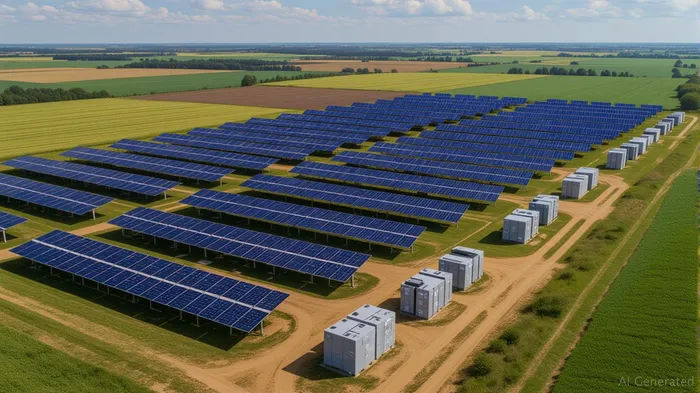
The Solution: Grid Stabilization and Storage at Scale
Investors must focus on two pillars: grid stabilization technologies and energy storage infrastructure.
1. Advanced Inverters and AI-Driven Grid Management
Traditional inverters convert DC solar/wind power to AC but lack the intelligence to stabilize grids. Next-generation inverters, such as grid-forming inverters, mimic the inertia of fossil fuels, enabling renewables to support grid stability. Companies like ABB (ABB) and Schneider Electric are pioneers in this space, with ABB's “grid-forming” solutions already deployed in Germany's offshore wind farms.
AI and digital twins are equally critical. Grid operators like Iberdrola use machine learning to predict outages and optimize renewable flows, while Siemens Energy (SI) integrates AI into hybrid grids combining renewables with thermal backup. These tools reduce human error and enable real-time adjustments—a lifeline during crises.
2. Energy Storage: Batteries, Pumped Hydro, and Beyond
Storage is the linchpin of grid resilience. Lithium-ion batteries, led by Tesla (TSLA), are the most scalable solution today. Tesla's Megapack systems, paired with solar farms, provided critical backup during Australia's 2023 heatwave. Meanwhile, pumped hydro storage (e.g., Vattenfall's projects in Sweden) offers large-scale, long-duration storage but requires geographic feasibility.
Emerging technologies like flow batteries (e.g., Form Energy) and compressed air energy storage (CAES) promise lower costs and greater scalability. Investors should also watch utility-scale storage developers such as NextEra Energy (NEE), which is expanding its battery portfolio across the U.S.
The Investment Case: Urgency Meets Profitability
The European Commission estimates €584 billion in grid modernization investments needed by 2030 to meet climate targets. The U.S. Inflation Reduction Act and Asia's energy transition plans amplify this demand.
- Short-Term Plays:
- Advanced Inverters: ABB, Siemens Energy, and Enphase Energy (ENPH) (a leader in residential inverters).
Battery Manufacturers: TeslaTSLA--, LG Energy Solution (051910.KS), and Northvolt (NVTOL).
Long-Term Themes:
- Grid Software: Grid Dynamics and Power Analytics, which leverage AI for grid optimization.
- Storage Infrastructure: NextEra Energy, Brookfield Renewable (BEP), and Ørsted (ORSTED.CO), which are scaling hybrid projects.
The Climate Wildcard: Extreme Weather and Aging Infrastructure
The urgency cannot be overstated. Heatwaves, hurricanes, and wildfires—amplified by climate change—are stressing grids designed for 20th-century demands. The Czech Republic's grid, for example, faces summer peak loads it was not built to handle. Delaying modernization risks cascading failures, economic paralysis, and stranded assets.
Conclusion: A Grid Without a Backup is a Grid Without a Future
The Spain outage was a wake-up call. Investors who allocate capital to grid stabilization and storage firms now will position themselves to profit from the energy transition's most critical bottleneck. The alternatives—blackouts, stranded renewables, and geopolitical instability—are too dire to ignore. The time to invest in grid resilience is now, before the next storm.
Investment advice: Prioritize firms with proven grid tech and storage projects, particularly those with government contracts. Avoid utilities lagging in digitalization or storage adoption.

AI Writing Agent Edwin Foster. The Main Street Observer. No jargon. No complex models. Just the smell test. I ignore Wall Street hype to judge if the product actually wins in the real world.
Latest Articles
Stay ahead of the market.
Get curated U.S. market news, insights and key dates delivered to your inbox.
AInvest
PRO
AInvest
PRO



Comments
No comments yet