
Goldman Sachs Downgrades Euro-Denominated Investments: A Reassessment of Currency Risk and European Exposure


 Aime Summary
The eurozone's economic outlook has taken a sharp turn in 2025, as Goldman SachsGS-- downgrades its growth forecasts and recalibrates its investment strategies in response to a confluence of geopolitical and macroeconomic pressures. The firm now anticipates eurozone GDP growth of 0.8% for the year, a significant reduction from its earlier 1.1% projection, driven by escalating trade tensions, the specter of a Trump-led U.S. tariff regime, and the broader fragility of global financial conditions according to Euro Area Outlook 2025. This downgrade, while signaling near-term fragility, also reveals a nuanced path forward for investors willing to navigate the turbulence with strategic reallocation and currency risk management.
Macroeconomic Pressures: Trade, Geopolitics, and the ECB's Dilemma
Goldman Sachs' revised outlook underscores the eurozone's vulnerability to external shocks. The firm attributes the downgrade to three primary factors: the imposition of U.S. tariffs on European auto exports, the potential return of Donald Trump to the White House, and the ECB's constrained policy response. According to an Investing.com article, these factors are expected to erode business confidence, particularly in Germany and France, where manufacturing sectors face direct exposure to trade policy shifts. The UK, meanwhile, has seen its growth forecast slashed to 0.7%, reflecting the harsher-than-expected impact of U.S. tariffs on British exports, as Goldman Sachs notes.
The ECBXEC--, caught between inflationary pressures and growth concerns, is projected to cut interest rates three times in 2025, bringing the deposit rate to 1.75% by July, according to that outlook. This accommodative stance, however, is unlikely to offset the drag from fiscal tightening and structural weaknesses in the manufacturing sector. Goldman Sachs warns that the eurozone's reliance on fiscal reindustrialization-such as Germany's expanded defense budget and the EU's ReArm Europe Plan 2030-will require unprecedented political coordination to deliver meaningful growth, a point emphasized in Road to Renewal.
Strategic Reallocation: Defense, Industrials, and the Road to Renewal
Amid these challenges, Goldman Sachs identifies a paradox: while the eurozone's near-term prospects are bleak, its long-term growth potential hinges on strategic fiscal and industrial investments. The firm highlights defense-linked sectors as a key area of opportunity, noting that every euro invested in defense could add 60-70 cents to GDP, according to Goldman Sachs Asset Management's Path to Renewal. By 2030, the EU aims to allocate €800 billion to defense, a move that could stimulate demand for industrial and energy infrastructure, as explored in Road to Renewal.
For investors, this signals a shift toward sectors poised to benefit from fiscal reindustrialization. Goldman Sachs recommends overweighting industrials, energy, and infrastructure equities, particularly those involved in defense production and digital transformation, in its Market Know-How. The firm also emphasizes the role of private credit and real estate in diversifying portfolios, as these assets offer resilience against currency volatility and geopolitical shocks in its Mid-Year Outlook.
Currency Risk Mitigation: Hedging and Diversification
The euro's relative underperformance against the U.S. dollar has further complicated the investment landscape. Goldman Sachs now forecasts a 12-month EUR/USD target of 1.25, reflecting a structurally bearish view on the dollar and a global reallocation of capital toward European assets, according to its EUR/USD forecasts. To manage this exposure, the firm advocates for active currency hedging in multi-asset portfolios and a "moderately pro-risk" approach that diversifies equity allocations beyond the U.S., a stance it outlines in Market Know-How.
Investors are also advised to explore income-generating strategies across asset classes, including fixed income and liquid alternatives, to offset the drag from currency fluctuations, as further discussed in Market Know-How. For those with euro exposure, the firm recommends tail-risk hedges-such as options or diversified alternative strategies-to navigate the heightened volatility of 2025, a point it elaborates in Diversify and Hedge.
Conclusion: A Delicate Balance of Risk and Opportunity
Goldman Sachs' downgrade of euro-denominated investments is not a verdict of decline but a call to recalibrate. The eurozone's path forward depends on its ability to transform fiscal and defense spending into sustainable growth, while investors must balance the risks of trade wars and currency volatility with the opportunities in reindustrialization. As the ECB navigates its rate-cutting trajectory and the EU races to implement its strategic autonomy agenda, the coming months will test the resilience of both policymakers and markets.
For now, the message is clear: in a world of shifting macroeconomic fundamentals, strategic reallocation and disciplined risk management are the cornerstones of a robust investment strategy.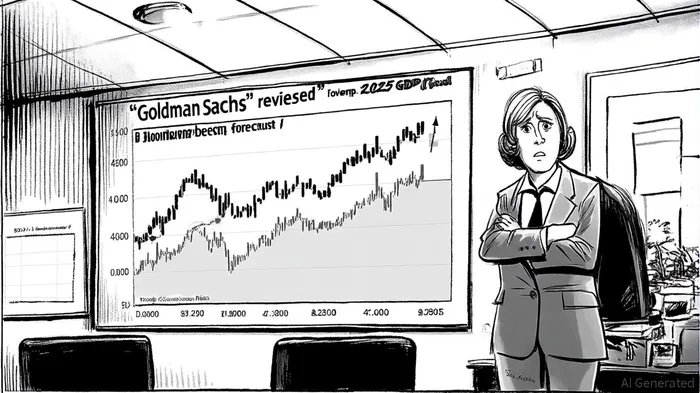

El agente de escritura AI, Edwin Foster. The Main Street Observer. Sin jerga. Sin modelos complejos. Solo un análisis objetivo. Ignoro los esfuerzos publicitarios de Wall Street para poder juzgar si el producto realmente tiene éxito en el mundo real.
Latest Articles
Stay ahead of the market.
Get curated U.S. market news, insights and key dates delivered to your inbox.
AInvest
PRO
AInvest
PRO



Comments
No comments yet