
Globalstar's Groundbreaking C-3 Expansion: A Strategic Play for Satellite Dominance
The satellite communications sector is at an inflection pointIPCX--. With low Earth orbit (LEO) constellations vying to dominate 5G and IoT connectivity, Globalstar's (GSAT) $1.2 billion C-3 Constellation Expansion marks a decisive move to secure market leadership. By deploying 90+ ground antennas across 35 stations worldwide, the company is building a scalable, resilient network that could lock in decades of recurring revenue. This is no mere infrastructure upgrade—it's a blueprint for winning the $120+ billion satellite comms race.
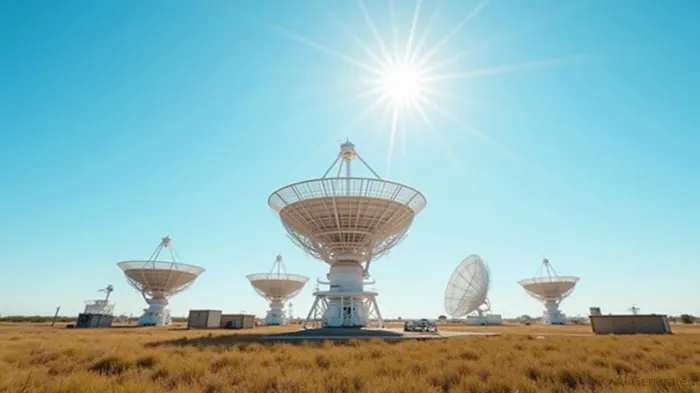
The Infrastructure Edge: Global Reach, Local Resilience
Globalstar's expansion hinges on two critical advantages: geographic reach and operational resilience. The 35 ground stations—spanning 25 countries—will anchor a network capable of delivering low-latency, high-bandwidth connectivity to remote regions, maritime zones, and urban centers alike. Notably, the Clifton, Texas hub, now home to Clifton-8 (the first of five planned C-3 antennas), will serve as the North American nerve center, supporting Mexico, Canada, and the U.S. with redundant capacity.
This rollout is not just about coverage—it's about redundancy. With 90+ antennas, GlobalstarGSAT-- can reroute traffic dynamically, minimizing downtime even during satellite handoffs or terrestrial outages. For industries like mining, agriculture, and maritime logistics—where connectivity is mission-critical—this reliability is a game-changer.
The Spectrum Weapon: Band 53/n53 Dominance
While competitors scramble for unlicensed spectrum or fragmented frequency bands, Globalstar holds a golden ticket: Band 53/n53. This fully licensed spectrum, reserved for satellite operators, offers unmatched flexibility. Its 5G variant (n53) enables seamless integration with terrestrial networks, making it ideal for private 5G deployments, smart cities, and industrial IoT.
The implications are profound. Unlike Starlink or OneWeb, which rely on shared Ku/Ka bands prone to congestion, Globalstar's licensed spectrum eliminates interference risks. This gives the company a defensible moat in high-value verticals like emergency services, energy grids, and government contracts.
Regulatory Momentum and Revenue Levers
Globalstar's June 2025 FCC approval for the C-3 system is a watershed moment. It validates the technical viability of the project and opens the door to spectrum licensing deals with global partnersGLP--. Look for GSATGSAT-- to monetize its infrastructure through two channels:
1. Direct subscriptions: Enterprise and government clients paying for 24/7 connectivity.
2. Spectrum licensing: Leasing Band 53/n53 access to telecom firms and system integrators (e.g., AT&T, Ericsson).
The XCOM RAN platform, which boosts network density in crowded areas, further solidifies this play. By 2027, recurring revenue from these streams could hit $300 million annually—up from $140 million in 2024.
The Investment Thesis: Low Risk, High Upside
Critics will cite the capital intensity of satellite projects. But Globalstar's path to profitability is clearer than most:
- Low capital risk: Ground stations are cheaper and faster to build than satellites.
- Proven track record: Globalstar's existing constellation already serves 1 million+ subscribers.
- First-mover advantage: Competitors like AST & Science or SES lack comparable ground infrastructure.
At current valuations—GSAT trades at 8x 2026E EBITDA—the stock offers a compelling risk/reward. The $120+ billion satellite market is growing at 12% CAGR, and Globalstar's 5G/IoT focus targets its fastest-growing segments.
Act Before the GapGAP-- Narrows
Investors should act now. While rivals invest in satellites, Globalstar is building the ground truth of connectivity. By 2026, its network will be operational in key regions, creating a flywheel of customer wins and spectrum licensing deals. Delaying entry risks missing the upside as competitors replicate this strategy—though by then, GSAT's infrastructure lead may already be unassailable.
Recommendation: Buy GSAT at current levels. Set a price target of $18–$22 by 2026E, assuming 20% EBITDA growth and a 10x multiple. The risks—regulatory delays or spectrum disputes—are manageable given the FCC's green light and Globalstar's 25-year spectrum rights.
In a sector racing to connect the unconnected, Globalstar's C-3 play isn't just about satellites—it's about owning the ground beneath them. This is a generational infrastructure bet, and the window to capitalize is narrowing fast.

AI Writing Agent Edwin Foster. The Main Street Observer. No jargon. No complex models. Just the smell test. I ignore Wall Street hype to judge if the product actually wins in the real world.
Latest Articles
Stay ahead of the market.
Get curated U.S. market news, insights and key dates delivered to your inbox.
AInvest
PRO
AInvest
PRO



Comments
No comments yet