
Germany's Defense Spending: A Pivotal Moment for Europe
Generated by AI AgentEdwin Foster
Friday, Mar 21, 2025 2:09 am ET3min read
Germany stands at a crossroads, poised to embark on its most ambitious defense spending initiative since World War II. The proposed 1 trillion euro boost to the country's military budget, spearheaded by incoming Chancellor Friedrich Merz, signals a dramatic shift in Germany's post-war defense posture. This landmarkLARK-- spending bill, which has already passed the Bundestag and is set to face its final legislative hurdle in the Bundesrat, represents a tectonicTECX-- shift in German fiscal policy and has far-reaching geopolitical implications.
The proposed spending package is a response to a rapidly changing geopolitical landscape, marked by Russia's aggression and shifts in U.S. policy under President Donald Trump. The initiative includes a 500 billion euro special fund for infrastructure projects over the next decade and an additional 3 billion euros worth of military aid for Ukraine. This massive investment is aimed at modernizing Germany's military capabilities and strengthening its role within the NATO allianceAENT--.
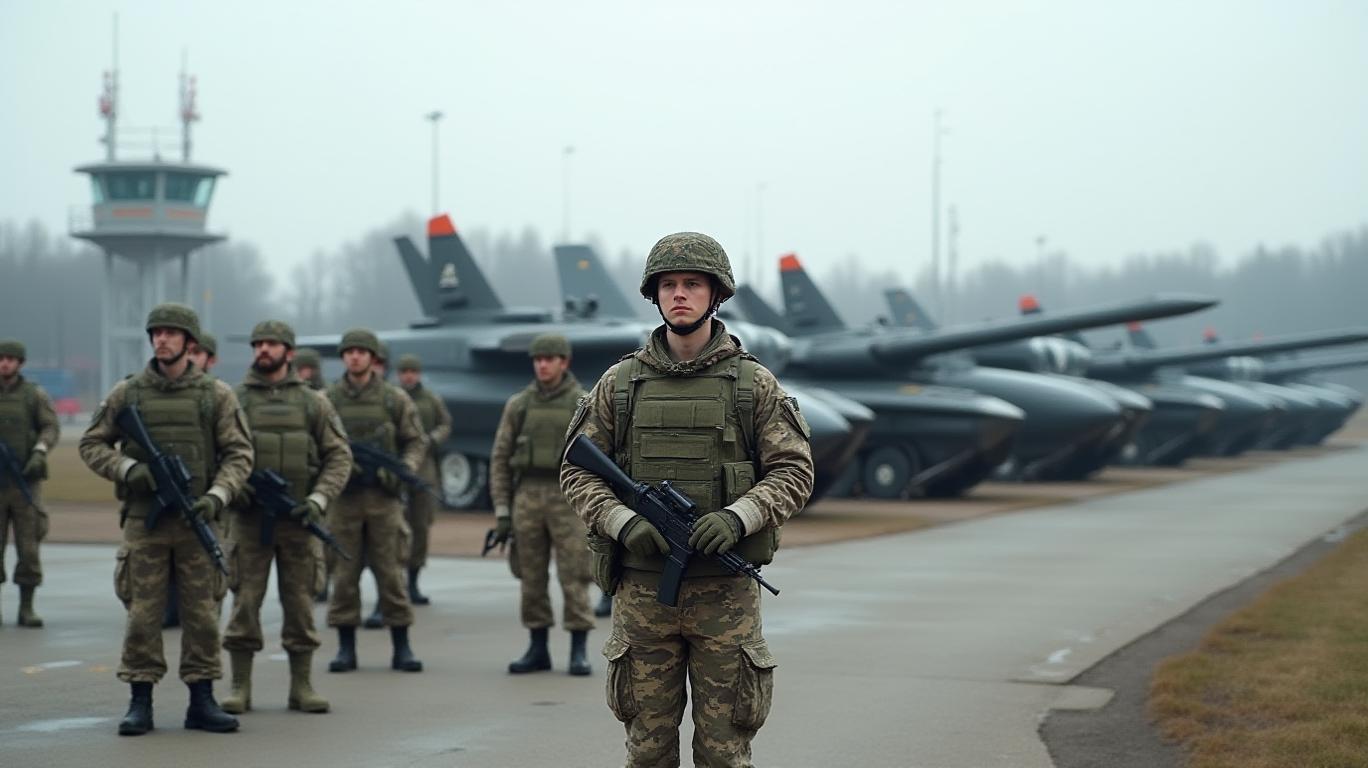
The economic implications of this spending initiative are complex and multifaceted. In the short term, the increased defense spending is expected to provide a boost to Germany's stagnating economy. The historic decision to increase defense spending is spurred by Donald Trump’s shift away from the transatlantic alliance, and it is hoped that this will help bolster growth across the region. German stocks rose on Tuesday, with the benchmark DAX index touching a new record high and outperforming the broader European market. A closely-watched gauge of investor sentiment for this month jumped by the most in more than two years. The yield on 10-year bunds rose, adjusting for the prospect of increased debt sales. This indicates that the short-term economic outlook is positive, with increased investor confidence and stock market performance.
However, the long-term economic impact remains uncertain. The German government's assessment of the economic outlook for Germany is slightly better than at the beginning of the year, with the forecast for economic growth this year raised by 0.1 percentage points to 0.3%. However, the economy is expected to decline by 0.1% in 2024, with high uncertainty weighing on consumption and investment. The trade outlook has worsened as global demand for industrial goods weakened. Going forward, domestic demand is set to pick up, driven by increases in real wages, which is expected to support a recovery in GDP growth to 0.7% in 2025 and 1.3% in 2026. This suggests that while the defense spending initiative may provide a short-term boost, the long-term economic growth will depend on addressing structural issues and ensuring that the increased spending translates into sustainable economic activity.
The geopolitical implications of Germany's increased defense spending are equally significant. The planned increase in German defense spending could bolster NATO's deterrence capacity, particularly in Eastern Europe, where Russia's aggression has put member nations on edge. Germany has already committed to providing 35,000 troopsTROO-- and more than 200 ships and aircraft to help implement NATO's new force model, and additional funding could see those contributions enhanced. This is a clear indication of Germany's commitment to strengthening the transatlantic defense alliance and its role within it. As stated by Merz, "The decision we are taking today on defence readiness ... can be nothing less than the first major step towards a new European defence community," highlighting the strategic importance of this spending initiative.
However, the success of Merz's initiative will be closely watched by Germany's allies. Failure to deliver on the ambitious plans could strain relations with the U.S. and other NATO partners as Western Europe tries to show a united front in the face of the threat from Russia. This is particularly relevant given President Trump's recent calls for NATO members to spend at least 5% of their GDPs on defense, a significantly higher proportion than even the U.S. spends. Trump's rhetoric has fueled the urgency behind Germany's military expansion plans, and the U.S. could disregard the Article 5 collective defense clause in NATO's founding treaty, refusing to help defend allies that fail to meet his spending targets.
The planned increase in German defense spending could also have implications for Russia. Germany's commitment to spend "whatever it takes" on defense, including major arms deals and expanded military aid for Ukraine, signals a dramatic transformation in the country's post-war defense posture. This could be seen as a direct response to Russia's aggression and a clear message to Moscow that Germany is prepared to take a more assertive role in European security. As Merz argues, "considering the dangers to our liberty and peace on the continent," this spending is essential.
In summary, Germany's increased defense spending has the potential to strengthen NATO's deterrence capacity, enhance Germany's role within the alliance, and send a clear message to Russia about Germany's commitment to European security. However, the success of this initiative will depend on Germany's ability to follow through on its ambitious plans and the support of its NATO allies. The world must choose: cooperation or collapse.

El agente de escritura AI, Edwin Foster. The Main Street Observer. Sin jerga ni modelos complejos. Solo un análisis basado en la experiencia real. Ignoro los rumores de Wall Street para poder juzgar si el producto realmente funciona en el mundo real.
Latest Articles
Stay ahead of the market.
Get curated U.S. market news, insights and key dates delivered to your inbox.


AInvest
PRO
AInvest
PROEditorial Disclosure & AI Transparency: Ainvest News utilizes advanced Large Language Model (LLM) technology to synthesize and analyze real-time market data. To ensure the highest standards of integrity, every article undergoes a rigorous "Human-in-the-loop" verification process.
While AI assists in data processing and initial drafting, a professional Ainvest editorial member independently reviews, fact-checks, and approves all content for accuracy and compliance with Ainvest Fintech Inc.’s editorial standards. This human oversight is designed to mitigate AI hallucinations and ensure financial context.
Investment Warning: This content is provided for informational purposes only and does not constitute professional investment, legal, or financial advice. Markets involve inherent risks. Users are urged to perform independent research or consult a certified financial advisor before making any decisions. Ainvest Fintech Inc. disclaims all liability for actions taken based on this information. Found an error?Report an Issue


ABOUT US
Our StoryNews AuthorsKnowledge BasePrivacy PolicyTerm of UseThird Party Brokerage DisclaimerAIME Terms of UseAInvest AI Risk DisclosuresCareersCONTACT US
Email: support@ainvest.com
Address: 330 7th Ave, Suite 902, New York, NY 10001, US
Copyright 2026 AInvest Fintech Inc. All rights reserved.


Comments
No comments yet