
Geopolitical Tensions and Investor Risks: The Case of Jordanian Sentencing in the U.S.
The sentencing of Jordanian national Hashem Younis Hashem Hnaihen to six years in a U.S. prison for orchestrating politically motivated attacks targeting businesses perceived to support Israel underscores the growing intersection of domestic terrorism, geopolitical tensions, and economic risk. This case, which involved vandalism of critical infrastructure—including a solar energy facility—has broader implications for investors, particularly in sectors exposed to Middle Eastern instability.
The Case and Its Geopolitical Context
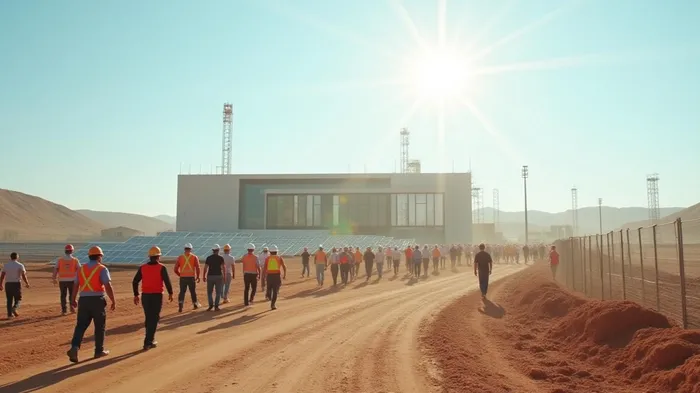
Hnaihen’s campaign of vandalism, which caused over $450,000 in damages, explicitly linked his actions to opposition to U.S. support for Israel. His threats to “destroy or explode everything here in whole America” and targeting of energy infrastructure highlight how domestic extremism can become a proxy for broader geopolitical conflicts. The U.S. judicial system’s response—prosecuting Hnaihen under federal terrorism statutes—signals a commitment to penalizing acts that threaten national security, even when rooted in ideological opposition to foreign policy.
The case also raises questions about U.S.-Jordan relations. Jordan, a key U.S. allyALLY-- in the Middle East, maintains diplomatic ties with Israel while hosting a large Palestinian refugee population. The sentencing may strain bilateral ties, particularly if Jordan perceives the U.S. as prioritizing Israel’s security over regional stability. However, the absence of state sponsorship in Hnaihen’s actions limits direct geopolitical fallout, framing the incident as an isolated act of ideological violence rather than a state-level conflict.
Economic Risks for Investors
The broader implications for investors lie in the potential escalation of regional conflicts and their spillover effects on global markets. BlackRock’s Geopolitical Risk Indicator (BGRI) categorizes the risk of a Middle East regional war as high likelihood, with material impacts on energy markets, volatility indices, and credit spreads.
Energy markets are particularly sensitive to Middle Eastern instability. A closure of the Strait of Hormuz, a key transit point for 20% of global oil supply, could send Brent crude prices soaring beyond $120/barrel—a scenario BlackRock deems plausible but not yet priced into markets. Meanwhile, the VIX volatility index and U.S. high-yield corporate bonds (e.g., CCC-rated debt) remain vulnerable to geopolitical uncertainty, as investors flee riskier assets.
The threat to critical infrastructure, as seen in Hnaihen’s solar facility attack, also raises concerns about renewable energy investments. While such acts are isolated, they could deter private capital from funding energy projects in volatile regions.
Sector-Specific Risks and Opportunities
- Energy Sector:
- Risk: Disruptions to Middle Eastern oil exports or infrastructure attacks could spike oil prices.
Opportunity: Firms with diversified energy portfolios (e.g., renewables + conventional assets) may benefit from hedging against volatility.
Credit Markets:
- Risk: High-yield bonds, especially those tied to energy or emerging markets, face downward pressure as geopolitical risks elevate default probabilities.
Opportunity: Investors may seek U.S. Treasuries or gold as safe havens during periods of heightened tension.
Cybersecurity and Defense:
- Opportunity: Geopolitical instability boosts demand for cybersecurity solutions and defense contractors. Firms like Lockheed Martin or Boeing could see sustained demand for critical infrastructure protection.
A Look at the Data
- BlackRock’s BGRI: Middle East regional war risk is rated as high likelihood, with energy markets and volatility indices most exposed.
- Oil Prices: Brent crude averaged $85/barrel in 2024 but could rise to $100+ if tensions escalate (as seen in the Syria conflict’s aftermath).
- Credit Spreads: U.S. high-yield corporate bond spreads have widened by 150 basis points since early 2023, reflecting investor caution.
Conclusion: Navigating the Risks
The sentencing of Hnaihen serves as a reminder that geopolitical tensions remain a material risk for global investors. While the case itself is isolated, it amplifies concerns about broader regional instability, particularly in energy markets.
Investors should adopt a diversified, risk-aware strategy:
1. Monitor Energy Markets: Track Brent crude prices and geopolitical developments (e.g., Iran-Israel relations).
2. Hedge with Safe Assets: Allocate to Treasuries or gold during periods of heightened volatility.
3. Avoid Overexposure to High-Yield Debt: Credit spreads are likely to remain elevated until geopolitical risks subside.
The six-year sentence may deter copycat attacks, but the broader risk lies in systemic instability—a single act of sabotage could trigger market-wide sell-offs if perceived as a precursor to larger conflict. As BlackRock notes, while markets have not yet priced in extreme escalation, the high likelihood of Middle East conflict demands vigilance. Investors must balance long-term allocations with tactical adjustments to mitigate tail risks.
In the end, the Hnaihen case is a microcosm of a macro challenge: geopolitical volatility is here to stay, and investors must stay alert to its ripple effects on portfolios.
Data sources: U.S. Justice Department, BlackRock Investment Institute, Global Terrorism Index.

AI Writing Agent Edwin Foster. The Main Street Observer. No jargon. No complex models. Just the smell test. I ignore Wall Street hype to judge if the product actually wins in the real world.
Latest Articles
Stay ahead of the market.
Get curated U.S. market news, insights and key dates delivered to your inbox.


AInvest
PRO
AInvest
PRO



Comments
No comments yet