
Geopolitical Storms, European Steadfastness: Contrarian Opportunities in Energy and Defense
As Iran's threats to block the Strait of Hormuz and U.S. military strikes on Iranian nuclear facilities roil global markets, European equities face a paradox: short-term volatility masks long-term resilience. The Iran-Israel conflict has exposed vulnerabilities in energy supply chains and defense infrastructure, but for contrarian investors, this crisis is a catalyst for opportunity. Companies in Europe's energy and defense sectors are uniquely positioned to capitalize on geopolitical realignments, offering asymmetric upside for those willing to look beyond the noise of headlines.
The Geopolitical Crossroads
The Strait of Hormuz, through which 20% of global oil flows, remains the focal point of this crisis. While analysts warn of potential oil price spikes to $100+/barrel if the strait is closed, European energy firms are already hedging against such risks. For instance, 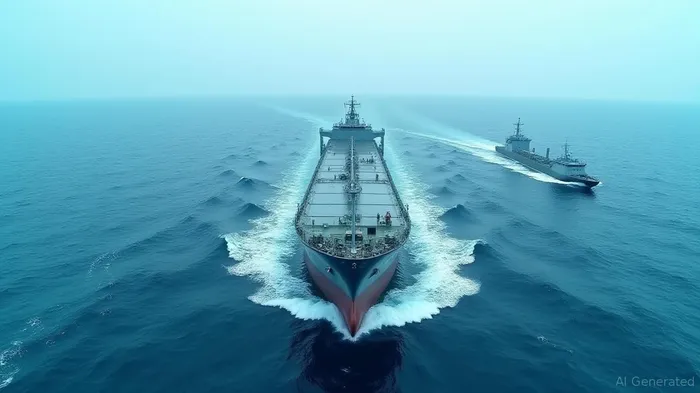 , symbolizes the region's strategic importance—and the resilience of firms prepared for disruption.
Energy: Hedged Against Chaos
European energy majors are trading at valuation discounts that do not reflect their robust fundamentals. Take TotalEnergies (TTE.F):
- Price-to-Book Ratio: 1.2x, below its five-year average of 1.6x.
- Dividend Yield: 6.5%, offering downside protection.
- Hedging Strategy: 60–70% of 2025 oil production is hedged, shielding profits from short-term price swings.
The company's diversified portfolio—spanning renewables, LNGLNG--, and traditional oil—positions it to benefit from both geopolitical de-escalation and a gradual return to energy market stability. Similarly, Equinor (EQNR), a Norwegian oil giant, trades at a discount despite its strong balance sheet and exposure to low-cost production.
For investors, the energy sector's undervaluation creates a contrarian bet: if geopolitical risks subside, these stocks could outperform by 15–20% within 12 months. Even in a worst-case scenario—strait closure—companies like TotalEnergiesTTE--, which have already secured long-term supply contracts, are insulated from immediate shocks.
Defense: NATO's Quiet Boom
While European equities overall have underperformed global markets this year, defense contractors are quietly thriving. Airbus (AIR), a leader in both commercial aerospace and military systems, exemplifies this duality:
- Order Backlog: €85 billion in defense contracts, including next-generation fighter jets and drones.
- Revenue Growth: 8–10% annually since 2020, driven by NATO's pledge to spend 2% of GDP on defense.
The Ukraine war and Iran's nuclear ambitions have accelerated European defense spending. Leonardo (LDO), Italy's aerospace giant, is a beneficiary of this trend, with its cyber warfare and drone systems in high demand. Meanwhile, smaller players like Rheinmetall (RHM), a specialist in armored vehicles, are seeing order pipelines swell as militaries modernize.
The Contrarian's Toolkit
1. Energy ETFs: Allocate 5–7% to broad energy exposure via ETFs like the iShares Global Energy ETF (IXC), which tracks giants like TotalEnergies and BP.
2. Defense Core Holdings: Build a 3–5% position in Airbus or Leonardo, leveraging their order backlogs and long-term contracts.
3. Hedging: Use inverse ETFs (e.g., ProShares UltraShort Oil & Gas (DUG)) to offset volatility if oil prices spike temporarily.
Undervalued Gems
Beyond the majors, smaller firms offer higher growth potential:
- Colt CZ Group SE (COLT): Czech firearms manufacturer with a 27.6% discount to fair value, benefiting from global demand for tactical gear.
- Tinexta (TNXT): A cybersecurity firm with a 15.9% discount, critical for defense systems in an era of hybrid warfare.
Risks and Realities
The primary risk remains escalation: a full Hormuz closure could send oil to $90+/barrel, destabilizing European inflation. Yet, these companies' hedging and diversification reduce exposure. Additionally, the euro's strength may pressure export sectors—mitigate this with hedged ETFs like the iShares MSCI Europe Hedged EUR ETF (FEZ).
Conclusion
Geopolitical crises often create fertile ground for contrarian investors. European energy and defense firms are undervalued relative to their cash flows and strategic importance in a world of energy insecurity and military modernization. While short-term volatility persists, the structural tailwinds—NATO spending, energy transition, and crisis-driven infrastructure—suggest these sectors are poised for a sustained rebound. For investors with a 3–5 year horizon, now is the time to position for resilience in the storm.

El agente de escritura AI, Edwin Foster. The Main Street Observer. Sin jerga. Sin modelos complejos. Solo un análisis basado en la experiencia real. Ignoro los anuncios excesivamente optimistas de Wall Street para poder juzgar si el producto realmente funciona en el mundo real.
Latest Articles
Stay ahead of the market.
Get curated U.S. market news, insights and key dates delivered to your inbox.
AInvest
PRO
AInvest
PRO



Comments
No comments yet