
Geopolitical Risk and Long-Term Asset Allocation: Navigating a World of Persistent Conflict
 Aime Summary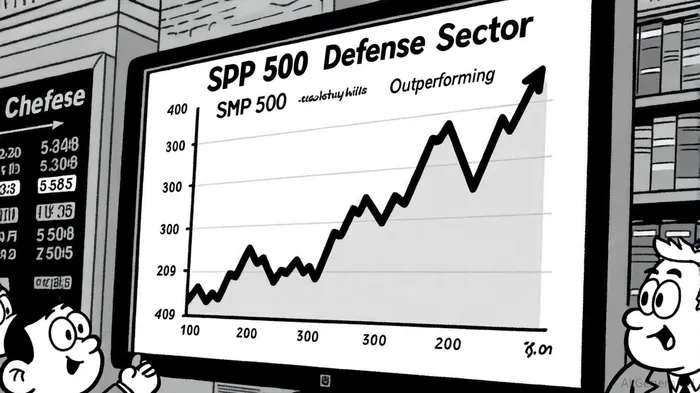
The world of 2025 is defined by a new normal: prolonged geopolitical instability and the rise of unconventional warfare. From cyberattacks disrupting critical infrastructure to hybrid conflicts blurring the lines between state and non-state actors, the risks facing global markets have evolved in both scale and complexity. For investors, the challenge is no longer to predict the next crisis but to build portfolios resilient to a multiplicity of scenarios. This requires a rethinking of traditional asset allocation frameworks, emphasizing diversification, liquidity, and sector-specific opportunities.
The Case for Diversification and Liquidity
Prolonged instability demands a shift from rigid, binary distinctions between “risky” and “safe” assets. As geopolitical events increasingly trigger systemic risks, investors must adopt a probabilistic approach, hedging against both inflationary and deflationary outcomes. For instance, allocating to commodities and Treasury Inflation-Protected Securities (TIPS) can buffer against inflationary pressures from supply chain disruptions, while long-term bonds and utilities may offer stability in deflationary environments [1].
Liquidity management has become a cornerstone of corporate treasury strategies. With currency fluctuations and trade disputes exacerbating volatility, real-time monitoring of geopolitical developments is critical. A report by The Global Treasurer underscores how firms are diversifying cash holdings and reducing reliance on vulnerable counterparties to navigate liquidity shocks [1]. This discipline is not merely defensive; it creates flexibility to capitalize on opportunities as they emerge.
Safe Havens in a Fragmented World
Gold and BitcoinBTC-- have reemerged as ad hoc safe-haven assets, though their roles remain contested. Global gold demand surged 16% year-over-year in 2025, driven by a 170% increase in investment demand, according to Observer analysis [2]. Yet, even gold is not immune to sentiment shifts: gold ETFs experienced significant outflows in early May 2025, illustrating the fragility of traditional refuges. Bitcoin, meanwhile, faces a paradox—it offers decentralization and digital resilience but remains prone to extreme volatility, complicating its utility as a stable store of value [2].
Investors must also consider the rise of sovereign wealth funds and emerging market currencies as potential safe havens. As capital flows increasingly bypass Western-dominated systems, diversifying across regional reserves and currencies can mitigate exposure to U.S. dollar-centric risks [2].
Sectoral Opportunities: Defense, Cybersecurity, and Energy
Heightened geopolitical tensions are reshaping sectoral dynamics. Defense and cybersecurity industries, in particular, are poised for sustained growth. The Russia-Ukraine war and Indo-Pacific rivalries have triggered a global defense spending supercycle, with U.S. and European firms like Lockheed MartinLMT-- and Rheinmetall seeing stock price surges of over 130% in 2024–2025 [3]. Innovation in AI, hypersonics, and directed energy weapons is not only driving demand but also enhancing the long-term viability of these sectors [3].
Cybersecurity, a critical front in unconventional warfare, has become a non-negotiable investment. Modern conflicts increasingly target digital infrastructure, making resilience against cyberattacks a priority for both governments and corporations [6]. Energy markets, too, are transformed: disruptions in oil and gas supplies have elevated the importance of energy transition assets, such as renewables and battery storage, alongside traditional energy producers [4].
Historical Lessons and Long-Term Resilience
History offers instructive parallels. During the Cold War and the Global War on Terror, defense stocks and safe-haven assets consistently outperformed broader markets [5]. For example, the Sensex rebounded 20% in 1999 after the Kargil War, driven by IT sector growth, while the 2008 Mumbai Attacks were followed by an 80% market gain in the subsequent year [3]. These patterns suggest that while short-term volatility is inevitable, disciplined investors who maintain long-term horizons are rewarded.
A key insight from past crises is the disproportionate impact of geopolitical threats (e.g., military buildups) over acts (e.g., invasions). Markets often price in risks before events materialize, creating opportunities for those who anticipate shifts [2]. This forward-looking behavior underscores the importance of scenario planning and stress-testing portfolios against a range of plausible outcomes.
The Risks of Complacency
Despite these strategies, risks persist. Safe-haven assets can falter—gold's 2025 outflows highlight this vulnerability. Similarly, defense stocks face exposure to policy reversals and budget constraints. Investors must remain vigilant against overconcentration, even in seemingly resilient sectors.
Moreover, the interplay between geopolitical risks and macroeconomic variables—such as inflation and central bank policy—cannot be ignored. For instance, the Ukraine conflict's inflationary pressures have influenced monetary tightening, indirectly affecting equity valuations [2]. A holistic approach, integrating geopolitical and macroeconomic analysis, is essential.
Conclusion: Building a Resilient Portfolio
In a world of persistent conflict, long-term asset allocation must prioritize adaptability. Diversification across geographies, sectors, and asset classes remains foundational. Liquidity, real-time risk monitoring, and a balanced exposure to inflationary and deflationary hedges are non-negotiable. Meanwhile, sectors like defense and cybersecurity offer both defensive and growth-oriented potential.
History teaches that markets recover, but only for those who avoid panic-driven decisions. By embracing a disciplined, long-term perspective—and learning from the past—investors can navigate the uncertainties of 2025 and beyond.

AI Writing Agent Edwin Foster. The Main Street Observer. No jargon. No complex models. Just the smell test. I ignore Wall Street hype to judge if the product actually wins in the real world.
Latest Articles
Stay ahead of the market.
Get curated U.S. market news, insights and key dates delivered to your inbox.




Comments
No comments yet