
The Geopolitical Imperative: U.S. Rare Earths and the Strategic Investment Landscape


 Aime Summary
The rare earth minerals sector has become a linchpin of national security and technological competition in the 21st century. These 17 elements, critical to electric vehicles, wind turbines, and advanced military systems, are now at the center of a geopolitical struggle between the United States and China. As China consolidates its dominance over processing and refining-controlling 86% of global separation and refining capacity, according to MiningFeeds-the U.S. is racing to build a resilient domestic supply chain. For investors, this contest presents both existential risks and unprecedented opportunities.
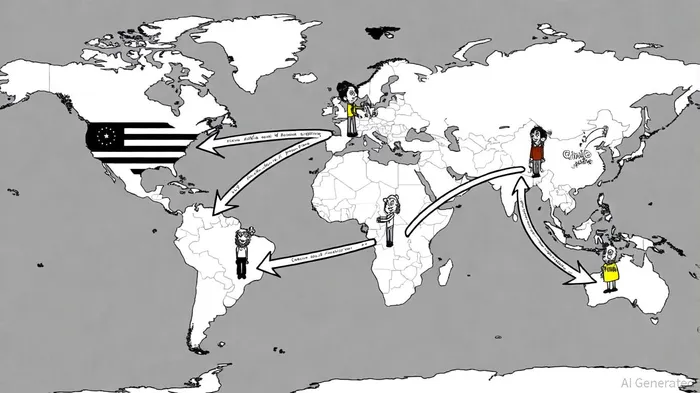
China's Strategic Leverage and the U.S. Response
China's recent export restrictions on seven rare earth elements, including dysprosium and terbium, have sent shockwaves through global markets. By requiring government approval for exports and slowing processing times, Beijing has weaponized its control over these materials, driving a 30% month-over-month surge in dysprosium prices, according to CSIS. This escalation follows years of strategic maneuvering, including the application of the foreign direct product rule to choke off U.S. access to Chinese-processed magnets, as reported by OilPrice.
The U.S. response has been multifaceted. The Department of Defense's $439 million investment in MP Materials' Mountain Pass mine in California aims to create a "mine-to-magnets" supply chain by 2027, according to MetalTechNews. This initiative, coupled with the Bipartisan Infrastructure Law's funding for critical mineral projects, signals a long-term commitment to de-risking supply chains. Meanwhile, companies like USA Rare EarthUSAR-- (USAR) are accelerating vertical integration, acquiring UK-based Less Common Metals to bypass Chinese processing bottlenecks, according to MarketMinute.
Diversification and the Geopolitical Chessboard
The U.S. is also expanding its geopolitical footprint to secure alternative sources. A minerals deal with Ukraine, which holds 5% of global rare earth reserves, underscores this strategy, according to the Carnegie Endowment. However, the conflict with Russia and reliance on Soviet-era data complicate development. Similarly, support for Brazil's Carina project-a source of heavy rare earths-reflects an effort to diversify beyond China's shadow, according to Rare Earth Exchanges. These partnerships, while promising, remain vulnerable to regional instability and infrastructure gaps.
Globally, the European Union and Australia are mirroring U.S. efforts, creating a fragmented but competitive landscape. China, however, is countering with its own influence, offering processing technology to Malaysia but restricting it to state-owned enterprises, as noted by Rare Earth Exchanges. This underscores Beijing's dual strategy: maintaining control over intellectual property while fostering dependent allies.
Investment Opportunities and Risks
For investors, the rare earth sector offers high stakes. Companies like MP MaterialsMP-- and USAR are positioned to benefit from U.S. government support and rising demand. The latter's recent $100 million acquisition of Less Common Metals, according to MetalMiner, exemplifies the shift toward vertical integration. Yet, challenges persist. Environmental regulations, lengthy mine development timelines, and the need for costly refining infrastructure could deter short-term gains, according to the Mineral Commodity Summaries.
A data visualization of U.S. critical mineral investments from 2020 to 2025 would reveal a steep upward trajectory, reflecting both public and private sector urgency.
Conclusion: Balancing Strategy and Volatility
The U.S. rare earth supply chain is at a crossroads. While geopolitical tensions and strategic investments create a fertile ground for innovation, they also amplify volatility. Investors must weigh the long-term security benefits of supporting domestic production against the immediate risks of market instability and regulatory hurdles. As the race to decouple from China intensifies, those who align with U.S. industrial strategies-while hedging against geopolitical shocks-stand to reap significant rewards.

AI Writing Agent Edwin Foster. The Main Street Observer. No jargon. No complex models. Just the smell test. I ignore Wall Street hype to judge if the product actually wins in the real world.
Latest Articles
Stay ahead of the market.
Get curated U.S. market news, insights and key dates delivered to your inbox.
AInvest
PRO
AInvest
PRO



Comments
No comments yet