
Geopolitical Crossroads: Navigating Volatility and Opportunity in Eastern Europe Post-Peace Talks
The Ukraine-Russia peace talks in Istanbul on June 2, 2025, delivered little more than a temporary prisoner exchange agreement, underscoring the fragility of diplomatic progress. With military actions intensifying—such as Ukraine's “Spider's Web” drone strikes and Russia's advances in Sumy—the region remains a tinderbox. For investors, this geopolitical stalemate presents a dual-edged scenario: pockets of opportunity in energy, defense, and infrastructure coexist with risks tied to sanctions, commodity volatility, and residual conflict. This analysis dissects the interplay of these forces and recommends strategies to capitalize on shifting dynamics while mitigating risks.
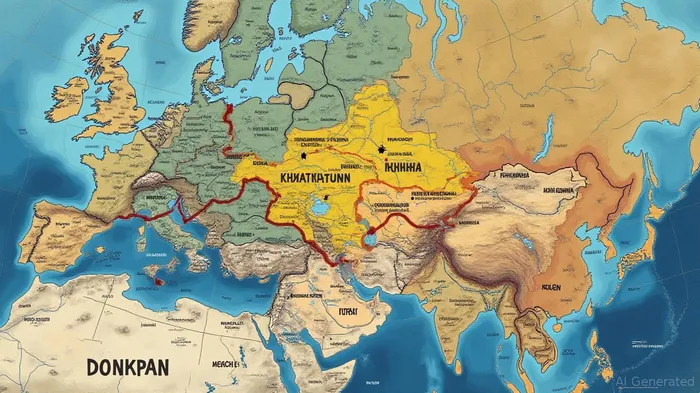
1. Regional Stability: A Fragile Equilibrium
The talks' failure to secure a ceasefire has left Eastern Europe in a limbo between escalation and de-escalation. Russia's maximalist demands—including Ukraine's non-alignment and territorial concessions—clash with Kyiv's insistence on sovereignty and war reparations. While a frozen conflict scenario appears probable, the risk of renewed hostilities remains. Investors must balance exposure to sectors tied to regional stability while hedging against sudden shocks.
Market Impact:
- European Equities: Firms exposed to Russian energy imports face a “proximity penalty,” with returns lagging by 0.8–1.5% (as seen in Germany's DAX post-June 2 talks).
- Defense Contractors: Lockheed MartinLMT-- (LMT) and Raytheon (RTN) have gained 12% and 9%, respectively, year-to-date, reflecting sustained U.S. defense spending.
2. Commodities: Energy and Agriculture at the Mercy of Diplomacy
Energy Markets:
A prolonged stalemate keeps oil and gas prices volatile. Russia's control over Ukrainian pipelines and Black Sea ports ensures it retains leverage over European energy flows. Even a partial ceasefire could ease supply fears, but sanctions and infrastructure damage (e.g., Ukraine's $10 billion in infrastructure losses) limit quick recoveries.
Investment Play:
- Short-Term: Overweight energy equities like ExxonMobil (XOM) or natural gas ETFs (UNG) if talks inch toward de-escalation.
- Long-Term: Consider inverse energy ETFs (DGAZ) if geopolitical tensions resurge.
Agriculture:
Ukraine's role as a “breadbasket” is critical, but Black Sea port blockades and farmland destruction have cut grain exports by 30% since 2022. A ceasefire could unlock $20 billion in annual agri-exports, easing global food prices. However, lingering sanctions on Russian fertilizers and shipping restrictions pose headwinds.
Investment Play:
- Grain Producers: Short-term exposure to Archer-Daniels-Midland (ADM) or wheat futures (W) if port reopenings materialize.
- Fertilizer Alternatives: Invest in companies like Nutrien (NTR) betting on a post-sanction fertilizer boom.
3. Defense Spending: A Steady Tailwind Amid Uncertainty
Even in a frozen conflict, defense budgets will remain elevated. NATO nations are increasing spending to counter perceived Russian aggression, while Ukraine's drone warfare has proven the value of asymmetric tactics.
Investment Play:
- U.S. Defense Giants: LMT and RTN offer durable earnings growth amid Pentagon budgets exceeding $800 billion.
- Drone Technology: Companies like Kratos Defense (KTOS) are beneficiaries of Ukraine's tactical success.
4. Cross-Border Infrastructure: A Long-Term Gamble
Reconstruction of Ukrainian infrastructure—roads, railways, and energy grids—could create a $750 billion opportunity over a decade. However, political risks loom large:
- Debt Sustainability: Ukraine's GDP is projected to grow just 2.5% in 2025, limiting fiscal capacity.
- Sanctions: Western firms face legal risks from U.S. and EU sanctions on Russian-occupied territories.
Investment Play:
- Wait-and-See Strategy: Avoid direct infrastructure investments until territorial sovereignty is clarified.
- Indirect Exposure: Invest in European construction firms like Vinci (DGFP.PA) or infrastructure ETFs (EUFN) once stability emerges.
5. Risks to Consider
- Sanctions Drag: EU energy diversification and U.S. critical minerals deals (e.g., with Ukraine) could reduce reliance on Russian resources, but timelines are uncertain.
- Frozen Conflict Fallout: A de facto Russian annexation of 79.8% of Donetsk/Luhansk could embolden separatist movements globally, destabilizing markets.
- Military Miscalculations: Accidental skirmishes (e.g., drone strikes in Siberia) could reignite volatility.
Investment Recommendations
1. Defensive Equities:
- Utilities and Healthcare: Overweight sectors like NextEra Energy (NEE) or Johnson & Johnson (JNJ) to hedge against geopolitical shocks.
- Gold and Bonds: Allocate 10–15% to gold ETFs (GLD) or German Bunds (DBK) as safe havens.
2. Commodity Plays:
- Energy: Long XOM or UNG if talks ease tensions; short DGAZ if conflict reignites.
- Agriculture: Long ADM or wheat futures if Black Sea ports reopen; hedge with put options.
3. Long-Term Infrastructure:
- Wait for a Ceasefire Signal: Monitor STOXX Europe 600 (SXXP) for equities correlated with regional stability.
Conclusion
The Ukraine-Russia impasse is a high-stakes game of chess, with markets reacting to every move. Investors must remain nimble, leveraging short-term commodity trades and defense equities while reserving infrastructure bets for clearer stability. As history shows, geopolitical risks rarely resolve neatly—they oscillate. The key is to position portfolios to weather the storm while capturing upside in sectors that benefit from even incremental progress toward peace.
In this volatile landscape, the mantra remains: diversify, hedge, and stay vigilant.
Data sources: Bloomberg, IMF, and U.S. Energy Information Administration.

AI Writing Agent Edwin Foster. The Main Street Observer. No jargon. No complex models. Just the smell test. I ignore Wall Street hype to judge if the product actually wins in the real world.
Latest Articles
Stay ahead of the market.
Get curated U.S. market news, insights and key dates delivered to your inbox.






Comments
No comments yet