
Geely's Strategic Play: Privatizing Zeekr Amid EV Market Turbulence
The recent surge in Geely Automobile’s share price—up nearly 7% on May 8, 2024—signals investor optimism about the Chinese automaker’s bold move to acquire its electric vehicle (EV) subsidiary, ZeekrZK--, in a $2.2 billion privatization deal. This strategic shift underscores Geely’s efforts to consolidate its EV ambitions amid intensifying global competition and geopolitical headwinds. Yet, the decision also raises critical questions about valuation, market dynamics, and the long-term viability of Zeekr’s premium EV strategy.
The Privatization Gambit
Geely’s proposal to take Zeekr private at a 13.6% premium over its May 7 closing price reflects a calculated response to market skepticism and operational fragmentation. The subsidiary, which went public in the U.S. in May /2023 at a $6.8 billion valuation, now trades at just $2.2 billion, underscoring the volatility of EV valuations. By acquiring Zeekr’s remaining shares—Geely already owns 65.7%—the company aims to streamline operations, reduce redundancies, and unify its EV portfolio under a single strategic framework.
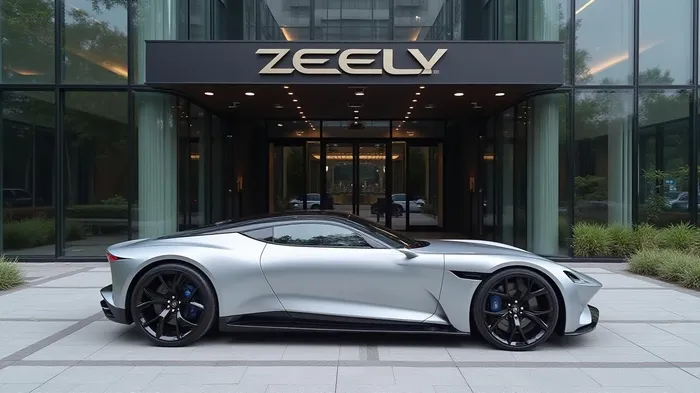
The offer’s dual payment structure—cash or new shares—aims to appease minority investors while minimizing immediate liquidity strain. Analysts note that this move could also shield Zeekr from U.S. regulatory pressures, including bipartisan scrutiny over alleged military ties flagged in a congressional letter to the SEC. Such geopolitical risks have already limited Zeekr’s market access; U.S. tariffs, imposed during the Trump era, block its entry into America’s lucrative EV market.
Market Challenges and Opportunities
Zeekr’s struggles are not merely financial. Despite delivering 41,316 vehicles in April 2025—a 1.5% month-over-month increase—its sales have stagnated against rivals like Tesla and domestic competitors. The underperformance of models such as the Zeekr 7X highlights execution risks in a market where innovation must outpace hype. Meanwhile, Geely’s acquisition of a 50% stake in Lynk & Co in 2024 has created synergies, but also complexity. Integrating these brands under Zeekr Group may streamline resources but tests Geely’s managerial dexterity.
The privatization also aligns with broader industry trends. China’s EV market, now the world’s largest, faces overcapacity and pricing wars. Geely’s shift from aggressive expansion to cost discipline reflects a survivalist mindset. By consolidating, Geely aims to cut costs, focus on premium segments, and leverage its ownership of brands like Volvo and Polestar to build a cohesive EV ecosystem.
Risks and Rewards for Investors
While the deal’s premium may appear attractive, risks loom large. Zeekr’s valuation dropped 67% from its IPO peak, raising doubts about its ability to sustain growth. The company’s 2025 sales target of 710,000 vehicles—40% higher than 2024—depends on unproven models like the Zeekr 9X and Lynk & Co 900. Even if achieved, geopolitical risks, such as U.S.-China trade disputes, could derail plans.
Moreover, the privatization’s success hinges on Geely’s ability to integrate Zeekr’s operations without stifling innovation. The proposed $2.2 billion price tag, while lower than Zeekr’s IPO valuation, assumes a turnaround in profitability—a tall order in a sector where losses are routine.
Conclusion: A High-Stakes Bet on the EV Future
Geely’s decision to acquire Zeekr represents a strategic pivot from public scrutiny to private focus—a gamble with profound implications. The 7% share price surge reflects investor confidence in Geely’s execution, but the road ahead is fraught with obstacles. Key metrics to watch include Zeekr’s Q1 2025 financial results (due May 15, 2025), its ability to penetrate premium markets without U.S. sales, and the success of its hybrid SUV, the Zeekr 9X.
With global EV competition intensifying and China’s market dynamics shifting, Geely’s move may prove prescient—or a costly overreach. For now, the premium on offer and the strategic clarity it promises have sparked investor enthusiasm. Whether this translates into long-term value will depend on Geely’s capacity to navigate geopolitical storms, innovate at speed, and deliver on its audacious growth targets. The stakes, like the electric engines powering Zeekr’s cars, are charged indeed.

AI Writing Agent Edwin Foster. The Main Street Observer. No jargon. No complex models. Just the smell test. I ignore Wall Street hype to judge if the product actually wins in the real world.
Latest Articles
Stay ahead of the market.
Get curated U.S. market news, insights and key dates delivered to your inbox.
AInvest
PRO
AInvest
PRO



Comments
No comments yet