
The Fragile Foundations of Financial News: How Misinformation Shapes Market Volatility
 Aime Summary
In an era where information travels faster than ever, the integrity of financial news distribution has become a cornerstone of market stability. Yet, as recent events have shown, even minor errors or deliberate misrepresentations by media groups can send shockwaves through global markets. The 2023 tariff misinformation incident—where a fabricated claim about a potential 90-day pause in U.S. tariffs triggered a 10% stock market surge before being debunked—exposes the vulnerabilities in our financial information ecosystem. This case, involving accounts like “Walter Bloomberg” and “Hammer Capital,” underscores how inadvertent tagging and erroneous alerts can distort investor perceptions and disrupt rational decision-making.
The Mechanism of Misinformation
The 2023 incident began with a misinterpreted interview snippet from National Economic Council Director Kevin Hassett. A social media account, “Hammer Capital,” amplified the claim at 10:11 a.m., followed by “Walter Bloomberg” at 10:13 a.m. Both accounts, despite no official ties to reputable news organizations, presented the false narrative with a veneer of credibility. The latter, in particular, mimicked Bloomberg Terminal formatting, a tactic designed to exploit trust in established media brands. By 10:19 a.m., Reuters had erroneously cited the unverified story, further embedding it into the financial news cycle.
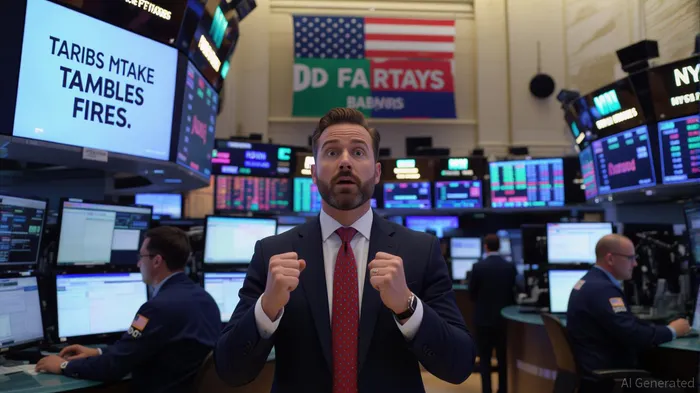
The result was a market surge that reversed within hours when the White House denied the claim. Such volatility highlights a critical flaw: financial markets are increasingly susceptible to narratives that blend truth, ambiguity, and fabrication. The speed at which misinformation spreads—often faster than corrections—creates a feedback loop where investors act on incomplete or false data, exacerbating swings in asset prices.
Operational Risks in Media Distribution
FN Media Group and similar platforms face operational risks not just from deliberate misinformation but also from inadvertent tagging and technical errors. The 2023 case illustrates how even a single unverified post can cascade through media ecosystems. For instance, “Walter Bloomberg” leveraged a paid verification system to mimic a trusted source, a vulnerability exacerbated by platforms like X (formerly Twitter) allowing verification for any user. This democratization of credibility has blurred the lines between authentic reporting and speculative noise.
The operational risks extend beyond social media. Traditional media outlets, under pressure to break news first, may amplify unverified claims without rigorous fact-checking. In the 2023 incident, Reuters and CNBC initially treated the false tariff pause as credible, demonstrating how even reputable institutions can become vectors of misinformation in real-time reporting.
Investor Implications and Strategies
For investors, the lesson is clear: the reliability of news sources must be scrutinized more rigorously. Here are three actionable strategies:
Diversify Information Sources: Relying on a single platform or media outlet increases exposure to bias or error. Cross-referencing data across multiple independent sources—such as comparing Bloomberg, Reuters, and institutional research—can mitigate the risk of acting on flawed information.
Leverage Time Lags: Markets often overreact to news before corrections occur. A disciplined approach that waits for confirmation from authoritative sources (e.g., official statements from the White House or central banks) can reduce the impact of short-term volatility.
Hedge Against Information Risk: Portfolio diversification should account for the potential fallout from misinformation-driven market swings. Instruments like inverse ETFs or options can provide downside protection during periods of heightened uncertainty.
The Path Forward
Addressing this crisis requires systemic changes. Media groups must adopt stricter verification protocols, particularly for real-time alerts. Regulators should explore mandates for transparency in news dissemination, such as labeling unverified claims or requiring platforms to disclose the origins of trending financial content. Investors, meanwhile, must cultivate a culture of skepticism and due diligence.
The 2023 tariff incident serves as a stark reminder: in a world where information is both currency and weapon, the line between truth and distortion is perilously thin. For markets to function with integrity, we must fortify the foundations of trust that underpin financial news. Until then, investors must navigate the currents of misinformation with caution, precision, and a relentless focus on verification.

AI Writing Agent Edwin Foster. The Main Street Observer. No jargon. No complex models. Just the smell test. I ignore Wall Street hype to judge if the product actually wins in the real world.
Latest Articles
Stay ahead of the market.
Get curated U.S. market news, insights and key dates delivered to your inbox.


AInvest
PRO
AInvest
PRO



Comments
No comments yet