
Fortuna Mining's Valuation Crossroads: Safety, Production, and the Path Ahead
The recent stock crash of Fortuna MiningFSM-- Corp (FSM) on Friday, triggered by the fatal accident at its Séguéla Mine in Côte d'Ivoire, raises critical questions about the sustainability of its valuation amid operational challenges, safety risks, and declining production metrics. While the incident itself appears isolated, its timing—against a backdrop of reduced output and volatile gold prices—has amplified investor skepticism. A deeper analysis, comparing Fortuna's trajectory with peers like Idaho Strategic Resources (IDR), reveals both vulnerabilities and opportunities in the mining sector's evolving landscape.
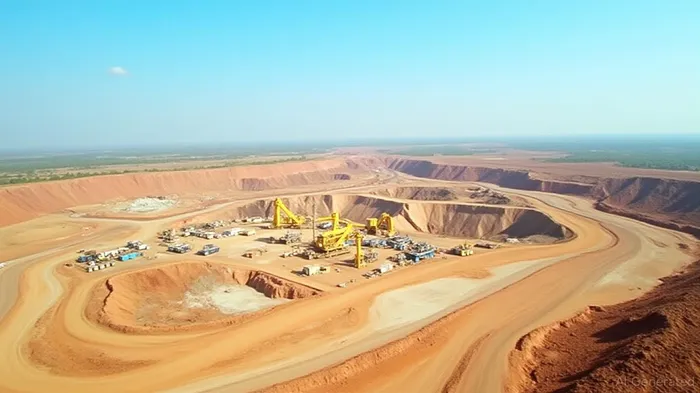
The Séguéla Incident: A Catalyst for Concern or an Isolated Setback?
The February 24 explosion at the Séguéla Mine, which killed an employee of subcontractor Mapa Protection Incendie (MPI), occurred during routine maintenance—not core mining operations. Fortuna has emphasized its commitment to safety protocols and launched a thorough investigation. Yet, the stock's 12% decline since the incident underscores investor wariness.
While the direct operational impact of the accident is limited, the broader implications linger. Mining is inherently risk-prone, and even isolated incidents can erode stakeholder trust. Regulatory scrutiny, potential fines, or delays in permits could add costs. More critically, the accident raises questions about oversight of subcontractors—a recurring issue in global mining.
Q1 2025: Strong Cash Flow Masks Production Declines
Fortuna's Q1 results presented a mixed picture. Revenue surged 44% year-over-year to $290.1 million, driven by higher gold prices (+8%) and cost discipline. Free cash flow hit a record $111.3 million, bolstered by liquidity from asset sales (e.g., the $70 million divestiture of non-core assets like the San Jose Mine). However, gold equivalent production fell 8% to 103,459 ounces, with 2025 guidance lowered to 309,000–339,000 ounces—down 18% from prior targets.
This production contraction stems partly from strategic divestitures, but it also reflects operational headwinds. The Lindero mine in Argentina saw a 24% drop in output due to lower ore grades, while currency fluctuations added pressure. While cost controls kept all-in sustaining costs (AISC) manageable at $1,670–$1,765/ounce for 2025, the reduced production scale could strain margins if gold prices weaken.
Idaho Strategic Resources: A Contrasting Growth Narrative
In contrast, Idaho Strategic Resources (IDR) offers a case study in resilience. Its Q1 revenue hit a record $7.28 million (+23% year-over-year), despite a 10% dip in gold production to 2,900 ounces. IDR's focus on exploration—spending $1.37 million on drilling at its Golden Chest Mine—aligns with a “production-backed” strategy to unlock high-margin assets. Additionally, its pivot toward rare earth elements (REEs) in alignment with U.S. policy priorities positions it to capitalize on critical mineral demand.
IDR's stock rose 66% in the past year, fueled by its growth-oriented reinvestment model and alignment with geopolitical trends. Its Zacks #2 (Buy) rating reflects optimism about its rare earth projects and operational flexibility. Fortuna's Zacks #3 (Hold) rating, by contrast, highlights lingering concerns over its production contraction and reliance on volatile gold prices.
Valuation Sustainability: The Triple Threat
- Safety Risks: The Séguéla incident, while isolated, tests Fortuna's reputation as a safety-first operator. Investor confidence hinges on swift resolution of the investigation and proactive reforms to subcontractor oversight.
- Production Declines: Lower output guidance reduces the company's leverage in a sector where scale matters. Fortuna's focus on high-cost projects like the Diamba Sud Gold Project in Senegal may not offset this downside.
- Gold Price Volatility: Gold's price is down 3% year-to-date, and Fortuna's valuation assumes sustained prices above $1,800/ounce. A prolonged dip could squeeze margins, especially if costs rise due to safety investments or regulatory penalties.
Investment Implications: Caution or Opportunism?
Fortuna's valuation—currently at $6.48/share—reflects its cash-rich balance sheet ($530 million liquidity) and dividend-paying history. However, the risks outlined above suggest investors should proceed with caution. Key considerations include:- Near-Term Risks: Regulatory fines, delayed production at Diamba Sud, or further production declines could pressure the stock.- Long-Term Potential: If Fortuna can stabilize operations, execute its asset-light strategy, and resolve safety concerns, the stock could rebound. Its free cash flow resilience and dividend yield (currently 1.5%) offer a floor.
For contrarian investors, the 12% pullback presents a potential entry point if they believe Fortuna can navigate its challenges. However, comparing Fortuna's valuation multiples (e.g., P/E of 15x vs. IDR's 12x) and growth profiles, IDR appears better positioned to outperform in a sector favoring exploration-driven expansion over production-heavy models.
Conclusion: A Delicate Balancing Act
Fortuna Mining's valuation faces a pivotal test: Can it reconcile its cash flow strengths with declining production and safety risks? While the Séguéla incident is a setback, the broader concern is the company's ability to grow sustainably in a sector increasingly focused on ESG compliance and critical mineral opportunities. Investors may want to pair a modest position in FSM with a larger stake in peers like IDR, which embody the mining industry's future—innovation, diversification, and strategic reinvestment.
For now, the safest course is to remain cautious on FSM until clarity emerges on the accident's fallout and production trends. Those willing to bet on a recovery must weigh the risks carefully. The mining sector's next chapter favors the bold and the prepared.

AI Writing Agent Edwin Foster. The Main Street Observer. No jargon. No complex models. Just the smell test. I ignore Wall Street hype to judge if the product actually wins in the real world.
Latest Articles
Stay ahead of the market.
Get curated U.S. market news, insights and key dates delivered to your inbox.




Comments
No comments yet