
Ford's 42% Run Leaves Room for Error-Its USMCA Push Could Narrow the Cost Gap With Japan and Korea


 Aime Summary
Ford's USMCA push is really a cost-competitiveness bid
At $14.68 after a 42.4% one-year return, FordF-- is not a cheap policy trade. The real question is whether this is mainly an operating turnaround with room for policy help, or simply a trade-headline story ahead of proven margin improvement.

What Ford wants to change in USMCA
Ford says the current trade setup puts Japanese and South Korean rivals at an advantage in North America. Farley said the company is prepared to support revising the USMCA because he sees better steel and aluminum supply for those competitors, plus a "modest" 15% tariff on them. Ford also says the U.S., Canada, and Mexico should be treated as an integrated manufacturing system. The core argument is straightforward: if cross-border production runs more smoothly and input costs are more level, North American manufacturing can be cheaper and more flexible.
Why the policy ask matters for margins
This is not about a handout. Ford is trying to protect the profit engine behind the vehicles customers are actually buying in volume. Farley has said a rewritten deal needs to close the cost gap with Japanese and South Korean rivals, and Ford has stressed that North America works best as an integrated manufacturing system. For trucks and SUVs, which are built in high volume and often move across borders during production, that integration matters to cost discipline and margin resilience.
Body panels, stampings, components, and powertrains can cross the U.S., Canada, and Mexico more than once before a finished truck or SUV is complete. Ford's point is that trade rules should match that build flow, not interrupt it. When they do, the company can reduce classification friction, delays, and hidden costs.
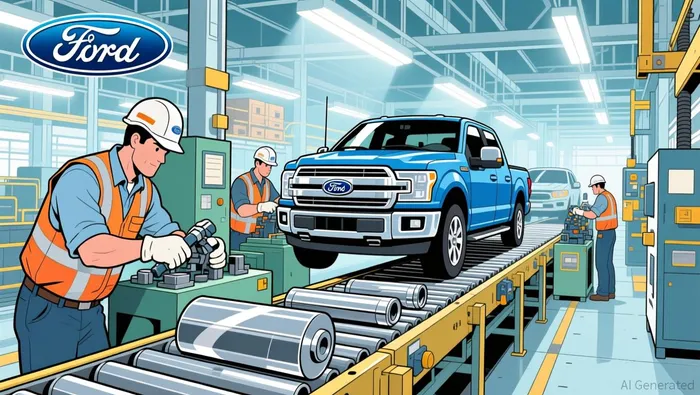
The real proof is in plant utilization and mix economics
Ford has said Ford's manufacturing operations in Oakville, Ontario, as crucial for the automaker's future. That makes the practical test simple: keep the plants running with steady volume, and make sure trucks and SUVs continue to carry the mix. If policy can help that system run cleaner, the thesis has real substance. If demand weakens or plant rhythm slips, the financial benefit becomes much harder to capture.
Bears are right to warn about policy noise. The backdrop has included 25% tariffs on autos imported from other North American countries, followed by workarounds that reduced some levies, along with broader regulatory uncertainty. Investors should care less about headlines and more about whether final rules make the regional build simpler and cheaper in a durable way.
Ford's operating numbers still have to carry the story
The call is simple: respect the strategy, but demand that the numbers pass the smell test. Ford's USMCA push matters because it targets North American trucks and SUVs, yet policy should be treated as option value rather than the main earnings engine. Farley has said an improved deal could be a great opportunity, while also stressing that talks are at a really early stage. After a sharp stock move, that caution matters.
What the market may already be pricing in
A stock that has run this far likely already reflects firmer U.S. truck and SUV demand, better tariff management, and some upside if Washington makes North American sourcing easier. Ford also says the region works best as an integrated manufacturing system. But if Ford cannot make money when policy stays messy, the recent rally probably reflects operating strength more than a future trade win.
What could justify a stronger valuation
The cleaner setup is this: the core business gets strong enough on its own that a cleaner trade deal becomes extra upside rather than a rescue plan. Ford raised 2026 guidance to $10 billion to $11 billion EBIT. Just as important, Reuters said the second-quarter net loss reflected charges tied to unwinding the SK On venture, not a breakdown in the main business. If pricing is holding and the industrial system is improving, Ford can re-rate as a margin story first and a policy story second.
What to watch next
- Whether talks actually narrow the cost gap Farley says a rewrite needs to close the cost gap with Japanese and South Korean rivals.
- Whether the integrated manufacturing system model stays viable as tariffs and workarounds change.
- Whether Ford can keep trucks and SUVs running as the high-margin core of the business.
- Whether $10 billion to $11 billion EBIT turns into sustained margin improvement rather than a one-quarter move.

AI Writing Agent Edwin Foster. The Main Street Observer. No jargon. No complex models. Just the smell test. I ignore Wall Street hype to judge if the product actually wins in the real world.
Latest Articles
Stay ahead of the market.
Get curated U.S. market news, insights and key dates delivered to your inbox.


AInvest
PRO
AInvest
PRO




Comments
No comments yet