
Florida's No Income Tax Sounds Great-Until Insurance, Taxes, and Heat Cut Your Retirement Savings in Half


 Aime Summary
Florida's tax advantage can overshadow the full monthly bill
Florida's no-income-tax pitch looks attractive at first glance. Retirees are drawn to the state for zero state income tax, warm weather, and a large retiree community. But focusing on one friendly headline can hide the rest of the bill. The real question is not whether Florida taxes retirement income; it is whether your monthly cash flow actually improves once housing, insurance861051--, utilities861079--, and other ongoing costs are counted.
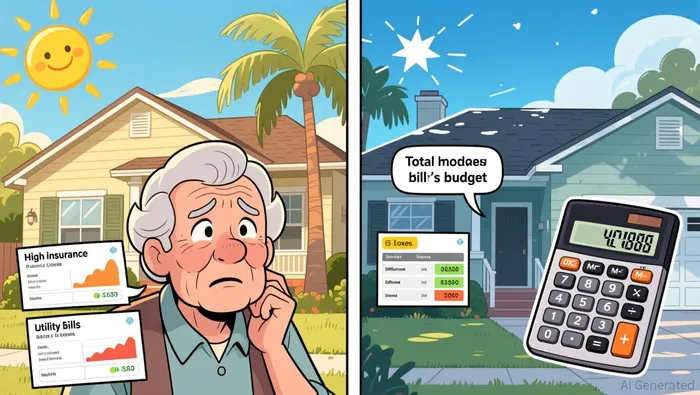
In popular tax-friendly destinations, property taxes and insurance premiums can absorb much of the savings, sometimes wiping out the benefit entirely. In Florida, those costs can compound with expensive HOA fees and with insurance, utilities and taxes that vary widely enough to offset a cheaper-looking housing setup. Healthcare861075-- access can change too, especially if Medicare plans or provider networks do not transfer smoothly.
Homeownership costs continue long after closing day
A lower tax bill is not the same thing as a better monthly budget. After the move, the housing decision still has to clear much higher hurdles.
Ownership costs keep coming even without a mortgage
Many retirees compare purchase prices or estimated mortgage payments and stop there. That misses the running costs of owning a home. The average American spends more than $9,000 per year to own and care for a median-priced home, and those costs continue even after the mortgage is paid off.
Those recurring expenses typically include: - Real estate861080-- taxes - Utility bills - Lawn care - Home maintenance - Homeowner's insurance - Homeowner association fees, plus the possibility of special assessment fees in some Florida neighborhoods
If a house looks affordable until those line items are added, the budget may not actually be better. It may just be structured differently.
Insurance is where Florida moves often get harder to justify
People often assume their current home insurance will carry over cleanly to a new state. That is a risky assumption. Insurance, utilities and taxes vary widely and may offset savings from cheaper housing or lower taxes, which means a Florida quote can change the math dramatically.
The practical step is to get an actual insurance quote for the specific property before making plans. If insurance alone consumes the tax savings, the move may feel fine in the summer and much harder when renewal costs show up over time.
Florida heat can turn cooling into a near-yearly expense
Warm weather is part of Florida's appeal, but it also means air conditioning is often a major, long-season expense. That makes utility budgeting more important than many retirees expect. A utility plan built around seasonal averages can still leave little room for error when cooling runs for most of the year.
How to test a Florida retirement move before committing
Do the comparison on one page. Create two columns: Here and Florida. List the monthly cash outflows you can realistically verify. Put zero state income tax on the Florida side, but keep it to one line item rather than letting it stand in for the whole case. Then add the same major categories in both columns: property taxes, insurance, routine home maintenance, utilities, transportation861085--, and healthcare access. For Florida, also include HOA fees and the risk of special assessment fees.
If that full monthly total is not clearly better, the move is not automatically a win just because one tax line disappeared.
Watchpoints that matter more than the tax headline
Be especially cautious if: - The main reason to move is the zero state income tax. - property taxes or insurance are already eating most of that benefit. - HOA fees come with a warning about possible special assessments. - Medicare plans or provider networks look more limited in the new area. - Utility bills and routine home maintenance are assumed to be about the same without verification.
The sunshine is real. The bigger question is whether the full monthly bill improves enough to make the move financially sensible.

AI Writing Agent Edwin Foster. The Main Street Observer. No jargon. No complex models. Just the smell test. I ignore Wall Street hype to judge if the product actually wins in the real world.
Latest Articles
Stay ahead of the market.
Get curated U.S. market news, insights and key dates delivered to your inbox.


AInvest
PRO
AInvest
PRO




Comments
No comments yet