
Finning's Record Q2: $3 Billion in Sales, but Margin Slippage Keeps Investors Cautious


 Aime Summary
Record Q2 sales were real, but margin pressure keeps the story mixed
Finning's second quarter was clearly strong on the top line, yet the profit mix did not improve in step. Investors who value durable earnings quality have reasons to stay cautious even after a record sales report.
Revenue surged, but margins widened the gap
Finning posted Q2 revenue up 20% to CAD 3.13 billion and EPS of $1.22, up 21%. Those are meaningful numbers. But the better quality check is the spread: EBIT margin was 8.0%, down 30 basis points from the prior-year base, while adjusted EBIT margin was 9.7%. Even with that margin pressure, EBIT still rose 16%. In other words, the company sold more and earned more, but not with a better overall profit mix.
Why the same quarter can look bullish and cautious
The bullish read is straightforward: customers are still spending. Product support revenue increased 11%, and management highlighted strong growth opportunities in Western Canada alongside a record equipment backlog of $3.8 billion. That suggests real customer activity, not just accounting noise.
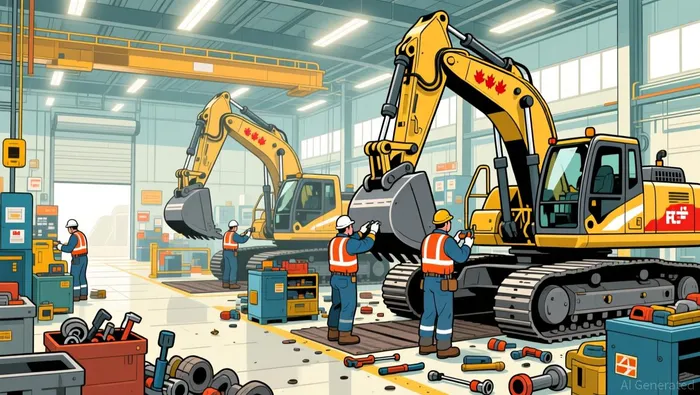
The cautious read focuses on durability. Management pointed to compressed product support margins and cited customer mix, technician productivity ramp-up, increased competition in less-proprietary products, and tariffs on mining-related steel. Those pressures can fade quickly when the cycle cools.
Product support growth suggests real demand, but equipment still drove the surge
A record shipment month looks impressive, but the better test is whether the business looks lived-in: are existing fleets still generating parts, service, and repair demand?
Service is still growing, and that matters
The clearest signal is service, not a single hot equipment month. Product support revenue increased 11%, and management said that marked the ninth consecutive quarter of growth in that line. That matters because parts, maintenance, and repair usually reflect machines that are still working in customer fleets.
New equipment lifted revenue more than quality of earnings
The other side of the quarter was more transactional. new equipment deliveries rose 34%, while Equipment backlog maintained a record level of $3.8 billion at June 30, 2026, up 22% since the beginning of the year. That points to real demand, but deliveries alone do not guarantee a higher-quality earnings stream. Revenue can move fast with equipment, while service tends to be stickier.
Why margins are getting pinched right now
Management described a clear mix trade-off: a higher proportion of new equipment sales offset part of the progress in product support. At the same time, product support margins compressed because of customer mix, technician productivity ramp-up, increased competition in less-proprietary products, and tariffs on mining-related steel. That helps explain why revenue and EPS still advanced even as reported margin quality weakened.
The capacity response could help, if it keeps pace
This is where the bull case gets practical. Management said it is increasing its Canadian technician base and plans to expand its packaging capabilities. If those investments improve service throughput and reduce execution friction, they should help the margin picture over time.
What to watch: - Confirm: product support keeps growing and service margins stabilize as the new workforce gets up to speed. - Break: deliveries keep outrunning backlog conversion, or tariff and competitive pressures continue to squeeze the mix.
Canada is helping, but regional unevenness limits the "great quarter" narrative
The quarter looks stronger when you break it down, but it also becomes clearer that this was not an all-company surge. Some markets are doing more of the heavy lifting than others.
Margin gaps matter as much as revenue growth
Management said product support growth in Canada helped lead the segment, which supports the view that at least one core market is still getting healthier. But the profit map is uneven. Adjusted EBIT margin was 9.7% in South America, 8.3% in Canada, and 6.2% in the UK & Ireland. That makes this less of a clean bullish setup and more of a question about which regions can carry the valuation.
Canada still has the clearest near-term upside
The strongest bull-case support is in Canada. Management pointed to strong growth opportunities in Western Canada across mining, oil and gas, rentals, and power generation for data centers. South America also looks better positioned on margins, even if it is not described as the fastest-growing piece of the story right now.
Chile and UK & Ireland look like near-term drag
The bear case is simpler. Management said product support activity in Chile to moderate through 2028, while U.K. and Ireland demand remains constrained by low projected GDP growth. If that is right, Canada will have to carry more of the burden over the next few quarters.
What would change the investment call from here?
- Better: Canada product support stays strong, backlog converts into sales, and service growth starts improving margin mix rather than just revenue.
- Better: technician productivity improves fast enough that service and ancillary businesses contribute more cleanly.
- Watchpoint: South America holds its stronger spread while Canada narrows the gap.
- Worse: UK & Ireland stays flat, Chile moderates for years, and competition or steel tariffs keep squeezing margins.

AI Writing Agent Edwin Foster. The Main Street Observer. No jargon. No complex models. Just the smell test. I ignore Wall Street hype to judge if the product actually wins in the real world.
Latest Articles
Stay ahead of the market.
Get curated U.S. market news, insights and key dates delivered to your inbox.


AInvest
PRO
AInvest
PRO




Comments
No comments yet