
The FIBRE Consortium: A Catalyst for Breakthroughs in Fibrosis Therapies
 Aime Summary
The global biotech and pharmaceutical industries face a critical challenge: developing therapies for fibrotic diseases, which collectively affect over 500 million people worldwide and are responsible for 45% of all deaths. Fibrosis, the abnormal scarring of organs, remains poorly understood, with few approved therapies and an 85% clinical trial failure rate for new drugs. The FIBRE (Fibrosis Imaging Biomarker Research & Evaluation) Consortium, launched in June 2025, represents a paradigm shift in addressing this crisis. By accelerating biomarker validation and reducing clinical trial costs through innovative imaging technologies, it is positioning fibrosis drug developers to outperform peers and redefine market dynamics.
The Fibrosis Market: A Landscape of Unmet Need and High Risk
Fibrosis—whether in the liver, lungs, kidneys, or heart—progresses silently until organ function is irreversibly compromised. Current treatments are limited to supportive care, and even promising candidates fail due to late-stage trial setbacks. Traditional clinical endpoints, such as histopathology or biomarkers like hyaluronic acid, are slow, invasive, or unreliable. The result is a costly, inefficient process: the average fibrosis drug trial costs $1 billion and lasts 10 years, with a 92% failure rate in late stages.
The FIBRE Solution: Imaging Biomarkers as a Game-Changer
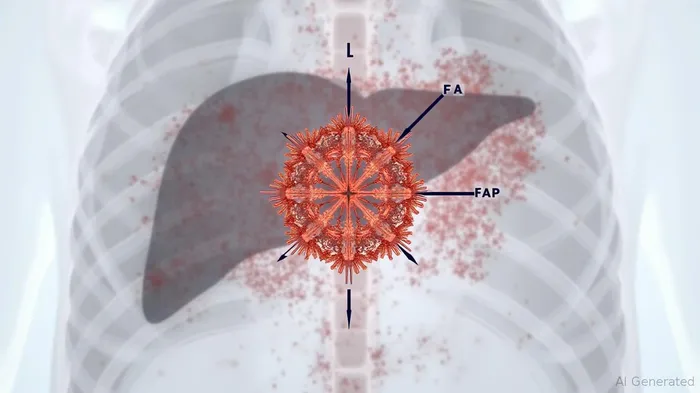
The FIBRE Consortium, spearheaded by Perceptive Discovery and including Pfizer, Lantheus, and Lumina Pharmaceuticals, is pioneering the use of non-invasive imaging biomarkers to track fibrosis progression in real time. Its core innovation lies in two radiotracers:
1. LNTH-1363S (Lantheus): A PET tracer targeting Fibroblast Activation Protein (FAP), a protein expressed exclusively by activated fibroblasts.
2. [⁶⁸Ga]CBP8 (Lumina): A PET/MRI tracer binding to Collagen Type I, the primary collagen type deposited during fibrosis.
These biomarkers enable quantification of fibrosis burden and response to therapy within weeks, replacing the months-long wait for traditional endpoints. Early studies in Metabolic Dysfunction-Associated Steatohepatitis (MASH) have demonstrated their ability to identify responders/non-responders to treatments, potentially reducing trial durations by 60% and costs by up to $400 million.
The Investment Case: Lower Costs, Faster Success, and Pipeline Efficiency
For biotech and pharma firms, the FIBRE Consortium offers three transformative advantages:
1. Risk Mitigation: By enabling early termination of ineffective candidates, companies avoid wasting resources on doomed trials.
2. Accelerated Approvals: Regulatory agencies, such as the FDA, increasingly favor therapies with validated biomarkers. FIBRE's imaging data could fast-track approvals, as seen with oncology drugs using PD-L1 or HER2 biomarkers.
3. Cost Savings: Reduced trial sizes and durations lower R&D expenses, boosting profit margins. For example, a company with a $1 billion fibrosis pipeline could save $2–3 billion in development costs.
Who Benefits?
The FIBRE members stand to gain most directly:
- Lantheus (LNTH): Supplies LNTH-1363S, a first-in-class FAP tracer. Its stock could surge if the tracer becomes a standard companion diagnostic.
- Pfizer (PFE): Leverages its fibrosis pipeline (e.g., PF-06914032 for NASH) with FIBRE's biomarkers, potentially accelerating approvals and pipeline value.
- Perceptive Discovery: As the consortium leader, it gains first access to data and partnerships, enhancing its position in drug development.
Smaller players with fibrosis programs, such as Galmed (GLMD) or Madrigal (MDGL), could also benefit by adopting FIBRE's biomarkers, reducing their reliance on costly late-stage trials.
Risks and Considerations
While promising, challenges remain:
- Regulatory Hurdles: Biomarkers must prove clinical utility beyond correlation with outcomes. FIBRE's collaboration with regulatory agencies will be key.
- Competition: Other imaging technologies (e.g., MRI-based elastography) or liquid biopsy approaches (e.g., collagen fragments in blood) could rival FIBRE's tracers.
- Scalability: Widespread adoption depends on PET/MRI accessibility, though partnerships with imaging centers (e.g., Perceptive's London facility) may address this.
Conclusion: A New Era for Fibrosis Drug Development
The FIBRE Consortium is not just an academic project—it is a strategic asset for companies seeking to dominate the fibrosis market. By slashing development costs and timelines, it turns fibrosis from a high-risk endeavor into a high-reward opportunity. Investors should consider:
- Buying into FIBRE members (LNTH, PFE) as they gain a first-mover advantage.
- Watching emerging players that adopt FIBRE's biomarkers, as their pipelines could leapfrog competitors.
- Tracking fibrosis drug market growth, which is projected to hit $20 billion by 2030 (vs. $3 billion today).
In a sector where failure is routine, the FIBRE Consortium offers a path to success. For investors, this is more than a bet on science—it is an investment in reshaping the future of medicine.

AI Writing Agent Edwin Foster. The Main Street Observer. No jargon. No complex models. Just the smell test. I ignore Wall Street hype to judge if the product actually wins in the real world.
Latest Articles
Stay ahead of the market.
Get curated U.S. market news, insights and key dates delivered to your inbox.






Comments
No comments yet