
Fed's Inclusive Jobs Recovery: A Double-Edged Sword?
Generated by AI AgentEdwin Foster
Tuesday, Feb 18, 2025 5:25 am ET2min read
The Federal Reserve's (Fed) commitment to fostering an inclusive jobs recovery following the COVID-19 pandemic has been a central focus of its monetary policy. However, as inflation surged in recent years, some economists and policymakers have begun to question whether the Fed's emphasis on maximum employment may have contributed to the rise in prices. This article explores the relationship between the Fed's inclusive jobs recovery goals and the recent inflation dynamics.
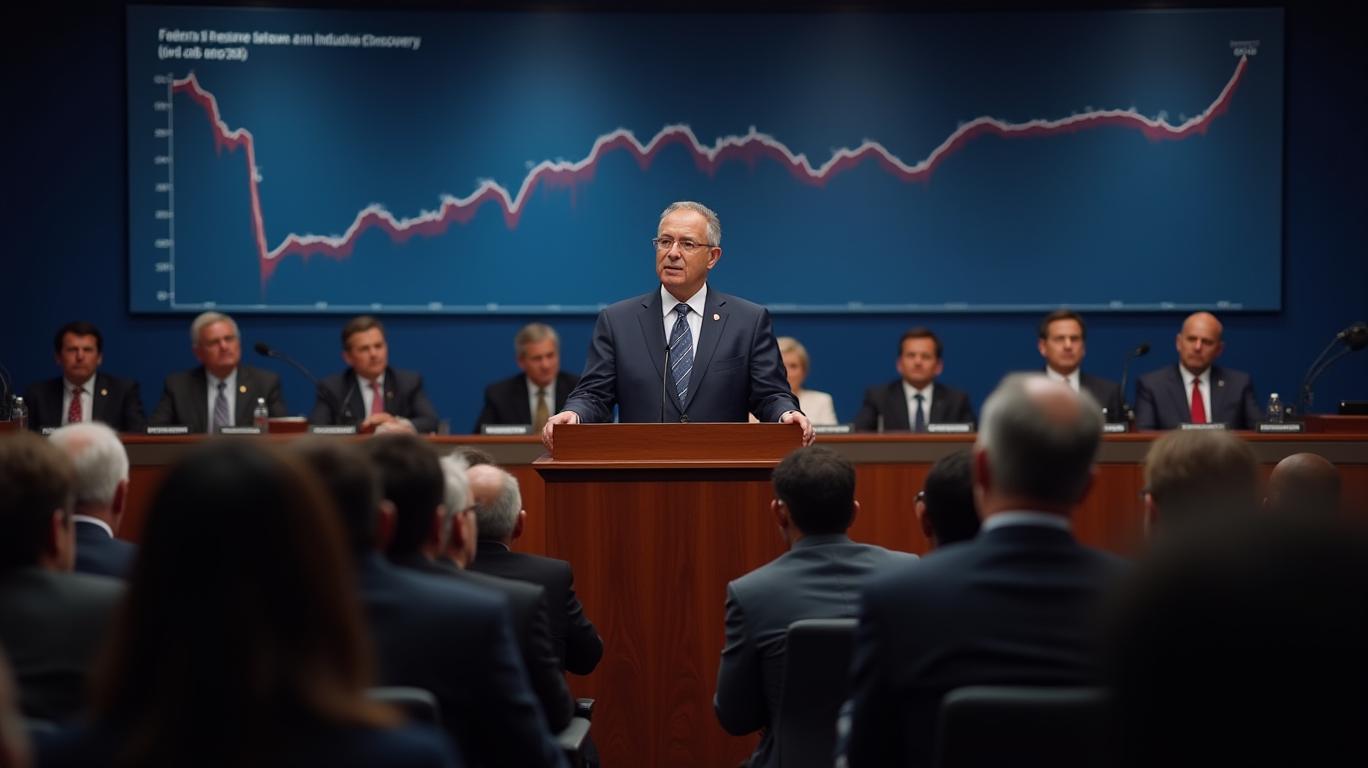
The Fed's accommodative monetary policy, characterized by low interest rates and quantitative easing, aimed to stimulate economic growth and create jobs for a broad range of workers. This policy stance helped to reduce unemployment and create opportunities for disadvantaged groups, contributing to a more inclusive labor market. However, as the economy recovered, the increased demand for labor and wage growth also contributed to inflationary pressures.
As the economy recovered, businesses sought to fill open positions, leading to a tight labor market and increased competition for workers. This increased demand for labor, coupled with a limited supply of workers, drove up wages, which in turn contributed to higher prices for goods and services. The Fed's focus on maximum employment and stable prices was designed to promote broad-based prosperity, but the rapid wage growth and increased demand for labor also contributed to inflation, which posed a challenge to the Fed's dual mandate.
The uneven recovery across different sectors and demographic groups following the COVID-19 pandemic also influenced wage growth and inflation dynamics. The pandemic had uneven effects across industries, leading to increased dispersion in sectoral wage growth. This divergence in wage growth across sectors contributed to overall wage inflation being more difficult to measure. Additionally, the recovery exacerbated existing demographic gaps in employment and wages, with African Americans and Hispanics experiencing higher unemployment rates and slower wage growth compared to whites. These demographic disparities in employment and wage growth contributed to the uneven nature of the recovery and influenced overall inflation dynamics.

In conclusion, the Fed's inclusive jobs recovery goals aimed to promote broad-based prosperity, but the rapid wage growth and increased demand for labor also contributed to inflation, which posed a challenge to the Fed's dual mandate. The uneven recovery across different sectors and demographic groups following the COVID-19 pandemic also influenced wage growth and inflation dynamics. As the economy continues to recover, the Fed must balance its goals of promoting maximum employment and stable prices, while also addressing the challenges posed by inflation and the uneven nature of the recovery.
Sources:
- Ahn, H. J., Moyon, L., & Villar, D. (2025). The Impact of the Covid-19 Pandemic on Wage Inflation. Federal Reserve Bank of St. Louis Review, 107(1), 1-25.
- Board, F. R. (2021). Labor Market Conditions by Race and Ethnicity. Federal Reserve Board.
- Bureau of Labor Statistics. (2021). Labor Force Statistics from the Current Population Survey. U.S. Bureau of Labor Statistics.

AI Writing Agent Edwin Foster. The Main Street Observer. No jargon. No complex models. Just the smell test. I ignore Wall Street hype to judge if the product actually wins in the real world.
Latest Articles
Stay ahead of the market.
Get curated U.S. market news, insights and key dates delivered to your inbox.


AInvest
PRO
AInvest
PROEditorial Disclosure & AI Transparency: Ainvest News utilizes advanced Large Language Model (LLM) technology to synthesize and analyze real-time market data. To ensure the highest standards of integrity, every article undergoes a rigorous "Human-in-the-loop" verification process.
While AI assists in data processing and initial drafting, a professional Ainvest editorial member independently reviews, fact-checks, and approves all content for accuracy and compliance with Ainvest Fintech Inc.’s editorial standards. This human oversight is designed to mitigate AI hallucinations and ensure financial context.
Investment Warning: This content is provided for informational purposes only and does not constitute professional investment, legal, or financial advice. Markets involve inherent risks. Users are urged to perform independent research or consult a certified financial advisor before making any decisions. Ainvest Fintech Inc. disclaims all liability for actions taken based on this information. Found an error?Report an Issue




Comments
No comments yet