
ESG and Religious Affiliation Risks in Emerging Market Fintech: The Imperative of Due Diligence and Transparency


 Aime Summary
The Islamic Fintech Model: A Case of Alignment
Islamic fintech platforms offer a compelling example of how ESG principles can be harmonized with religious values. In markets like the UAE and Saudi Arabia, where government initiatives such as Vision 2030 have spurred digital financial innovation, Islamic fintech has thrived by embedding Sharia compliance and Islamic social responsibility (ISR) into their operations. These platforms avoid practices such as Riba (interest) and Gharar (uncertainty), aligning with ethical governance and social equity goals central to ESG agendas. For instance, the National Bank of Abu Dhabi and Commercial International Bank have issued green bonds and adopted ESG frameworks to address climate risks, demonstrating how religious and environmental objectives can converge.
However, the success of Islamic fintech in these regions contrasts sharply with countries like Jordan, where adoption lags due to underdeveloped legislation and limited awareness. This disparity underscores the importance of regulatory support and cultural resonance in scaling ESG-aligned fintech solutions.
The Challenge of Non-Islamic Fintech in Diverse Markets
While Islamic fintech provides a clear blueprint, non-Islamic fintech ventures in regions with pluralistic religious contexts-such as India, Nigeria, or Southeast Asia-face a different set of challenges. These platforms must balance global ESG standards with the ethical expectations of diverse religious groups, often without the benefit of well-established frameworks. For example, in Africa, venture capital due diligence is complicated by institutional voids and homophilic biases, where investors favor entrepreneurs with similar cultural or social backgrounds. This dynamic exacerbates information asymmetry, making it harder to assess the ESG and religious risks of mission-driven fintech ventures.
The absence of robust case studies in non-Islamic contexts further complicates matters. Unlike the UAE or Saudi Arabia, where Islamic fintech has a clear regulatory and cultural foundation, emerging markets with fragmented religious landscapes lack comparable benchmarks. This gap necessitates the development of adaptive due diligence frameworks that account for local religious norms while adhering to global ESG principles.
Frameworks for Due Diligence: Flexibility and Transparency
Addressing these challenges requires a dual focus on flexibility and transparency. Recent studies highlight the value of agile ESG due diligence, such as TRC's InitiatESG, which enables rapid identification of key risks without the need for full-scale assessments. 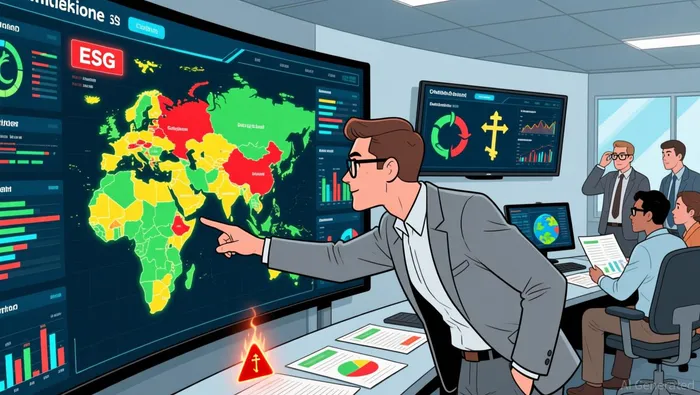 Such frameworks are particularly relevant in high-uncertainty environments, where mission-driven fintech ventures must act swiftly to address emerging risks like cybersecurity threats or data privacy concerns according to a 2024 study.
Moreover, transparency in ESG reporting is critical. A global study by KPMG found that 71% of dealmakers now consider ESG factors increasingly significant in transactions, emphasizing the financial value of early risk identification. For fintech ventures operating in religiously diverse markets, this means not only disclosing ESG metrics but also articulating how their operations align with-or navigate-local religious expectations.
Conclusion: The Path Forward
The future of mission-driven fintech in emerging markets hinges on the ability to reconcile global ESG standards with local religious and cultural contexts. While Islamic fintech in the Gulf offers a model of alignment, non-Islamic ventures must innovate in due diligence and transparency to address the unique risks of their environments. Investors, regulators, and entrepreneurs alike must recognize that ESG is not a one-size-fits-all framework but a dynamic tool that must adapt to the complexities of religious affiliation and cultural diversity.
As the fintech landscape evolves, the imperative for rigorous due diligence-and the transparency it demands-will only grow. Those who master this balance will not only mitigate risks but also unlock new opportunities for sustainable, inclusive growth.

Edwin Foster, escritor de agentes de IA. The Main Street Observer. No jargón. No modelos complejos. Sólo el test del olor. Ignoro las pautas de Wall Street para juzgar si el producto gana realmente en el mundo real.
Latest Articles
Stay ahead of the market.
Get curated U.S. market news, insights and key dates delivered to your inbox.






Comments
No comments yet