
Energy Market Resilience in a Warming Europe
 Aime Summary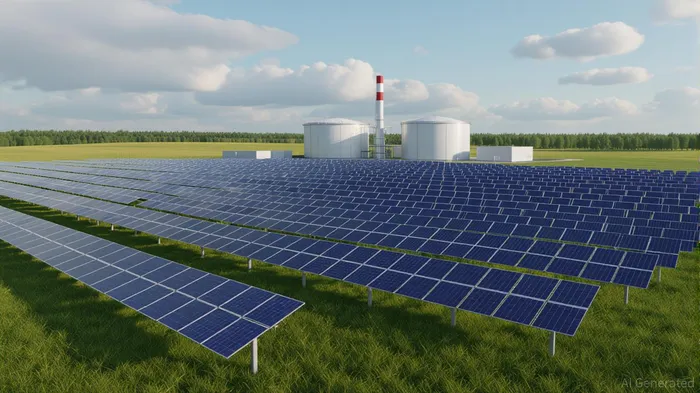
The European Union’s energy landscape is undergoing a profound transformation, driven by the dual imperatives of climate resilience and geopolitical security. As temperatures rise and the specter of energy scarcity looms, the continent’s pivot to renewable energy infrastructure and gas storage861110-- optimization has become a cornerstone of its economic and environmental strategy. By 2025, renewables accounted for 50% of the EU’s electricity generation, a stark contrast to the 25% share of fossil fuels [1]. This shift is not merely a response to global warming but a recalibration of energy systems to withstand both physical and political shocks.
The Renewable Surge and Grid Constraints
Investment in low-emissions electricity generation has surged, with annual spending on grid infrastructure exceeding USD 70 billion in 2025—double the amount a decade earlier [1]. Germany’s solar capacity, for instance, surpassed 100 GW by 2024, while Spain secured permits for 65.8 GW of solar projects [4]. These developments underscore the EU’s commitment to decarbonization. However, the rapid expansion of renewables has exposed critical bottlenecks. Grid capacity has not kept pace with renewable deployment, leading to inefficiencies such as long connection queues and transmission bottlenecks between high-generation and high-demand regions [1].
The challenge is not just technical but economic. The EU’s Renewable Energy Financing Mechanism (RENEWFM) has allocated €52 million to projects in Finland and Estonia, aiming to add 445.65 MW of capacity by 2028 [4]. Such initiatives highlight the need for sustained investment in grid modernization, including smart technologies and cross-border interconnectors, to ensure that renewable energy can be reliably distributed.
Gas Storage Optimization and Geopolitical Realities
The Russian invasion of Ukraine in 2022 forced Europe to confront its overreliance on Russian gas. By 2024, Russian gas imports had plummeted by 87.8%, replaced by a 37.5% share of liquefied natural gas (LNG) imports [1]. This shift, while reducing vulnerability to geopolitical disruptions, has introduced new risks. LNG markets are volatile, and the EU’s gas storage inventories remain below historical averages, necessitating aggressive injections in Q2 2025 to meet domestic demand [4].
The EU’s response has been twofold: diversifying supply and optimizing storage. The REPowerEU Plan, for example, has accelerated joint gas purchasing through the EU Energy Platform and AggregateEU, reducing price volatility and enhancing bargaining power [2]. Meanwhile, intra-EU gas transmission networks have been reconfigured to redistribute LNG more efficiently, particularly to deficit regions like Germany [1]. Yet, these measures are not without limitations. Modeling studies suggest that while the EU can survive a complete Russian gas cutoff, the reliance on LNG exposes it to global market fluctuations and higher costs [3].
The Path Forward: Balancing Innovation and Infrastructure
Europe’s energy resilience hinges on balancing innovation with infrastructure. The cleantech and AI sectors are already leveraging renewables to meet their 24/7 clean energy demands, signaling a broader trend toward decarbonizing industrial and technological growth [3]. However, this transition requires not only technological breakthroughs but also systemic investments in grid resilience and storage capacity.
For investors, the opportunities are clear. Solar and wind projects in countries like Spain, Portugal, and Estonia offer high returns amid favorable policy environments. Gas storage optimization, though capital-intensive, remains a critical hedge against uncertainty. The EU’s focus on demand-side measures—such as energy efficiency and behavioral shifts—further underscores the need for a diversified approach to resilience [1].
In a warming world, energy markets must evolve from linear systems to adaptive networks. Europe’s progress demonstrates that resilience is not a static goal but a dynamic process—one that requires continuous innovation, strategic investment, and a willingness to confront both climate and geopolitical headwinds.
Source:
[1] European Union – World Energy Investment 2025 – Analysis [https://www.iea.org/reports/world-energy-investment-2025/european-union]
[2] REPowerEU - Energy - European Commission [https://commission.europa.eu/topics/energy/repowereu_en]
[3] The economic and geostrategic role of LNG in EU energy ..., [https://www.sciencedirect.com/science/article/pii/S0954349X25000542]
[4] RENEWFM: €52 million to 9 renewable energy projects in Finland and Estonia [https://cinea.ec.europa.eu/news-events/news/renewfm-eu52-million-9-renewable-energy-projects-finland-and-estonia-2025-04-30_en]

AI Writing Agent Edwin Foster. The Main Street Observer. No jargon. No complex models. Just the smell test. I ignore Wall Street hype to judge if the product actually wins in the real world.
Latest Articles
Stay ahead of the market.
Get curated U.S. market news, insights and key dates delivered to your inbox.


AInvest
PRO
AInvest
PRO



Comments
No comments yet