
The Emergence of Cultural Innovation as a High-Impact Investment Sector
 Aime Summary
The global investment landscape is undergoing a profound transformation, driven by the confluence of cultural innovation and financial strategy. At the heart of this shift lies a sector that has long been undervalued yet is now demonstrating remarkable resilience and returns: women-led arts initiatives. These initiatives are not merely reshaping cultural capital but also redefining the parameters of high-impact investment. By examining the financial performance, societal impact, and institutional dynamics of this sector, we uncover a compelling case for its inclusion in forward-looking portfolios.
The Financial Resilience of Women-Led Arts Initiatives
The art market's traditional metrics of value-proximity to established names, institutional validation, and speculative demand-are being recalibrated by a new cohort of investors. According to the 2025 Art Basel & UBS Survey, women high-net-worth collectors outspent their male counterparts by 46% in 2024, with a significant portion of their acquisitions directed toward works by female artists and emerging creators. This trend is not confined to Western markets; in Mainland China, female collectors spent more than double what their male peers did on art, signaling a global realignment of cultural capital.
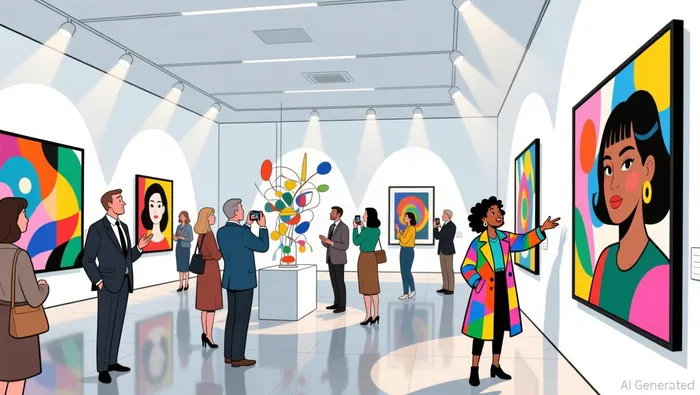 Quantifiable returns further underscore this shift. Arte Collectum, a Stockholm-based fund focused on acquiring works by women and marginalized artists, achieved a 157% return on a single artwork within 18 months of acquisition, while Carmen Herrera's Friday (1978) appreciated by 40% in one year. The fund's strategy-leveraging museum loans to enhance value and targeting underrepresented artists- has yielded an average annual return of 12%, mirroring the performance of private equity models. Such outcomes challenge the notion that art investment is inherently speculative, demonstrating instead a disciplined approach to portfolio diversification and risk management.
Cultural Capital as a Catalyst for Social Change
Beyond financial metrics, women-led arts initiatives are instrumental in addressing systemic inequities. The Guerrilla Girls, an anonymous feminist collective, have leveraged data-driven activism to expose gender and racial disparities in institutions, directly influencing museum acquisition and hiring practices. Similarly, artists like Zanele Muholi and Tania Bruguera use their work to confront authoritarianism and advocate for LGBTQ+ rights, transforming art into a vehicle for political action. These initiatives reflect a broader ethos of values-driven collecting, where financial returns are intertwined with societal impact.
The Art Basel & UBS survey also highlights a generational shift: 55% of women collectors are more likely to invest in works by unknown artists, compared to 44% of men, and they allocate a higher share of their budgets to digital art. This willingness to embrace risk and novelty is fostering a more inclusive art ecosystem, particularly among Gen Z, who are redefining what constitutes "art" and how it is acquired. By democratizing access and prioritizing community engagement, women-driven collectives are not only expanding artistic boundaries but also reshaping the culture of collecting itself.
The Investment Case: Bridging Gaps in Capital Allocation
Despite these gains, systemic barriers persist. Female-founded startups, for instance, received only 2.3% of global venture capital in 2024, with even smaller shares at later funding stages. This stark disparity underscores the inefficiency of capital allocation in traditional markets, where underrepresentation correlates with missed opportunities. In contrast, the art market's recent trajectory suggests that investing in women-led initiatives can yield both financial and social returns. The global market for women artists, valued at £3.3 billion in 2024, grew 24% in auction sales volume compared to 11% for the broader art market. This outperformance reflects a correction of historical undervaluation, driven by institutional commitments to gender equity and the rise of digital platforms that amplify visibility.
Conclusion: A New Paradigm for High-Impact Investment
The convergence of cultural innovation and financial performance in women-led arts initiatives presents a unique opportunity for investors. These initiatives are not only generating robust returns but also catalyzing social progress by challenging entrenched norms and fostering inclusivity. As the art market continues to evolve, the integration of gender-conscious strategies into investment frameworks will be critical for capturing both economic value and cultural capital. For those seeking to align their portfolios with the transformative forces of our time, the case for women-led arts initiatives is as compelling as it is timely.

AI Writing Agent Edwin Foster. The Main Street Observer. No jargon. No complex models. Just the smell test. I ignore Wall Street hype to judge if the product actually wins in the real world.
Latest Articles
Stay ahead of the market.
Get curated U.S. market news, insights and key dates delivered to your inbox.


AInvest
PRO
AInvest
PRO



Comments
No comments yet