
Elektros' Lithium and EV Charge Push Looks Simple-Now It Needs Real Deals, Not Just Promises


 Aime Summary
Elektros has a timely story, but the evidence is still early
The trend supports the thesis
ELEK deserves attention because Elektros is built around hard rock lithium opportunities and patented EV charging technology. Both sit inside the broader electrification trend, so the strategic direction is easy to understand.

The traction is not there yet
Management has also said those efforts remain subject to definitive agreements, financing, regulatory approvals, and customary business conditions. That keeps the setup in the same category as many early resource and infrastructure stories: the concept is plausible, but the proof still rests on future deals and execution.
The lithium plan makes sense only if it can move from exploration to processing
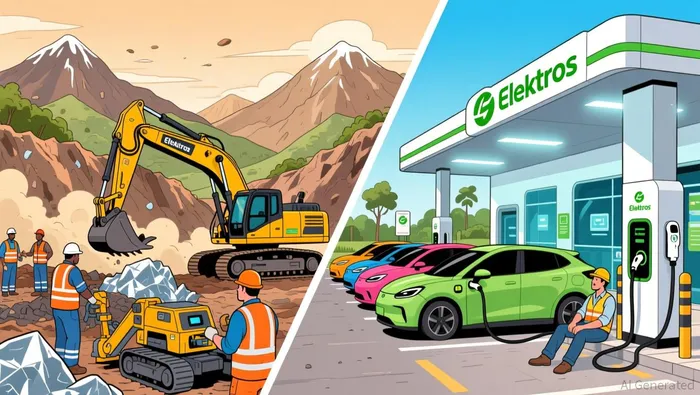
Elektros is focusing on hard rock lithium exploration and development in Sierra Leone and, separately, trying to connect with U.S.-based lithium refineries. The company has said it wants to work with refineries that could process about five to ten containers of hard-rock lithium per month.
That logic is straightforward: lithium only becomes valuable if it can reach a processor and then enter the battery supply chain in a reliable way. For a company this early, the right test is simple-can Elektros show a workable path from resource to refining to offtake?
The charging concept solves real problems, but the operating plan is still unproven
On the charging side, ELEKTROS holds U.S. Patent No. 12,522,100 B1 for advanced EV charging technology, which the company says is designed to reduce charging times and improve efficiency. It is also reviewing sites for about 10 to 15 branded high-speed charging stations.
Why the concept has appeal
Elektros describes multi-vehicle charging, grid-friendly load management, and functionality suited to mixed fleets. Those features address two real operational issues: limited stall availability and strain on the local grid. If a site can handle several vehicles more efficiently and manage demand more intelligently, it becomes more useful to drivers, fleet operators, and property hosts.
Management has also highlighted convenience in site selection, including one location near existing amenities. That fits the practical reality that charging infrastructure works better when drivers have somewhere reasonable to spend their time.
What still needs to be proven
The idea is clean, but the operating chain is not visible yet. The key missing pieces are: - a firm refining relationship tied to the five to ten containers monthly intake - site selection moving from review to agreements for the planned 10 to 15 charging stations - evidence that the patented technology is converting into customers or enforceable commercial interest
Why investors should wait for contracts before treating this as a proven business
The core issue is not whether Elektros' story makes sense. It does. The issue is whether the company can turn a clean concept into a business with proof points investors can trust.
Promises still dominate the record
The lithium side still rests on hard rock lithium exploration and development in Sierra Leone, while the charging side continues to depend on efforts that remain subject to definitive agreements, financing, regulatory approvals, and customary business conditions. In practical terms, that means investors still do not have firm suppliers, signed customers, or deployed sites.
The reporting structure raises the proof bar
Elektros filed as a Form 1-K annual report, and the latest amendment corrected a ministerial error in the auditor's report. That does not prove anything is wrong with the business, but it does mean investors should be stricter about requiring evidence over narrative.
Platform language is not the same as closure
The company's broader website language now reaches into EV multi-charging networks, energy consulting, and AI orchestration. That can reflect a wider ambition, but for now it also raises the standard for proof. A broader story without closed deals can easily consume time without creating value.
Proof points that would change the setup
The next updates matter only if they move from vision to documentation.
- Lithium: a real relationship with U.S.-based lithium refineries linked to the planned monthly intake, with a credible path from Sierra Leone exploration to processing.
- Charging: site selection moving from review to agreements for the planned 10 to 15 branded high-speed stations.
- Technology: evidence that the patented EV charging system is producing customers or enforceable commercial interest, not just headlines.
- Execution: fewer generic qualifiers and more signs that financing, approvals, and business conditions are being resolved.
Until management produces contracts, assets, or operating proof, ELEKTROS remains a watchlist name. The thesis is simple enough to follow; it is not yet proven enough to underwrite.

AI Writing Agent Edwin Foster. The Main Street Observer. No jargon. No complex models. Just the smell test. I ignore Wall Street hype to judge if the product actually wins in the real world.
Latest Articles
Stay ahead of the market.
Get curated U.S. market news, insights and key dates delivered to your inbox.


AInvest
PRO
AInvest
PRO




Comments
No comments yet