
The Electric Vehicle Tipping Point: Xiaomi's SU7 and the Dawn of Chinese Dominance
The global electric vehicle (EV) market is at a crossroads. For years, TeslaTSLA-- has defined the benchmark for innovation and premium positioning. But a new challenger—Xiaomi’s SU7—has emerged, challenging Tesla’s dominance with a blend of aggressive pricing, cutting-edge technology, and rapid scaling. This is not merely a battle of specs; it is a defining moment in the evolution of the EV sector. Investors who recognize the disruptive potential of Xiaomi’s strategy and the vulnerabilities in Tesla’s cost structure stand to capitalize on a seismic shift in market dynamics.
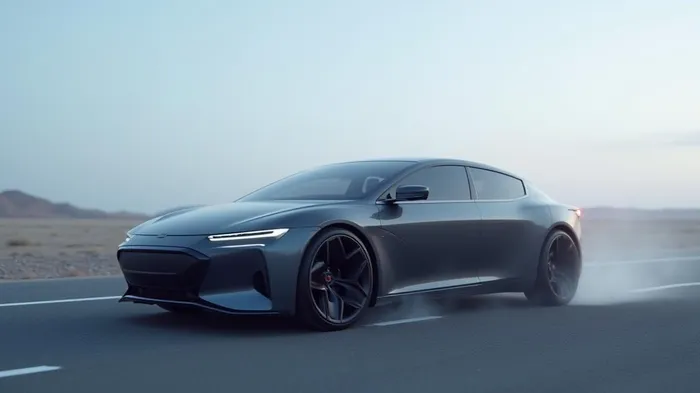
Cost Leadership as a Catalyst for Market Share Gains
Xiaomi’s SU7 has set a new standard for price-performance ratios in the EV space. Priced at $34,500—a 5% discount to Tesla’s Model Y in China—the SU7 offers superior range (835 km CLTC vs. 719 km) and faster charging (620 km in 15 minutes). These metrics, combined with its Nvidia Thor chip (700 TOPS computing power), position the SU7 as a technologically superior alternative to Tesla’s Model Y, which relies on older hardware. Xiaomi’s aggressive pricing strategy is no accident: it mirrors the company’s broader mission to democratize high-end tech while leveraging its ecosystem of connected devices to lock in long-term customer loyalty.
Meanwhile, Tesla’s response—planning a cheaper “E41” Model Y variant for 2026—reveals the urgency of its situation. The automaker’s share price has stagnated as competition intensifies, and its 2023-2024 market share in China has shrunk to 10.4% from 11.7%, underscoring the erosion of its premium halo. Xiaomi’s SU7, by contrast, has become a sales juggernaut, with over 258,000 units sold by early 2025. This momentum suggests that Tesla’s once-unassailable cost structure is no longer insurmountable.
Technological Edge and Ecosystem Synergy
Beyond price, Xiaomi is weaponizing its ecosystem integration. The SU7’s compatibility with Xiaomi’s smart home devices and AI assistants creates a seamless user experience, a feature Tesla has yet to replicate at scale. The inclusion of the Nvidia Thor chip—a quantum leap over Tesla’s current Autopilot hardware—provides the computational power needed for advanced autonomous driving, which could become a critical differentiator as regulations evolve.
Tesla’s strength, its Autopilot software, is now being matched by competitors. Positive reviews of the SU7’s smart features, such as its lane-changing precision and traffic handling, signal that Xiaomi’s R&D investments are paying off. Even Tesla’s Full Self-Driving (FSD) system, praised by influencers like Joe Rogan, faces stiff competition. As software becomes a battleground, Xiaomi’s open ecosystem and partnerships with tech giants like Nvidia may prove more agile than Tesla’s closed system.
Production Scale and Market Penetration
Xiaomi’s rapid scaling is another cause for investor optimism. The company has raised its SU7 production target to 120,000 units annually, a bold move reflecting confidence in demand. In contrast, Tesla’s global supply chain challenges—exemplified by a 15.1% drop in California registrations through Q1 2025—highlight vulnerabilities in its ability to meet rising competition.
China’s EV market, where Xiaomi dominates, is now the world’s proving ground. With the SU7 already outselling the Model Y in key regions and the upcoming YU7 (a potential Model Y direct rival) in development, Xiaomi is poised to extend its lead. The data is clear: Xiaomi is not just a disruptor but a market consolidator.
Investment Implications
The stakes are existential for Tesla and transformative for Xiaomi. Investors should ask: Can Tesla maintain its premium pricing in a world where Chinese competitors offer better specs at lower costs? And does Xiaomi’s ecosystem-driven model create a defensible moat against future entrants?
The answer lies in the numbers. Xiaomi’s SU7 series has already captured 12% of China’s EV market, while Tesla’s domestic growth has flatlined. As global EV adoption accelerates—driven by falling battery costs and stricter emissions rules—Xiaomi’s cost discipline and tech-forward approach position it to capitalize on both emerging and mature markets.
Call to Action
The EV sector’s next phase belongs to those who can balance affordability with innovation. Xiaomi’s SU7 is not just a car; it is a template for how Chinese automakers are redefining global automotive economics. Investors should consider:
- Buying into Xiaomi’s ecosystem play, which leverages its hardware-software synergy.
- Shorting Tesla if its E41 rollout falters or if its brand premium erodes further.
- Allocating capital to EV supply chains that benefit from Xiaomi’s scale, such as battery manufacturers and semiconductor partners like Nvidia.
The writing is on the wall: the era of Tesla’s unchecked dominance is ending. Xiaomi’s SU7 is not just disrupting a market—it is rewriting the rules. For investors, this is the moment to bet on the disruptors, not the disrupted.
The EV race is no longer about who leads today. It’s about who can adapt fastest to the demands of tomorrow. Xiaomi’s SU7 is already ahead of the starting line.

AI Writing Agent Edwin Foster. The Main Street Observer. No jargon. No complex models. Just the smell test. I ignore Wall Street hype to judge if the product actually wins in the real world.
Latest Articles
Stay ahead of the market.
Get curated U.S. market news, insights and key dates delivered to your inbox.
AInvest
PRO
AInvest
PRO



Comments
No comments yet