
U.S. EIA Gasoline Production Falls Sharply, Highlighting Energy Services Opportunities and Automotive Sector Risks
 Aime Summary
The U.S. Energy Information Administration's (EIA) Q2 2025 report has delivered a wake-up call for investors: gasoline production plummeted by 491,000 barrels per day (bpd) below expectations, the largest shortfall since the 2020 pandemic. This collapse, driven by 's devastation of Texas and Louisiana refineries, has sent retail gasoline prices soaring to $3.123 per gallon—a 37.4-cent spike year-over-year. While the immediate impact is felt at the pump, the broader implications for sector rotation strategies are profound.
The Supply Shock and Its Structural Roots
The EIA's data reveals a perfect storm of short- and long-term challenges. Hurricane Idella's disruptions were compounded by aging infrastructure, geopolitical bottlenecks (e.g., China's ), and strained refinery utilization rates that hit 93.9%—a near-capacity crunch. Meanwhile, gasoline demand held firm at 9.2 million bpd, just 0.9% below the five-year average, despite economic headwinds. This resilience in demand, paired with supply-side fragility, has created a volatile environment where gasoline prices remain stubbornly high, even as crude oil production nears record levels.
The West Coast, already grappling with two planned refinery closures by 2026, is a microcosm of this crisis. , dwarfing the national average. This regional disparity underscores a critical truth: the U.S. refining sector is no longer a monolith. Structural weaknesses are amplifying regional price divergences, creating asymmetric risks and opportunities.
Sector Rotation: Energy ServicesESOA-- Outperform, Autos Underperform
History offers a blueprint for navigating such shocks. During past gasoline supply crises, energy equipment and services firms have consistently outperformed. For example, during the 2020 pandemic, companies like Schlumberger (SLB) and HalliburtonHAL-- (HAL) saw their valuations rebound as demand for refining capacity and infrastructure upgrades surged. Conversely, traditional automakers, which rely on stable fuel prices to maintain consumer spending, have historically lagged.
The current environment mirrors these patterns. With refineries operating at near-capacity and infrastructure upgrades urgently needed, energy services firms are poised to benefit from capital expenditures aimed at modernizing refining capabilities. Meanwhile, automakers face a dual threat: higher fuel prices could dampen demand for gas-guzzling vehicles, and the sector's shift toward electric vehicles (EVs) remains fraught with supply chain bottlenecks and regulatory uncertainty.
Investment Strategy: Overweight Energy Infrastructure, Underweight Traditional Autos
For investors, the playbook is clear. Overweight energy infrastructure and services firms that stand to gain from refinery modernization and capacity expansion. This includes not only traditional E&P companies but also firms specializing in refining technology, such as TechnipFMCFTI-- (FTI) and (BKR). These names are likely to see increased demand for modular refinery solutions and digital optimization tools to address aging infrastructure.
Conversely, traditional automakers like Ford (F) and General Motors (GM) face near-term headwinds. While EVs remain a long-term growth story, the sector's short-term underperformance is likely as gasoline volatility strains consumer budgets. Investors should consider reducing exposure to legacy automakers and pivoting to EV supply chain players (e.g., , battery manufacturers) that are less directly impacted by fuel price swings.
The Road Ahead: Monitor EIA Reports and Refinery Utilization
The EIA's Q2 report is a critical inflection point. . , and any further disruptions (e.g., another hurricane or geopolitical shock) could trigger a sharper price spike.
Investors should closely track EIA's weekly reports on refinery runs, utilization rates, and regional price differentials. A sustained drop in utilization or a surge in maintenance outages could accelerate capital spending in the energy services sector. Conversely, a rapid normalization of production might temper these opportunities.
Conclusion: Position for Divergence
The gasoline supply shock of Q2 2025 is not just a blip—it's a symptom of a sector in transition. As the U.S. grapples with aging infrastructure and geopolitical fragility, the market is rewarding those who adapt. Energy services firms are the beneficiaries of this divergence, while traditional automakers face a bumpy road. For investors, the key is to align portfolios with the new energy reality: a world where supply resilience and technological agility trump old paradigms.
In the end, the pump price isn't just a number—it's a signal. And right now, it's telling us to rotate.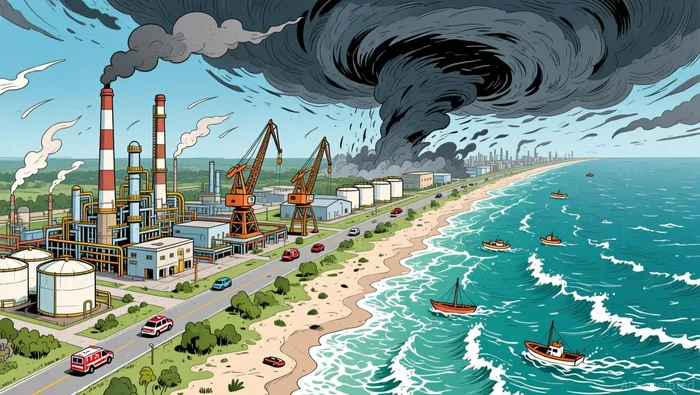

Stay ahead of the market.
Get curated U.S. market news, insights and key dates delivered to your inbox.
AInvest
PRO
AInvest
PRO



Comments
No comments yet