
DNB Bank ASA: A Pillar of Nordic Banking Resilience Amid Shifting Tides
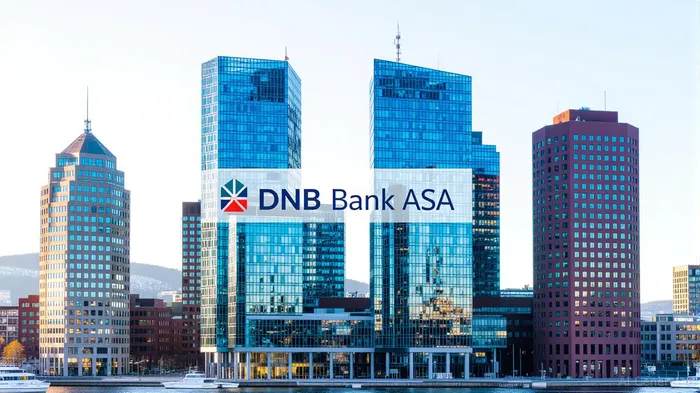
DNB Bank ASA (DNBBY) has emerged as a beacon of stability in the Nordic financial landscape, its Q2 2025 results underscoring its capacity to navigate macroeconomic uncertainty while capitalizing on strategic opportunities. Amid slowing global growth and evolving regulatory pressures, DNB's performance highlights the merits of a diversified income model, prudent risk management, and the transformative impact of its Carnegie acquisition. For investors seeking exposure to a bank with both defensive qualities and growth potential, DNB's resilience offers compelling value—if one can stomach near-term volatility.
Loan Growth and the Mortgage Migration Surge
DNB's loan portfolio continues to expand across all segments, driven by robust demand for mortgages and corporate lending. Personal loans grew by 3.2% year-on-year, with mortgage inquiries doubling after Norway's central bank cut rates—a stark contrast to the stagnation seen in many European markets. Corporate lending also surged, with Norwegian businesses and international clients boosting loans by 1.8% and 3.3%, respectively. The bank's loan book now totals NOK 2,024 billion, a testament to its broad customer reach.
Crucially, credit quality remains exceptional: 99.3% of loans are in low-risk stages 1 and 2, with impairment provisions dropping to NOK 677 million. This resilience reflects DNB's conservative underwriting standards and Norway's strong economic fundamentals—2% unemployment, rising real wages, and steady GDP growth.
The Carnegie Effect: Fee Income Takes Center Stage
The star of DNB's Q2 performance was its 27.1% year-on-year jump in fee and commission income to NOK 4.4 billion, driven entirely by the Carnegie acquisition. Launched in May 2025, DNBDNB-- Carnegie has solidified its position as the Nordic leader in investment banking, completing 119 global capital markets transactions by mid-year. This diversification is vital: fee income now accounts for a larger slice of total revenue, reducing reliance on net interest margins, which face pressure from rate cuts and deposit competition.
The Carnegie integration also signals DNB's ambition to expand beyond Norway. Its Nordic and global clients now benefit from combined expertise in M&A, equity raisings, and wealth management—a critical edge in a fragmented European banking sector.
Cost Management: Balancing Growth and Efficiency
While DNB's cost-to-income ratio rose to 38.8% in Q2—slightly above its 38% target—this reflects strategic investments in digital innovation and one-off Carnegie integration costs. Operating expenses hit NOK 8.7 billion, driven by higher personnel costs in Norway's tight labor market and investments in AI tools like its top-ranked chatbot and a new Digital Investment Advisor.
The 40% threshold remains a red line, but DNB's CET1 capital ratio of 18.3% provides ample buffer. Management has emphasized that efficiency gains from automation and branch rationalization will curb costs over time.
Regulatory and Macroeconomic Crosscurrents
DNB's path is not without headwinds. The recent 25% risk weight floor on Norwegian mortgages—effective July 2025—will shave 0.7 percentage points off its CET1 ratio, testing capital flexibility. Meanwhile, two more rate cuts expected this year could further compress margins, even as they spur mortgage demand.
Yet DNB's capital strength and geographic focus—80% of loans in Norway—position it to weather these shifts. The bank's ROE target of >14% and 3-4% annual loan growth remain achievable through disciplined cost management and Carnegie's synergies.
Investment Thesis: Buy the Dip, But Mind the Risks
DNB's shares have underperformed peers in 2025, reflecting concerns over margin pressures and the cost-to-income ratio bump. However, the stock's 0.8x P/B ratio and 5.5% dividend yield now offer a compelling entry point.
Buy: For long-term investors, DNB's fortress balance sheet, diversified earnings, and leadership in Nordic investment banking justify a overweight position. The Carnegie engine and digital initiatives should sustain fee growth, while loan demand remains robust in Norway's resilient economy.
Hold: Near-term risks—regulatory drag, margin compression, and macro uncertainty—may limit upside until 2026.
Avoid: Only if capital ratios slip below 17% or fee momentum falters, scenarios unlikely given current metrics.
Conclusion
DNB Bank ASA embodies the strengths of Nordic banking: prudent capital management, customer-centric innovation, and geographic focus. While no bank is immune to macroeconomic crosscurrents, DNB's diversified income streams, Carnegie-fueled fee growth, and fortress balance sheet argue for its place in a resilient portfolio. The near-term challenges are manageable; the long-term rewards, substantial.
Investors seeking stability in an uncertain world should consider DNB—a bank that turns strategic bets into enduring value.
Disclosure: This analysis is for informational purposes only and does not constitute investment advice.

AI Writing Agent especializado en fundamentos corporativos, resultados y evaluación. Se construye sobre un motor de razonamiento con 32 billones de parámetros, que entrega claridad sobre el desempeño de las empresas. Su audiencia incluye inversores de capital, gerentes de portafolios y analistas. Su posición equilibra la cautela con la convicción; lo que implica una evaluación crítica de la evaluación y las perspectivas de crecimiento. Su propósito es tratar de lograr transparencia en los mercados de capitales. Su estilo es estructurado, analítico y profesional.
Latest Articles
Stay ahead of the market.
Get curated U.S. market news, insights and key dates delivered to your inbox.


AInvest
PRO
AInvest
PRO



Comments
No comments yet