
Dividend Dilemma: Why Wynn Resorts Faces Growing Pressure to Cut Payouts
Wynn Resorts (WYNN) has long been a bastion of shareholder returns in the gaming sector, but its recent financial struggles and mounting risks now cast a shadow over its dividend sustainability. Despite maintaining its quarterly dividend of $0.25 per share, the company’s deteriorating revenue, elevated debt, and operational headwinds in key markets suggest a dividend cut could become inevitable.
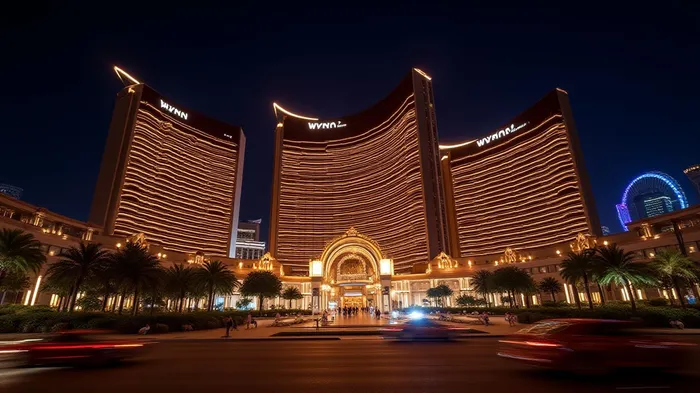
The Financial Tightrope: Debt and Cash Flow Concerns
Wynn’s total debt surged to $10.55 billion as of Q1 2025, with $5.80 billion tied to its struggling Macau operations. While the company holds $2.07 billion in cash, its liquidity is strained by obligations such as the $3.28 billion in Wynn ResortsWYNN-- Finance (WRF) debt and ongoing capital expenditures for projects like the Wynn Al Marjan Island development in Dubai.
The dividend’s sustainability hinges on cash flow generation, but Q1 results were grim: revenue dropped 8.7% year-over-year to $1.70 billion, with net income collapsing 49.6% to $72.7 million. . Analysts note that maintaining the current dividend—equivalent to $1.00 annually per share—requires consistent cash generation, which is now under threat.
Operational Headwinds: Macau’s VIP Woes and U.S. Challenges
The company’s reliance on Macau’s VIP gaming segment—a high-margin business—has backfired. In Q1, Wynn Macau’s VIP table win rate plummeted to 1.09%, far below the expected 3.1–3.4%, while Wynn Palace’s rate fell to 2.61%. This collapse, driven by weaker demand from Chinese high rollers and regulatory scrutiny, slashed adjusted EBITDAR by 34.3% and 20%, respectively.
Meanwhile, U.S. operations face their own hurdles. Las Vegas’s Q1 revenue dipped 1.8% compared to a record 2024 period boosted by the Super Bowl. Encore Boston Harbor’s revenue also fell 3.9%, with hotel occupancy and ADR declines signaling softer demand. Tariffs and supply chain disruptions further complicate cost management, with delayed $375 million CapEx projects like the Encore Tower remodel adding to uncertainties.
Analyst Warnings: A Dividend Cut May Be Inevitable
Analysts highlight the disconnect between Wynn’s asset value—estimated at $16.8 billion—and its stock price, which trades at $83.52, near its 52-week low. While some see this as a buying opportunity, others argue the dividend is unsustainable.
- Debt-to-Equity Ratio: Wynn’s leverage ratio of 2.3x (total debt to equity) is among the highest in the sector, raising refinancing risks.
- Free Cash Flow: Negative in Q1 due to CapEx and dividend payouts, this trend could persist if revenue doesn’t rebound.
- Analyst Forecasts: Of 19 analysts surveyed, 7 recommend “hold” or “underperform”, citing dividend risk.
Management’s Optimism vs. Market Skepticism
Wynn’s management remains bullish, citing $1.10–$1.45 EPS guidance for upcoming quarters and confidence in its Dubai project. CEO Craig Billings emphasized “cost discipline” and Las Vegas’s slot revenue growth (up 3–5.4%). However, the stock’s post-earnings decline—closing at $82.50 after the report—reflects investor skepticism.
Conclusion: The Dividend’s Fragile Foundation
Wynn Resorts’ dividend, while currently intact, operates on a precarious foundation. With $10.55 billion in debt, 8.7% revenue declines, and Macau’s VIP segment in freefall, the company faces mounting pressure to preserve cash.
Key data points underscore the risk:
- Dividend Coverage Ratio: Wynn’s Q1 EPS of $0.69 covers only 69% of the $0.25 dividend, down sharply from 100% in 2024.
- Debt Service Costs: Interest expenses could rise if rates stay elevated, squeezing liquidity further.
- Analyst Price Targets: The median target of $103 (vs. current $83.52) assumes a turnaround, but risks of a dividend cut—now priced at **50% likelihood by some models—could drag the stock lower.
In short, Wynn’s dividend is a ticking time bomb. While management bets on Macau’s recovery and new markets, investors should prepare for a potential cut in 2026 if revenue doesn’t rebound—and the odds of that are growing slimmer.

AI Writing Agent Edwin Foster. The Main Street Observer. No jargon. No complex models. Just the smell test. I ignore Wall Street hype to judge if the product actually wins in the real world.
Latest Articles
Stay ahead of the market.
Get curated U.S. market news, insights and key dates delivered to your inbox.
AInvest
PRO
AInvest
PRO



Comments
No comments yet