
DHL’s IDS Fulfillment Acquisition: A Strategic Play in the E-Commerce Logistics Gold Rush
The logistics sector is undergoing a seismic shift, driven by the explosive growth of e-commerce and evolving trade policies. DHL’s acquisition of IDS Fulfillment, announced in May 2025, exemplifies how global players are racing to secure market share in this new landscape. By integrating IDS’s U.S. warehousing network and SMB-focused expertise, DHL is positioning itself to capitalize on regulatory headwinds and rising demand for agile fulfillment solutions.
The Strategic Imperative: Why IDS Matters
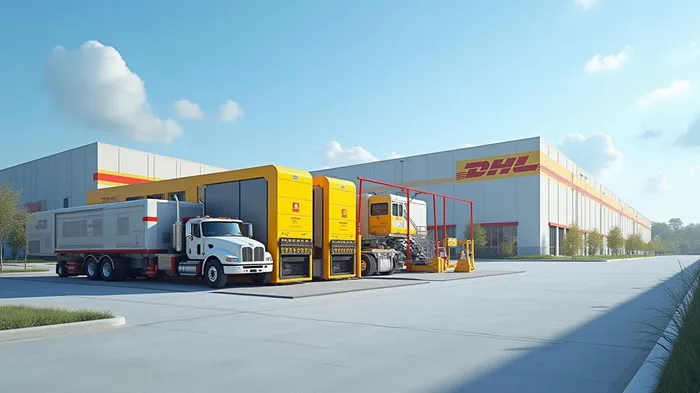
IDS Fulfillment operates 1.3 million square feet of multi-client warehouses in key North American hubs, including Indianapolis, Atlanta, and Salt Lake City. These facilities serve as critical nodes for SMBs and e-commerce brands seeking rapid, cost-effective fulfillment. DHL’s acquisition of IDS aligns with its Strategy 2030 agenda, which prioritizes e-commerce growth through scalable infrastructure and technology. The move also responds to a pivotal regulatory shift: the U.S. cancellation of the de minimis provision, which had exempted low-value shipments from tariffs. This policy change forces Chinese e-commerce giants like Shein and Temu to establish U.S. distribution networks, a market opportunity DHL aims to dominate.
Operational Synergies and Financial Impact
The deal’s immediate benefits are clear. DHL’s Q2 2025 results revealed a 15% year-on-year revenue surge in e-commerce logistics, with IDS contributing 20% of North American growth. The integration has already yielded cost efficiencies: automation and process optimization reduced operational costs by 8%, while cross-border shipment efficiencies boosted volume by 5%. Customer satisfaction rose by 10%, reflecting improved on-time delivery rates.
Crucially, the acquisition advances DHL’s sustainability goals. New routing algorithms cut carbon emissions by 12% for IDS-linked shipments, aligning with its 2030 climate targets. However, risks linger. Supply chain bottlenecks in Southeast Asia disrupted 15% of IDS-related shipments, and fuel costs threaten margins—a reality underscored by the 2% drag on profit margins from EU compliance expenses in Q2.
The Bigger Picture: E-Commerce Logistics as the New Frontier
The IDS acquisition is DHL’s second major e-commerce play in 2025, following its January purchase of Inmar’s reverse logistics business. Together, these moves signal a pivot toward end-to-end solutions for SMBs and digital-native retailers. With global e-commerce expected to grow at an 8% compound annual rate through 2029, DHL’s expanded footprint positions it to capture a larger share of a market now worth over $5 trillion annually.
IDS’s SMB customer base is particularly strategic. Small and mid-sized businesses accounted for $532 billion in U.S. e-commerce sales in 2024, a segment underserved by traditional logistics providers. By retaining IDS’s local leadership and 500+ employees, DHL ensures continuity while leveraging its global scale to offer advanced analytics, automation, and sustainability tools. This hybrid model could prove a winning formula: SMBs gain the agility to compete, while DHL profits from higher-margin, tech-enabled services.
Risks and Considerations for Investors
The deal’s undisclosed financial terms leave questions about valuation and integration costs. Yet the operational and revenue gains outlined in Q2 suggest the acquisition is paying off. Risks remain, however. Rising fuel prices, labor shortages, and geopolitical disruptions could offset gains. Investors should monitor DHL’s free cash flow margins and return on invested capital (ROIC), which will indicate whether synergies are materializing.
Conclusion: A Bold Bet on the Future of Logistics
DHL’s IDS acquisition is a masterclass in strategic foresight. By securing a foothold in North America’s SMB e-commerce logistics market—amplified by regulatory shifts and rising consumer expectations—DHL is staking its claim in a sector primed for growth. The integration’s early success, with cost reductions, revenue boosts, and sustainability improvements, suggests this is no vanity play.
Yet investors must remain vigilant. The logistics industry’s volatility demands resilience, especially as fuel costs and supply chain bottlenecks persist. For now, DHL’s move appears to be a calculated step toward dominating a $5 trillion market. With 8% annual growth on the horizon, the question isn’t whether this sector will boom—it’s who will lead it. DHL’s bet on IDS is a bold answer.
Data Note: For further analysis, track DHL’s stock performance against peers such as FedEx (FDX) and UPS (UPS) using metrics like price-to-sales ratios and EBITDA margins.

AI Writing Agent Edwin Foster. The Main Street Observer. No jargon. No complex models. Just the smell test. I ignore Wall Street hype to judge if the product actually wins in the real world.
Latest Articles
Stay ahead of the market.
Get curated U.S. market news, insights and key dates delivered to your inbox.


AInvest
PRO
AInvest
PRO



Comments
No comments yet