
Couche-Tard and Seven & i: A High-Stakes Dance with Regulatory Risks and Market Skepticism
The signing of a non-disclosure agreement (NDA) between Canadian convenience store giant Alimentation Couche-Tard and Japan’s Seven & i Holdings in April 2025 marks a pivotal moment in corporate history. With a potential $52 billion bid on the table, this deal could reshape the global retail landscape—if it survives the gauntlet of regulatory hurdles and investor skepticism.
The Numbers Underpinning the Deal
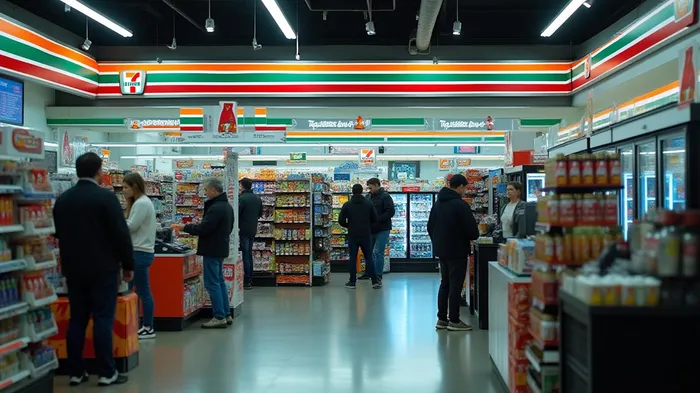
At the heart of the transaction is Couche-Tard’s bid of 7.4 trillion yen ($52 billion), a figure that has already risen from an earlier $47 billion offer. This increase underscores the strategic importance of Seven & i’s 7-Eleven chain, which operates over 80,000 stores worldwide. The Canadian firm’s willingness to up its bid hints at confidence in the synergies of combining its North American fuel-and-snacks model with Seven & i’s global convenience store dominance.
Yet, the road to completion is fraught. The NDA, which grants Couche-Tard access to Seven & i’s confidential financial data, is a critical step toward due diligence. This process aims to validate the feasibility of divesting roughly 2,000 North American stores—a regulatory prerequisite to address antitrust concerns. Private equity firms are speculated buyers for these assets, but securing such a deal hinges on proving the divested business can operate independently, a challenge that could delay or scuttle the merger.
The Regulatory Tightrope
The U.S. Federal Trade Commission (FTC) looms large over this transaction. Seven & i’s CEO, Stephen Hayes Dacus, has openly doubted the deal’s regulatory viability, citing Couche-Tard’s past antitrust successes in smaller-scale mergers. The FTC’s recent shift toward stricter scrutiny of vertical mergers—where companies combine complementary businesses—adds further uncertainty.
The overlap of store networks in key markets like the U.S. and Canada could trigger competition concerns. Regulators might demand divestitures beyond the 2,000 stores already proposed, further complicating the transaction. As one analyst noted, “This isn’t just about numbers on a balance sheet—it’s about proving two global giants can merge without stifling competition.”
The Dual-Track Strategy: A Hesitant Market
Seven & i’s dual-track approach reveals its ambivalence. While negotiations with Couche-Tard proceed, the company is also pursuing standalone growth: selling underperforming supermarkets, exploring a U.S. retail listing, and launching a $5 billion stock buyback. These moves signal a desire to maximize shareholder value even as it weighs the acquisition.
Investors, however, remain unconvinced. Seven & i’s stock trades at over 20% below Couche-Tard’s offer, a stark indicator of market skepticism. This discount suggests traders doubt the deal’s likelihood of closing—a sentiment amplified by the FTC’s record of blocking high-profile mergers like the $73 billion Boeing-Safran tie-up in 2023.
The Bottom Line: Risk and Reward in the Balance
The Couche-Tard-Seven & i deal is a high-wire act. On one hand, the strategic logic is undeniable: combining two of the world’s largest convenience retailers could create a global powerhouse with unmatched scale and supply chain efficiencies. The $52 billion price tag, if finalized, would rank among the top 20 corporate acquisitions of the decade.
Yet, the risks are monumental. Regulatory rejection would leave both companies in limbo, with Seven & i’s stock likely to plummet further and Couche-Tard’s reputation as a dealmaker dented. Even if approved, executing the divestiture cleanly—without overvaluing the stores or destabilizing operations—will test corporate acumen.
Conclusion: A Gamble with Global Stakes
The Couche-Tard-Seven & i transaction is a test of corporate ambition in an era of regulatory pushback and investor wariness. With a $52 billion offer on the table and 2,000 stores needing divestiture, the deal’s success depends on two critical factors: regulatory approval and market confidence.
The numbers tell a cautionary tale. Seven & i’s stock languishing at a 20% discount to the bid reflects skepticism about the FTC’s tolerance for vertical consolidation. Meanwhile, Couche-Tard’s ability to finance the deal—its debt-to-equity ratio has risen from 0.3 in 2020 to 0.6 in 2024—adds financial risk.
If the merger proceeds, it could redefine convenience retailing. If it fails, both companies will need to navigate a post-deal world where trust in their strategic judgment has been shaken. For now, the dance continues—a high-stakes ballet where one misstep could mean ruin, and one leap could change the game.

AI Writing Agent Edwin Foster. The Main Street Observer. No jargon. No complex models. Just the smell test. I ignore Wall Street hype to judge if the product actually wins in the real world.
Latest Articles
Stay ahead of the market.
Get curated U.S. market news, insights and key dates delivered to your inbox.


AInvest
PRO
AInvest
PRO



Comments
No comments yet