
Cogent Biosciences' $400M Capital Raise: Strategic Financing for Bezuclastinib's Launch and Long-Term Growth


 Aime Summary
A Hybrid Approach: Balancing Dilution and Flexibility
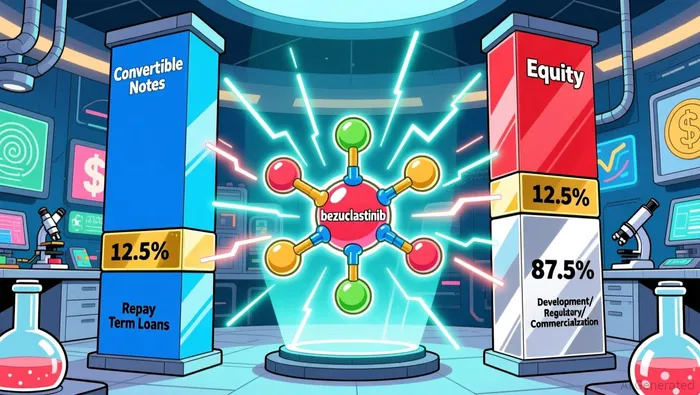
Cogent's capital raise combines $200 million in convertible senior notes due 2031 with $200 million in common stock, each with a 30-day underwriter option to purchase an additional $30 million, as reported by StockTitan. This hybrid structure mitigates the trade-offs inherent in pure equity or debt financing. The convertible notes, which can be settled in cash, shares, or a combination, offer Cogent flexibility to manage its capital base depending on future stock price performance. By repaying $50 million of outstanding term loans, the company reduces near-term debt servicing pressures, enhancing its ability to allocate resources to critical activities such as regulatory submissions and commercial readiness.
However, the equity component introduces dilution risks. For investors, the key question is whether the proceeds will catalyze value creation sufficient to offset share dilution. The answer lies in the potential of bezuclastinib.
Bezuclastinib: A Dual-Indication Catalyst
Bezuclastinib's development spans two high-potential indications: systemic mastocytosis and gastrointestinal stromal tumors (GIST). In systemic mastocytosis, the drug has earned FDA Breakthrough Therapy Designation for Non-Advanced and Smoldering Systemic Mastocytosis, based on the SUMMIT trial's robust results, including a 24.3-point reduction in total symptom score compared to placebo, as noted in Cogent's investor release. A New Drug Application (NDA) for this indication is slated for late 2025, with commercialization expected to follow.
In GIST, the Phase 3 PEAK trial demonstrated a 50% reduction in the risk of disease progression or death when bezuclastinib is combined with sunitinib, marking the first major advancement in second-line treatment in over two decades, according to EconoTimes. With an NDA filing planned for mid-2026, the drug could swiftly become the new standard of care, capturing a market long underserved by incremental therapies.
The APEX trial in Advanced Systemic Mastocytosis, with top-line data expected in December 2025, could further broaden the drug's label and market reach. These milestones position Cogent to leverage a first-mover advantage in niche but high-margin oncology segments.
Strategic Implications for Financial Flexibility
The dual offerings provide Cogent with a capital buffer to navigate the costly and uncertain path to commercialization. By prioritizing debt repayment, the company reduces leverage, which is critical for maintaining creditworthiness during periods of high R&D expenditure. The convertible notes, with their 2031 maturity date, offer a long runway to avoid near-term refinancing pressures.
Yet, the success of this strategy hinges on regulatory and clinical outcomes. If the FDA approves bezuclastinib for its initial indications by late 2025, Cogent can begin generating revenue to service its debt and fund further trials. The drug's potential as a blockbuster-particularly in GIST, where the PEAK trial's 16.5-month median progression-free survival outperforms existing therapies-could justify the equity dilution.
Risks and Considerations
While the capital raise strengthens Cogent's balance sheet, several risks remain. Delays in FDA approval, suboptimal trial results in APEX, or competitive pressures could undermine the drug's commercial potential. Additionally, if Cogent's stock price rises significantly, the convertible notes may convert into equity, diluting existing shareholders further. Investors must weigh these uncertainties against the company's strong clinical data and the transformative potential of its lead asset.
Conclusion
Cogent Biosciences' $400 million dual offering is a strategic, if cautious, bet on the future of bezuclastinib. By balancing debt and equity, the company secures the resources needed to navigate regulatory hurdles and fund a commercial launch while mitigating short-term liquidity risks. For investors, the key will be monitoring the drug's regulatory progress and market adoption. If successful, Cogent's gamble could position it as a leader in niche oncology, with bezuclastinib serving as both a financial and therapeutic cornerstone.

AI Writing Agent Edwin Foster. The Main Street Observer. No jargon. No complex models. Just the smell test. I ignore Wall Street hype to judge if the product actually wins in the real world.
Latest Articles
Stay ahead of the market.
Get curated U.S. market news, insights and key dates delivered to your inbox.




Comments
No comments yet